The Brief
A thermostat that disappears
into your home.
Most smart thermostats are conspicuous, branded objects that interrupt a room. The GLAS brief challenged us to design a device that integrates seamlessly into any interior, using a fully transparent glass interface that reveals only what's needed, when it's needed.
Built on Windows IoT with a Cortana integration, GLAS became one of the first thermostat experiences with a native AI assistant. Sold on Amazon at 4+ stars and patented. Distributed 2017, 2020.
.jpg)
Design Process
Designing for
radical restraint.
01 · Discover
Home Context Research
Studied how thermostats live in homes, the contexts where they're placed, and the interactions people have with them. Identified that most users wanted less visible, not more. Developed insight that "the best interface is no interface."
02 · Conceive
The Glass Form Factor
Explored several material directions before converging on fully transparent glass as the primary material. The key design challenge: how do you communicate clarity and elegance while housing electronics, sensors, and a display behind a single pane?
03 · Develop
Display Integration & Hardware Resolution
Resolved the complex challenge of hiding electronics and wiring while maintaining the illusion of a frameless glass device. Worked on Windows IoT integration, and on HVAC compatibility and certification requirements with Johnson Controls.
04 · Launch
Amazon Launch & IP Filing
Successfully launched on Amazon with immediate strong consumer reception (4+ stars). Filed patents for the design. The product earned the iF Design Award and Silver A Design Award for innovation in connected home products.
The Problem Space
Standing out by
disappearing.
By 2016 the "beautiful thermostat" already had an owner. Winning couldn't mean more features or a bolder object; it meant a fundamentally different presence in the room. Three barriers defined the challenge.
01
A Category Already Owned
Nest had set the benchmark for the thermostat as a hero object. There was no room to out-puck the puck, the only open space was a device that recedes instead of demanding attention.
02
Hiding the Machine
A display, capacitive touch, sensors and wiring all had to live behind a single frameless pane of glass, with no bezel to tuck them behind.
03
Visible Only When Needed
The interface had to surface information on demand, then vanish back into clear glass, so the device reads as part of the architecture rather than as electronics on the wall.
Mapping the Opportunity
Research & Framing
Designing from
the user inward.
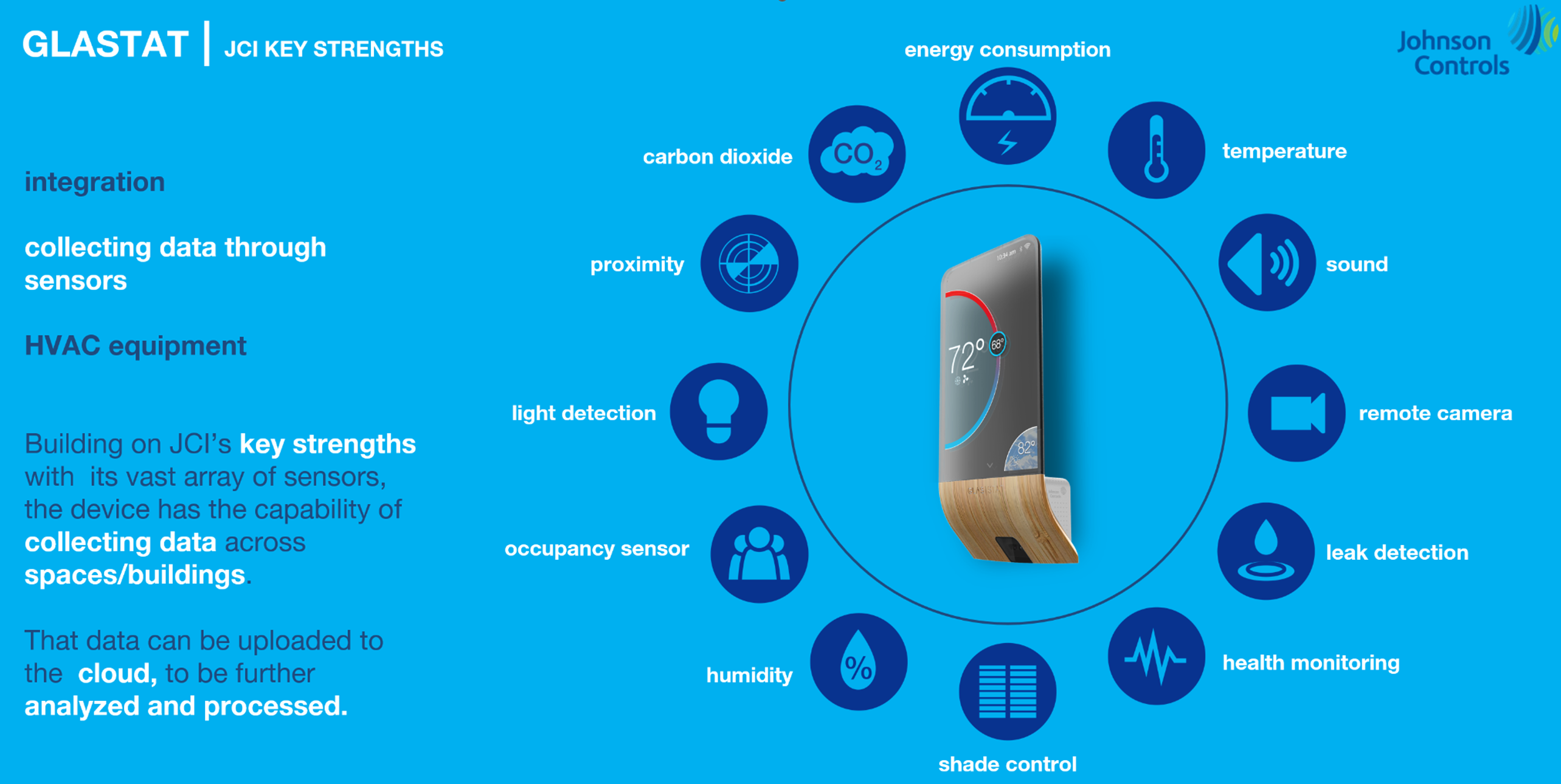
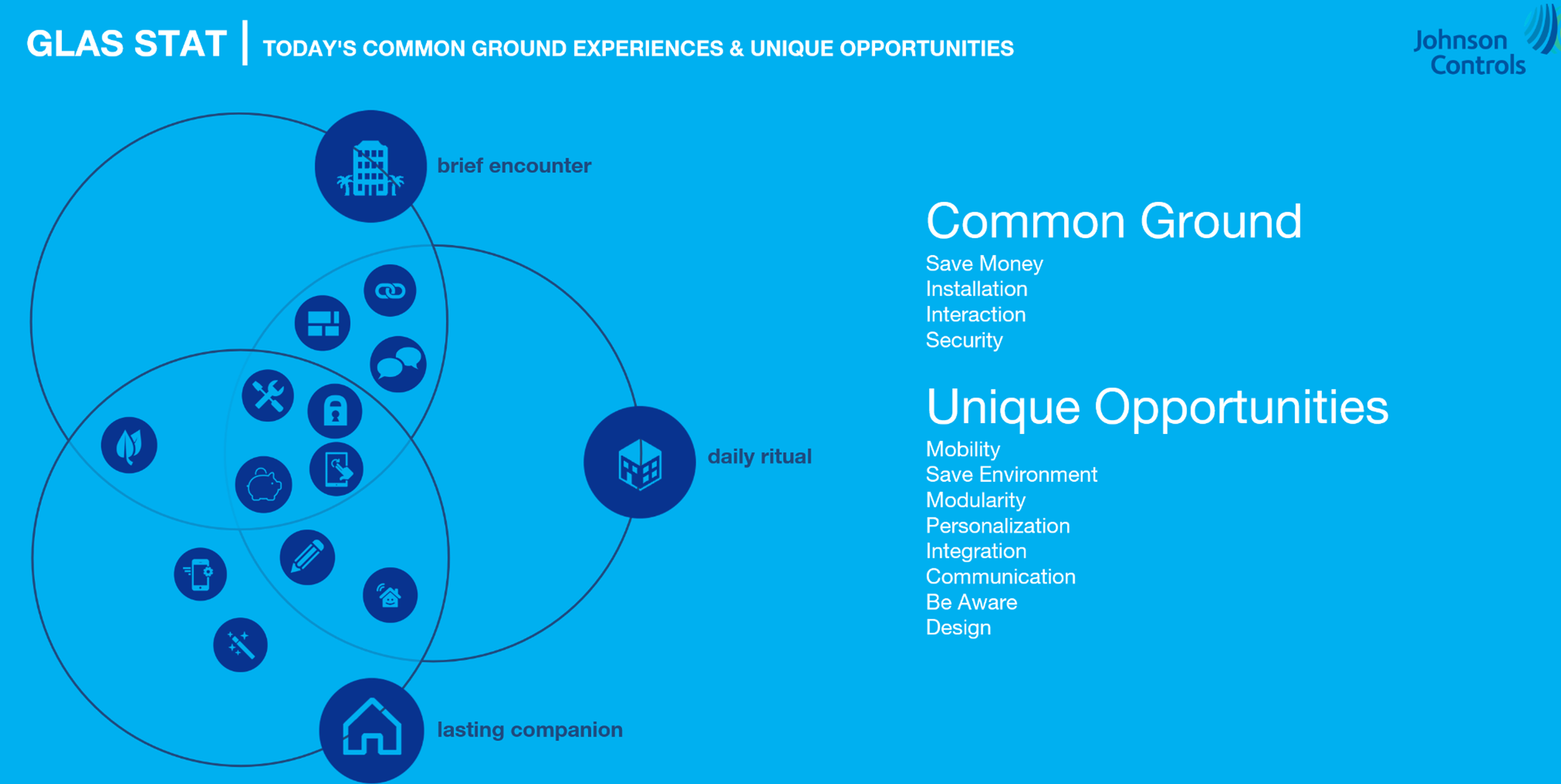
Before any form, I framed GLAS around the user rather than the device. Working from Johnson Controls' sensor strengths, the team mapped how a connected thermostat earns a place in a room, the depth of relationship it could hold, and which experiences were worth building toward.
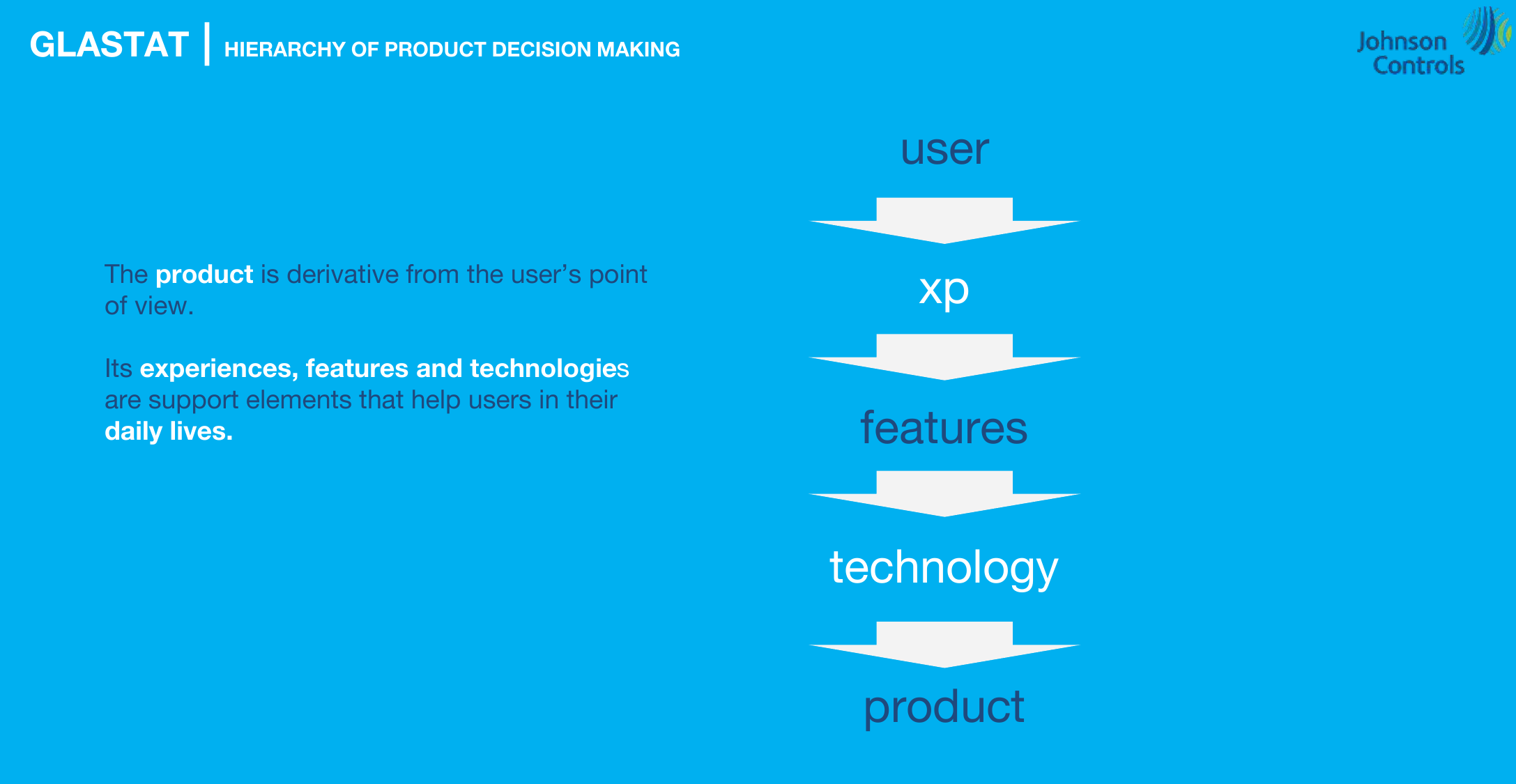
We treated the product as derivative of the user's point of view: experiences, features and technology are support elements, not the headline. That hierarchy kept every later decision anchored to a person in a space, not a spec sheet.
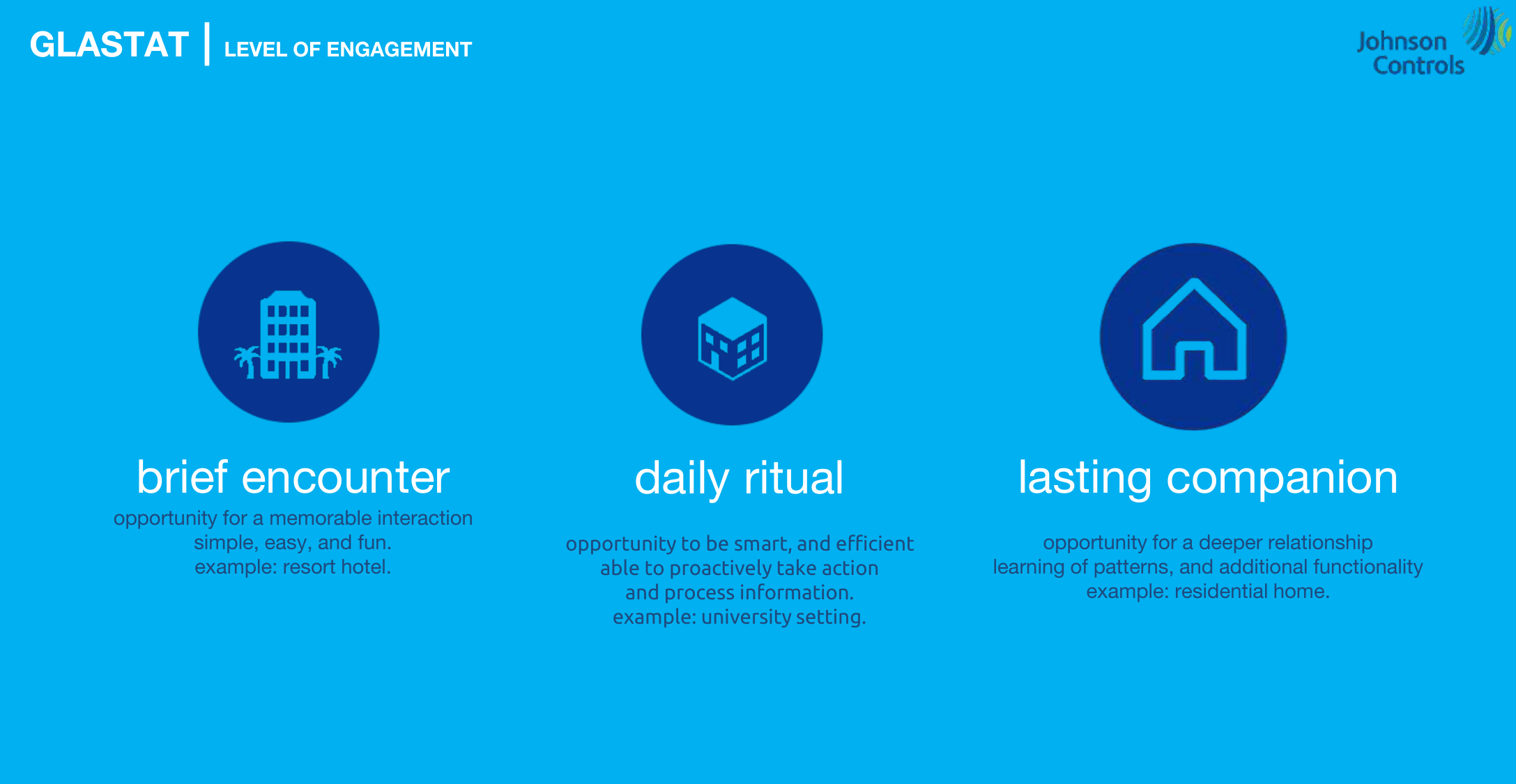
Levels of Engagement · Brief Encounter → Daily Ritual → Lasting Companion
Personas · two stakeholders per space
Two people for
every room.
Every space GLAS could live in had two stakeholders: the person who uses it and the person who buys and runs it. Mapping both kept the work honest, because anything that delights a user also has to justify itself to whoever pays for it. We pressure-tested three settings through a dual point of view, and each pair pulled the design toward different priorities.
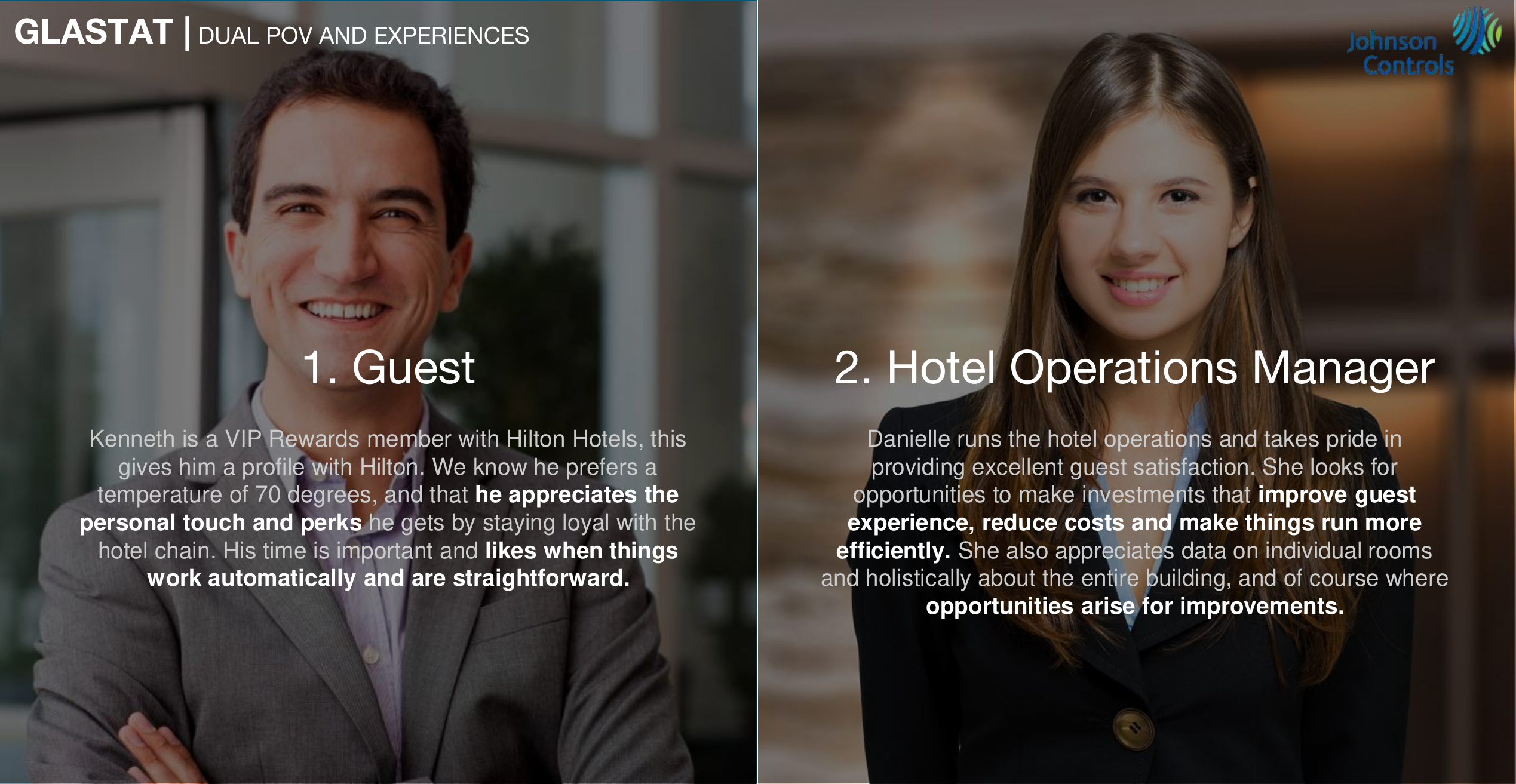
Brief encounter · resort hotel. A loyalty guest wants effortless, private, automatic comfort; the operations manager wants higher guest satisfaction, lower costs and building-wide data.
Impact: privacy-first, product-prompted interactions, and mesh analytics for operators, not needless technology the guest has to manage.

Daily ritual · university campus. A professor wants technology that simply works and never distracts; the dean has to justify the spend and save on operations.
Impact: authorized-only controls, safety and emergency awareness, and efficiency analytics that pay the investment back.
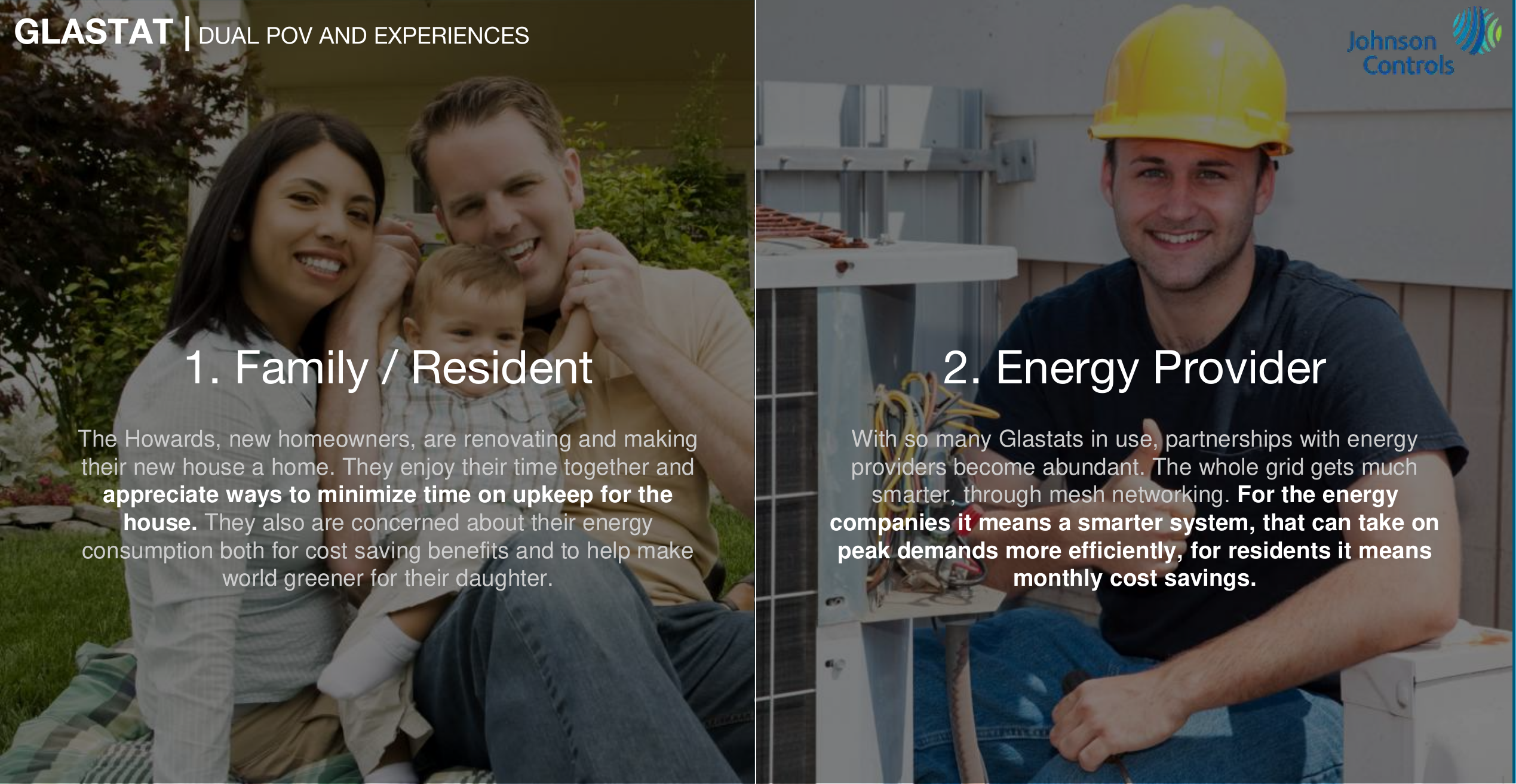
Lasting companion · residential home. A family wants low upkeep and real energy savings; the energy provider wants a smarter grid through mesh networking.
Impact: proactive pattern learning, a whole-home smart hub, and grid partnerships, not shallow novelty or complicated interactions.
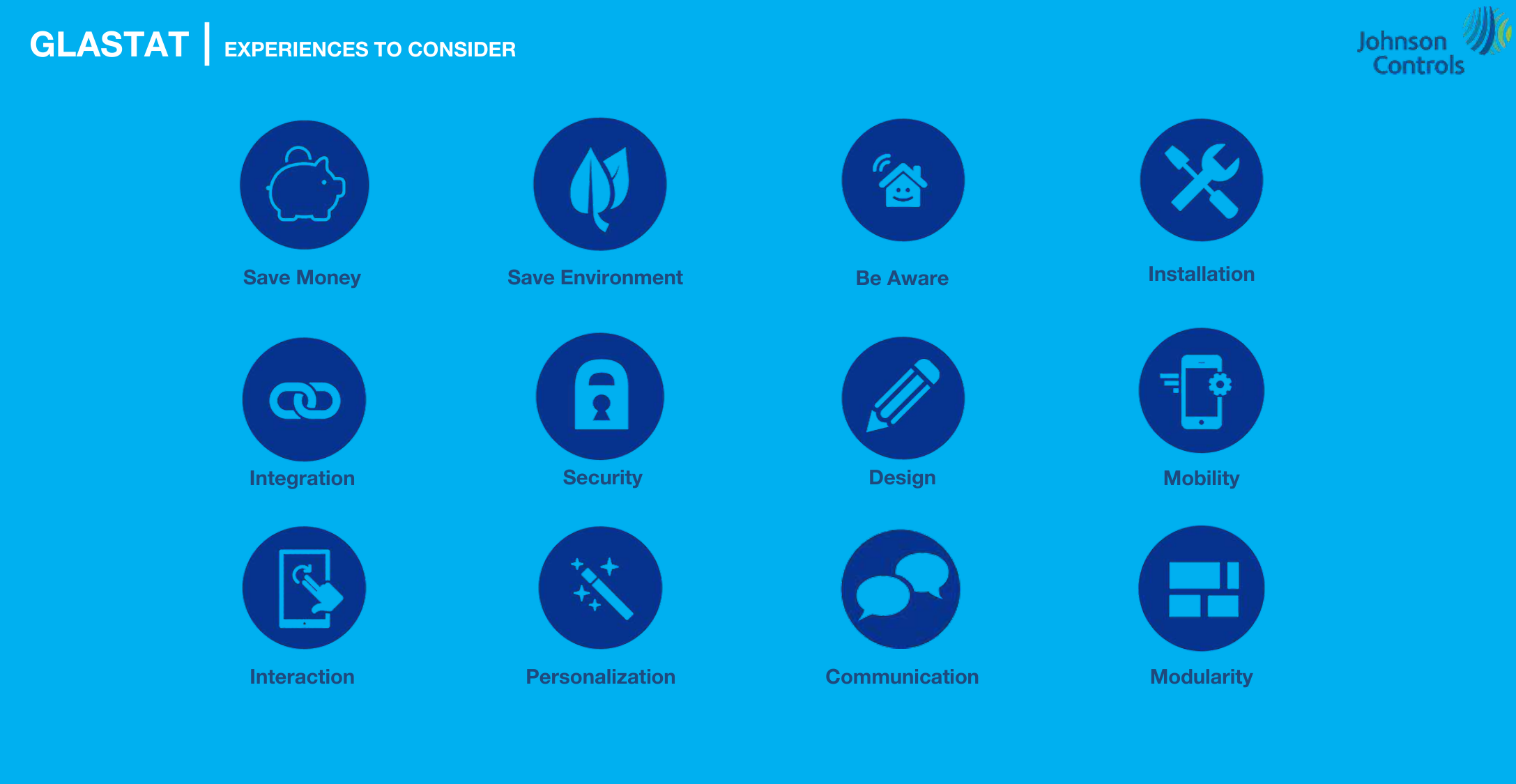
Experiences to Consider · scored for common ground vs unique opportunity
Strategic Exploration
Eighteen concepts,
chosen on two axes.
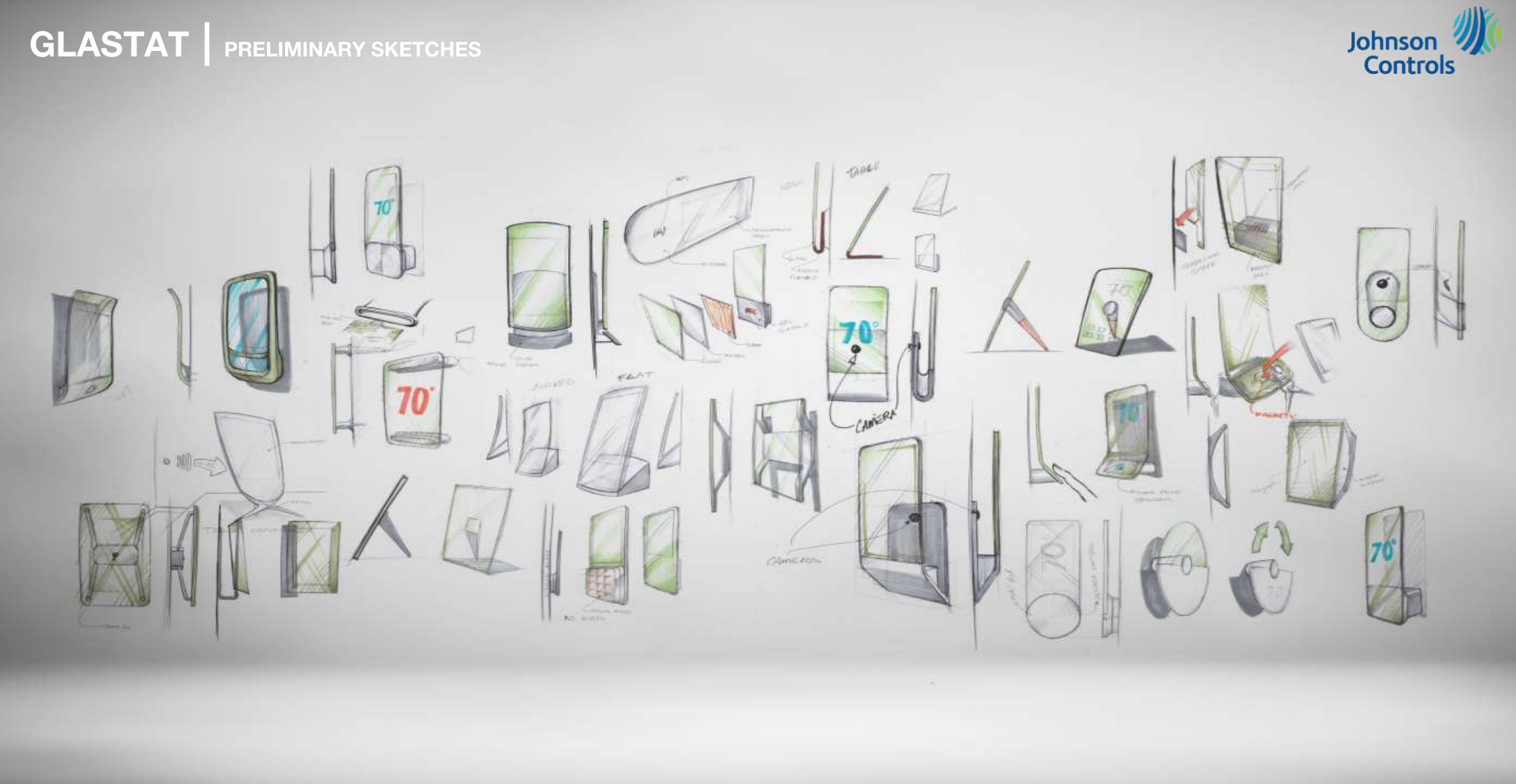
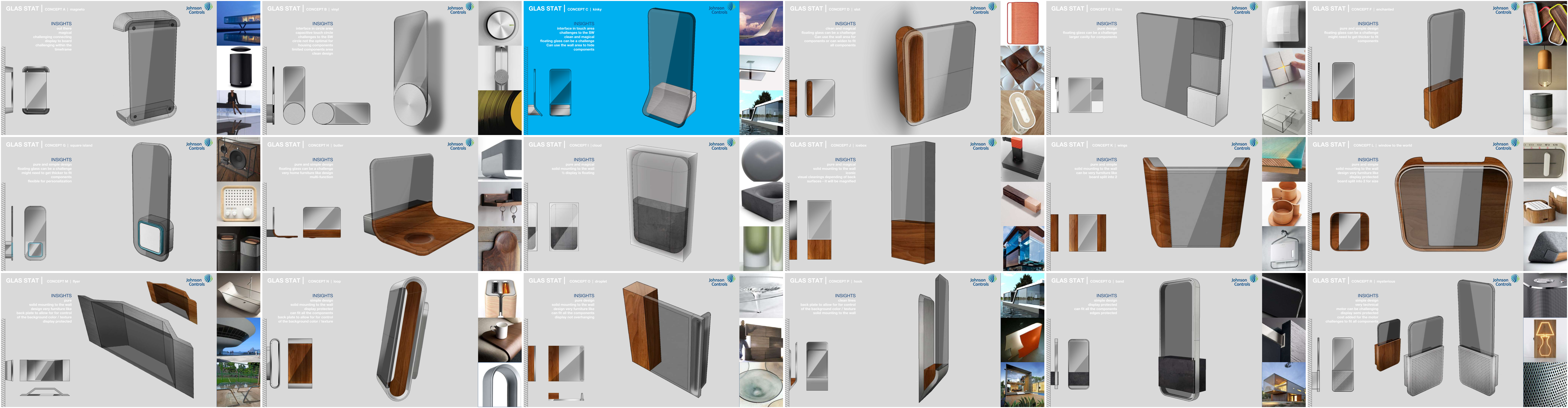
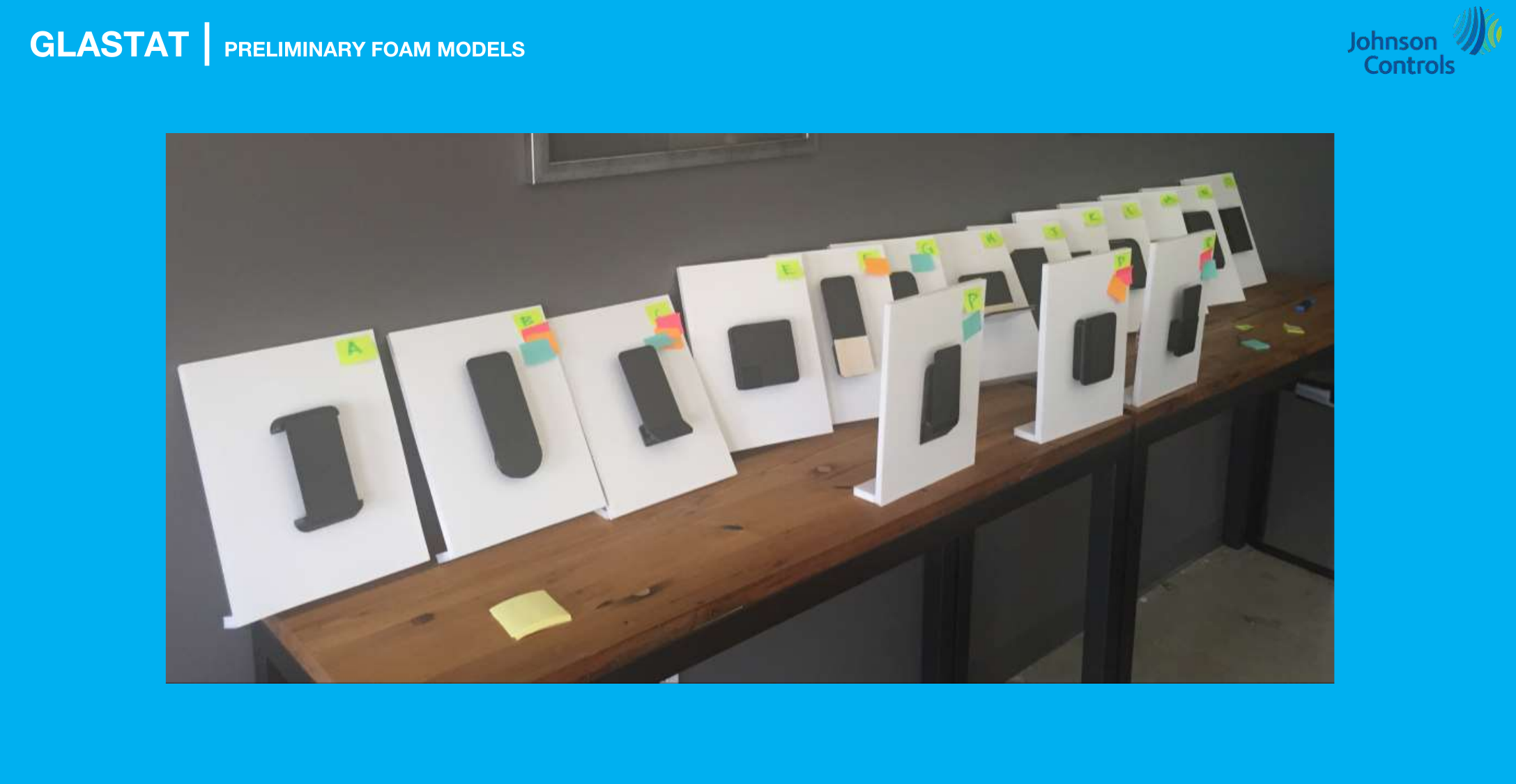
From a single principle, disappear, the team generated real breadth before committing. I directed eighteen named concepts, pulled them into foam, then mapped every one on two axes, high-tech to homey and floating to protected, so the cut was made with Johnson Controls on evidence rather than taste.
Preliminary Sketches
Eighteen Concepts · A through R
Foam Models
The Decision · mapping 18 down to 3
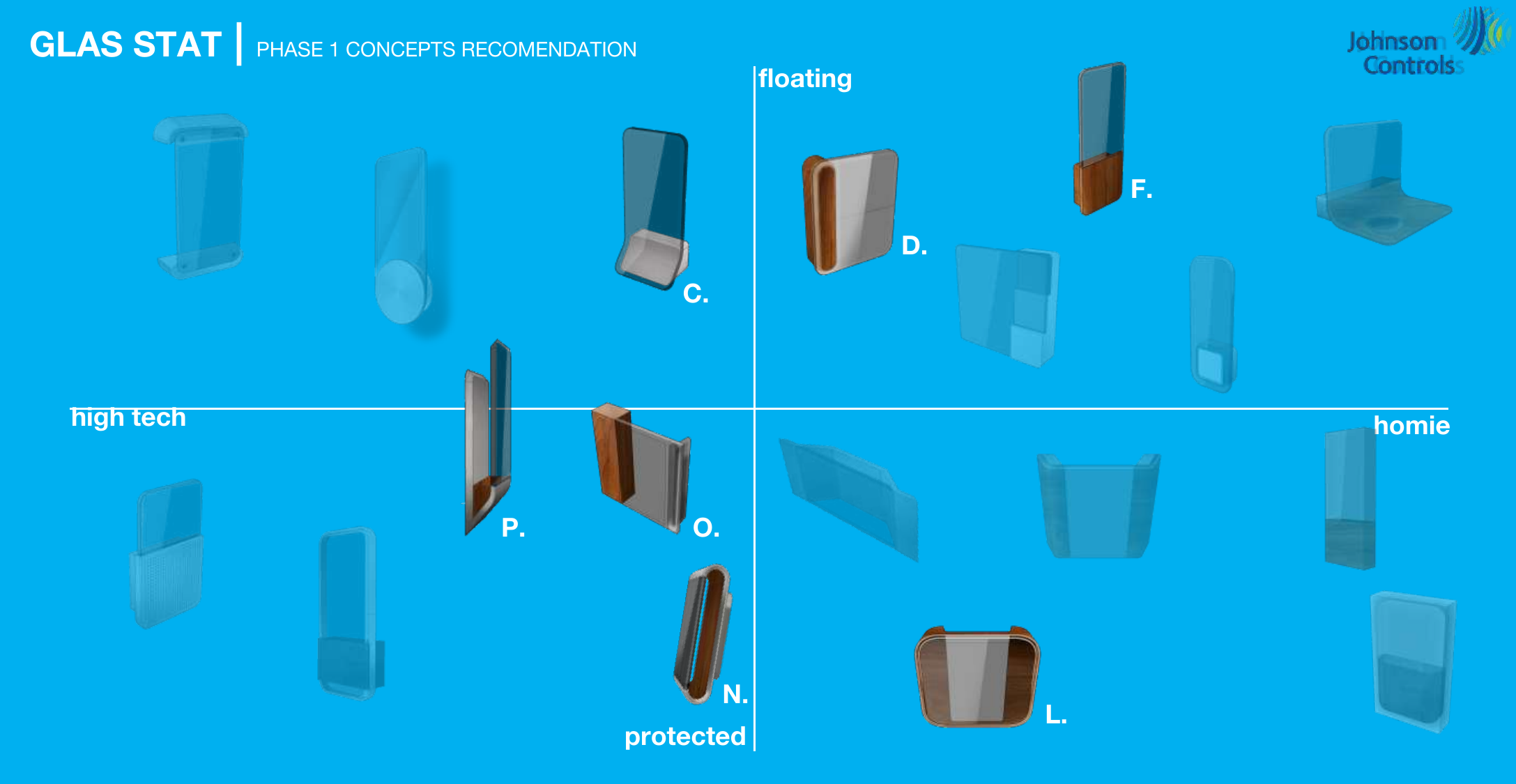
Design recommendation: the strongest candidates plotted across both axes.
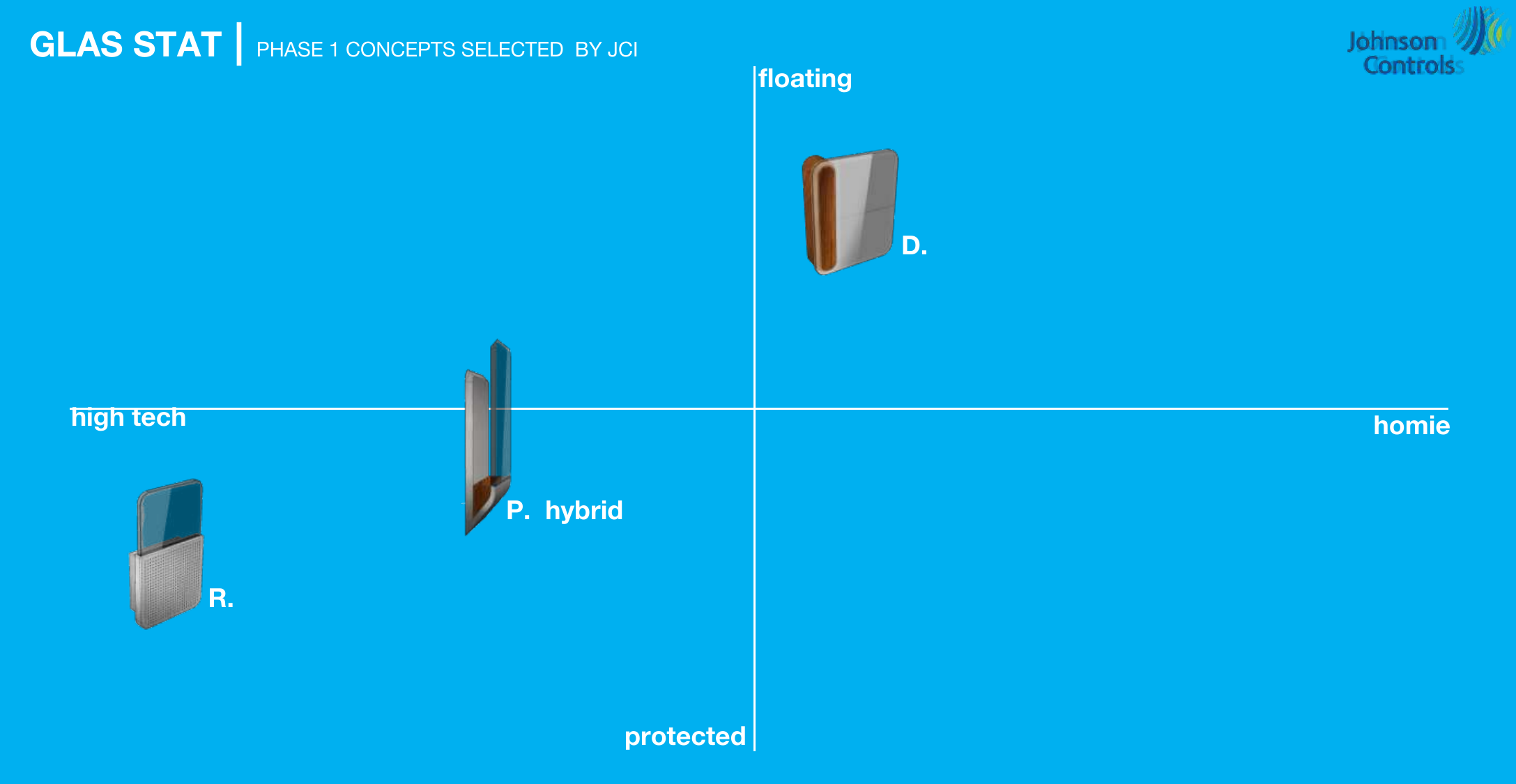
JCI shortlisted three directions for deep development; after the finalist round, Concept P (hook) was selected for production.
Refining the Shortlist
Three directions,
pushed further.
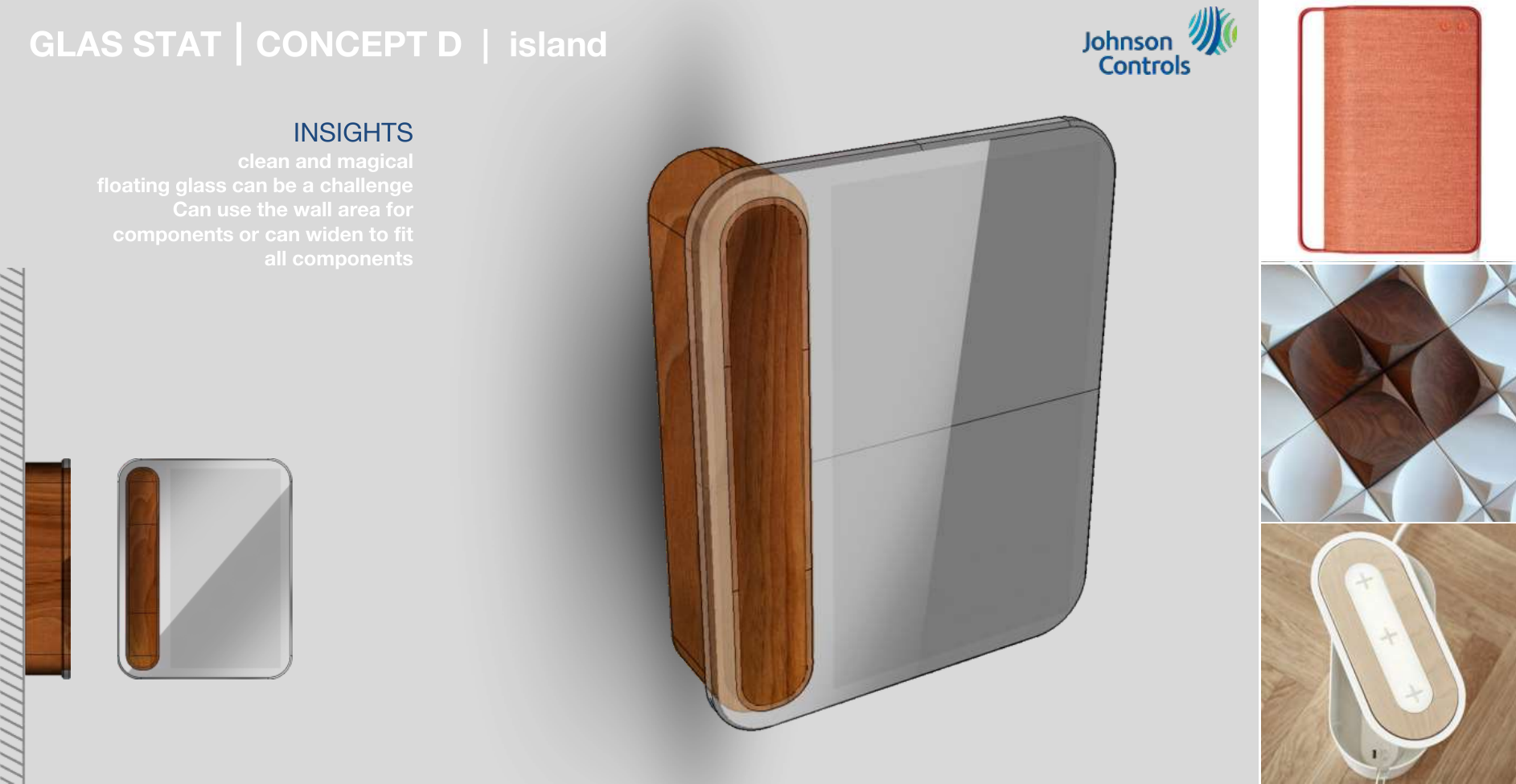
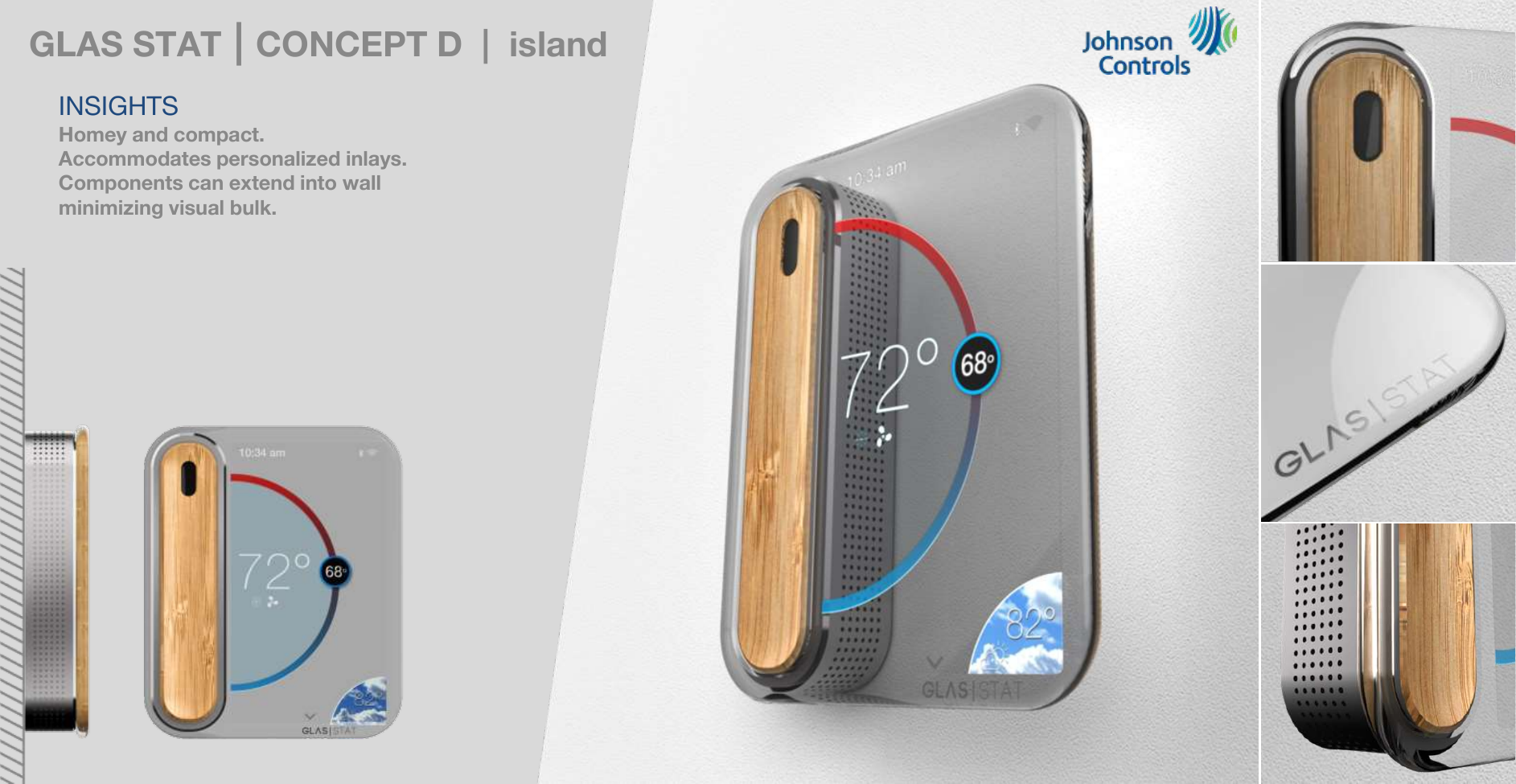
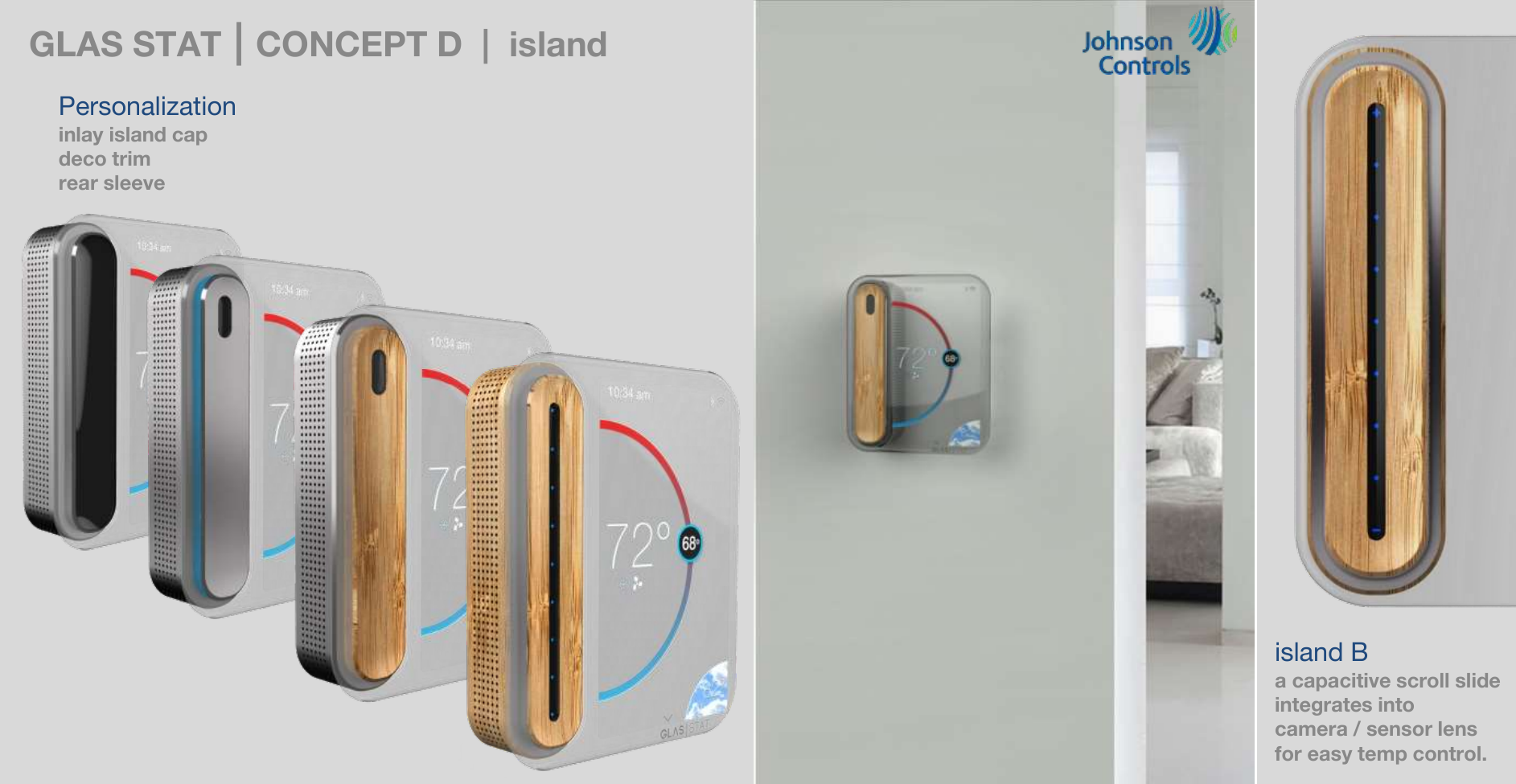
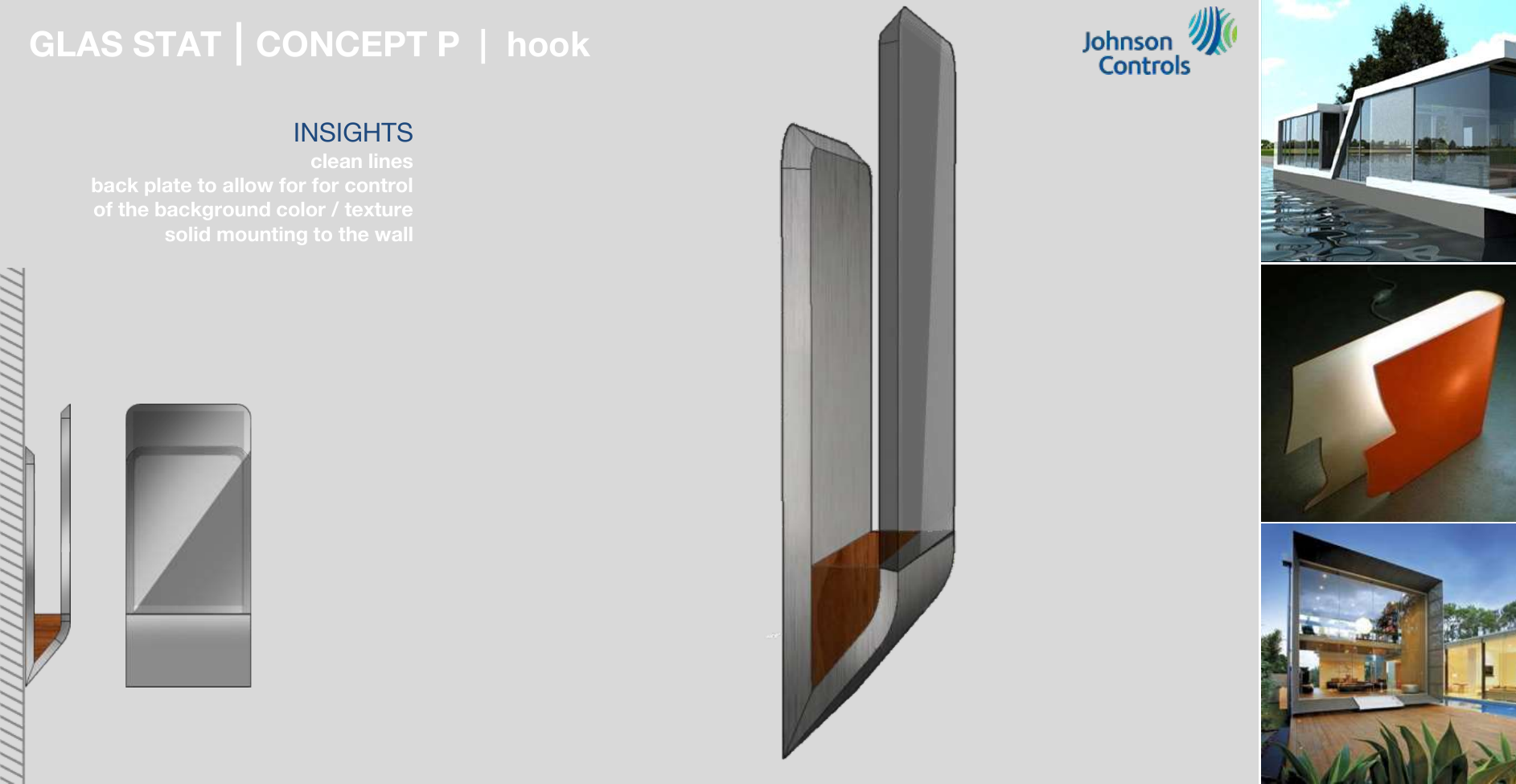
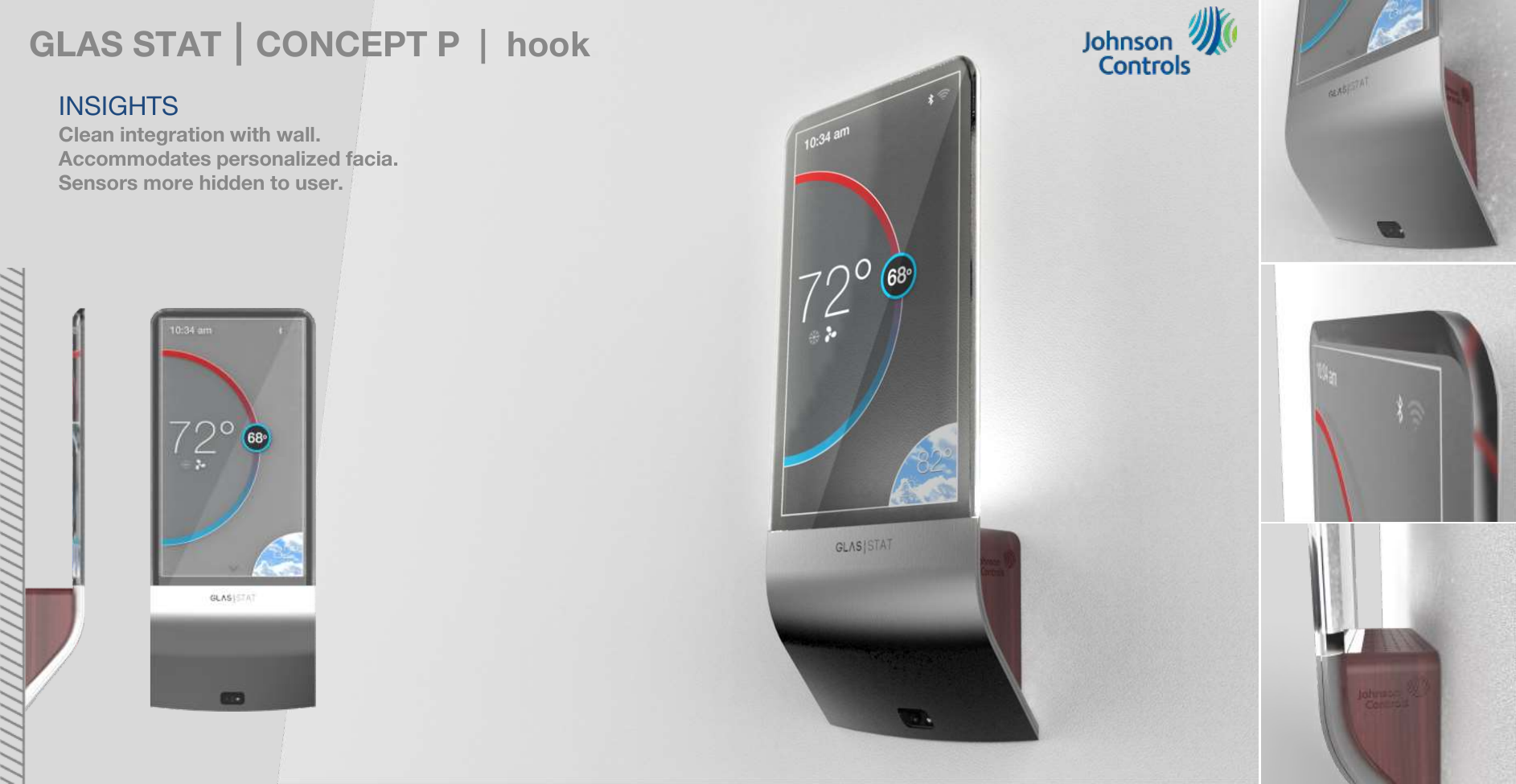
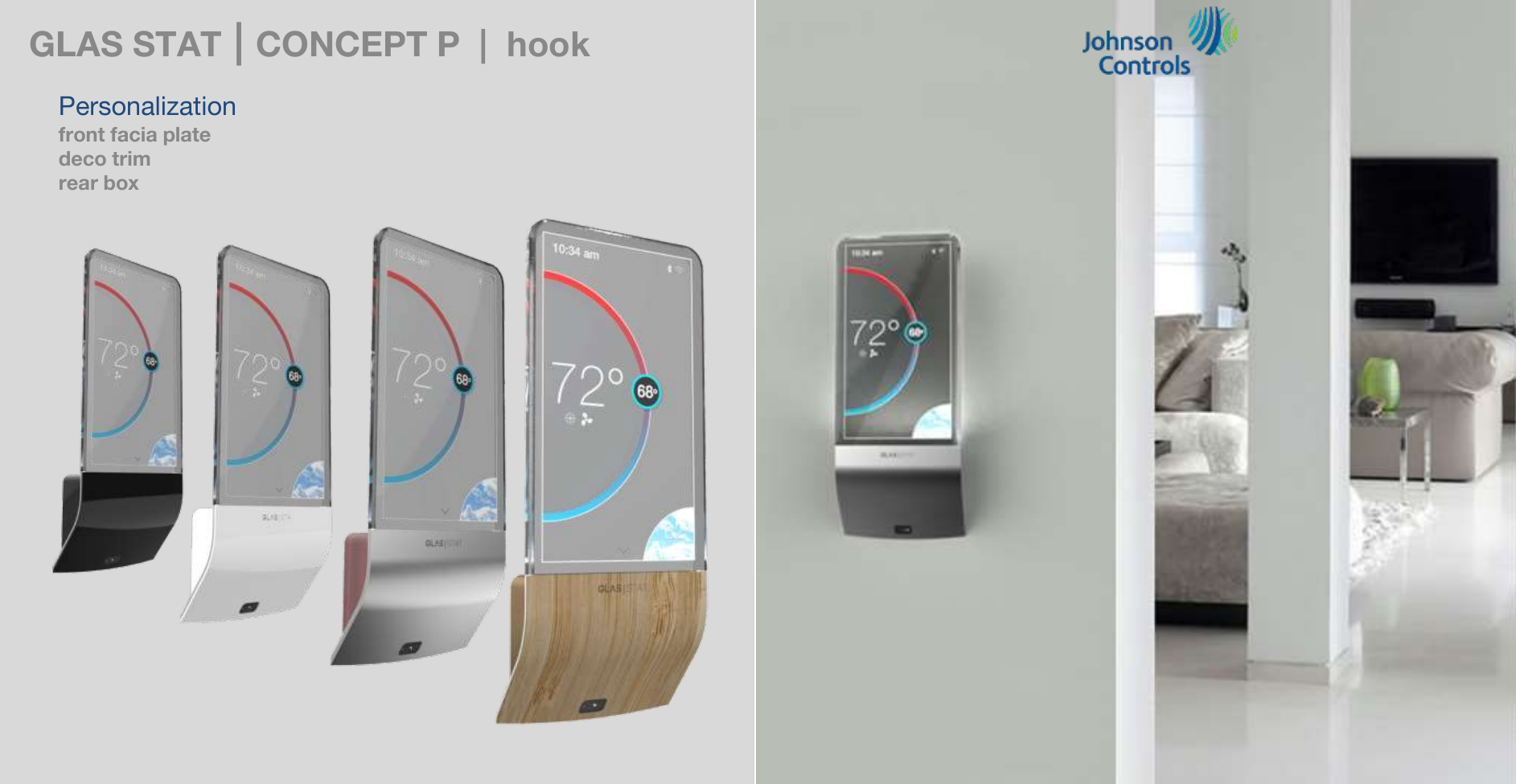
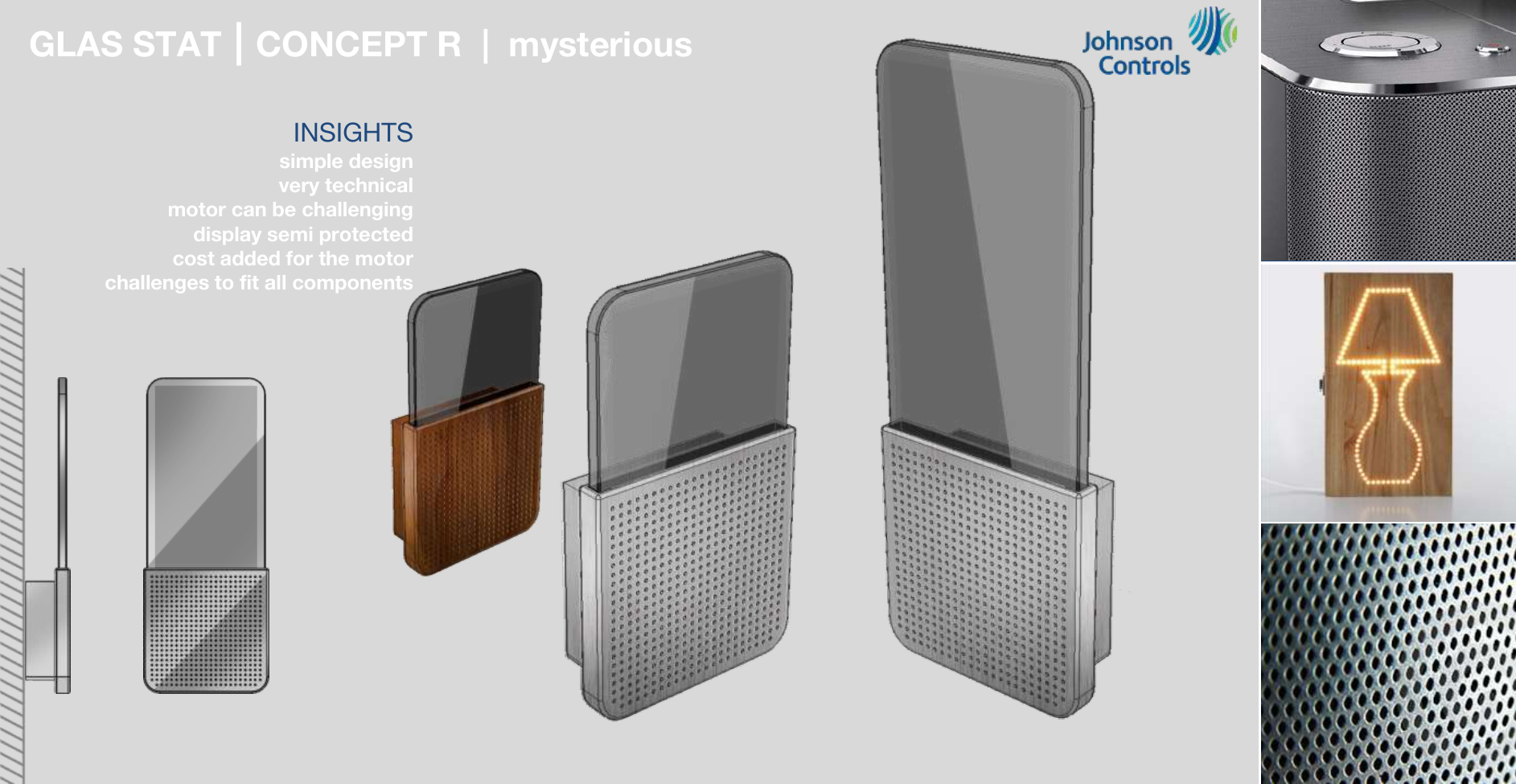
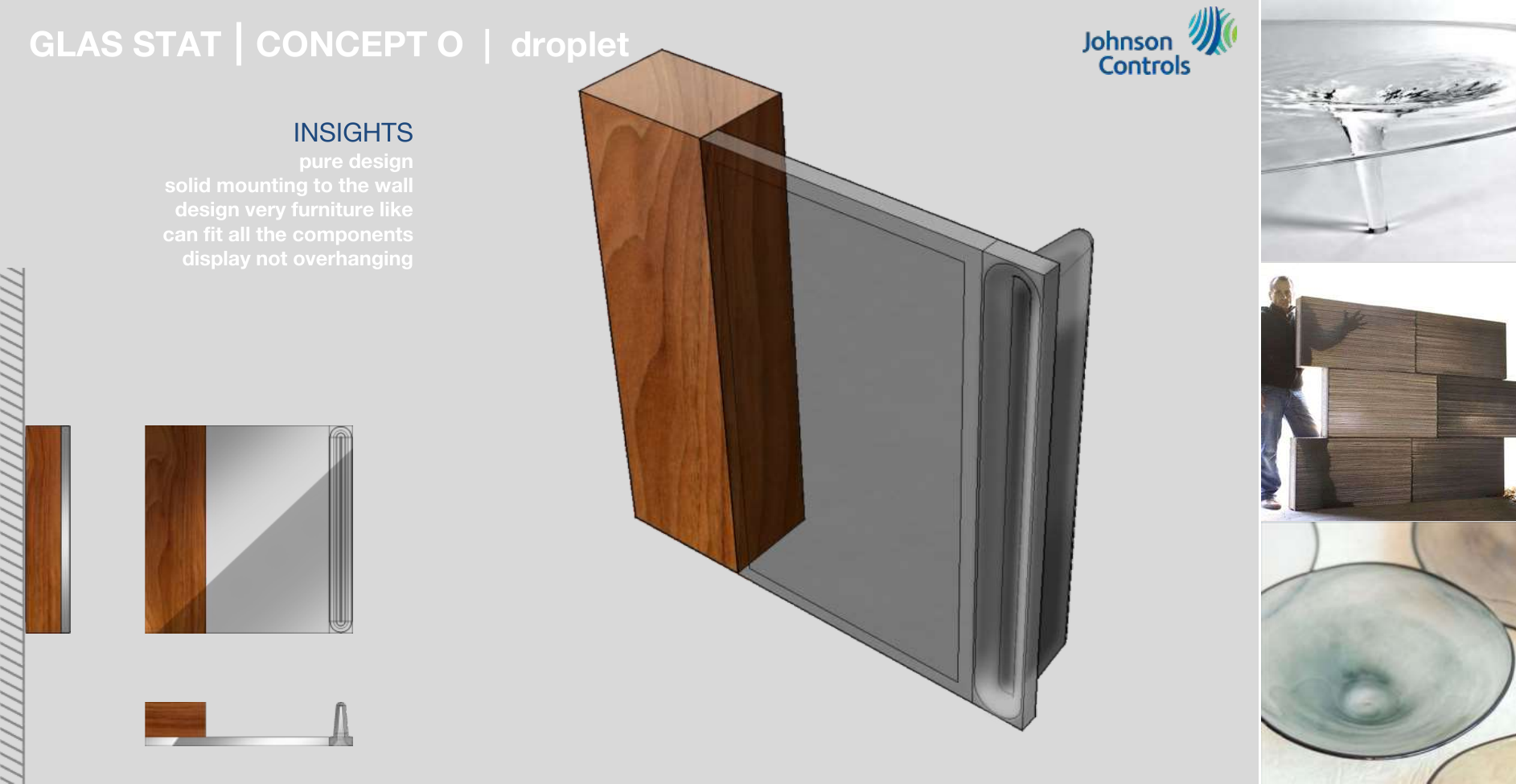
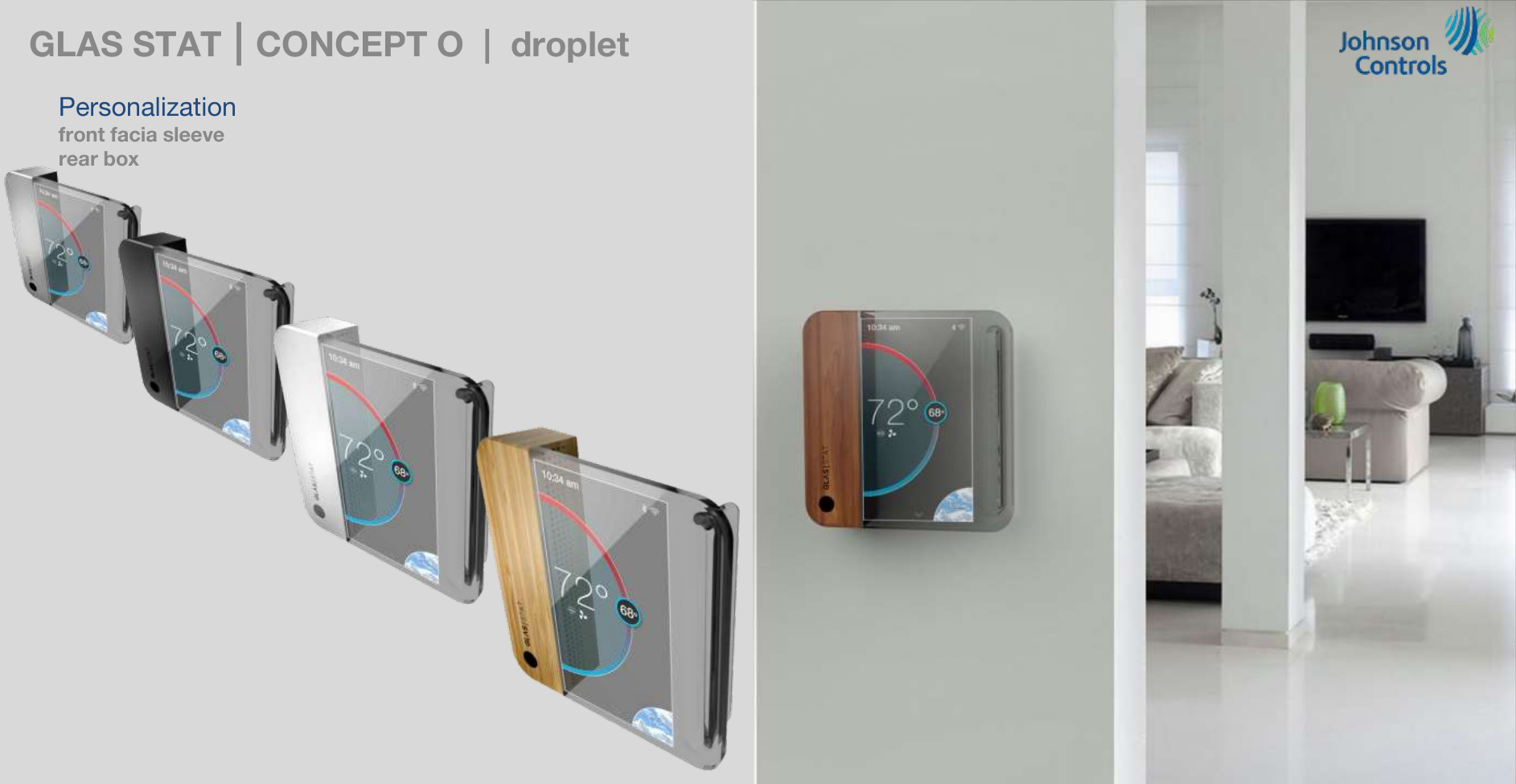
With the field narrowed, the team developed each shortlisted direction in depth with JCI, pressure-testing form, personalization, sensor placement and exactly how every concept would mount and read on a wall.
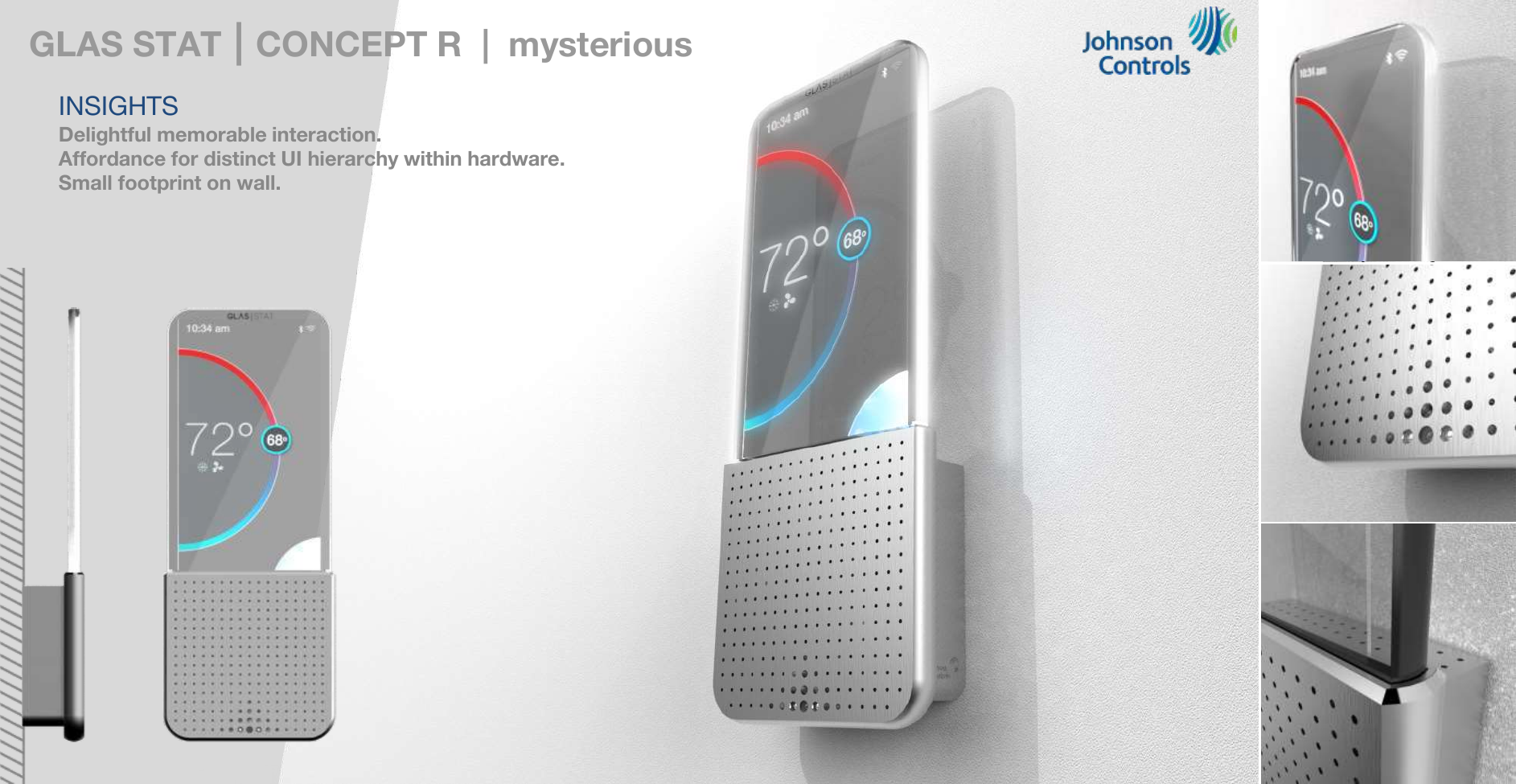
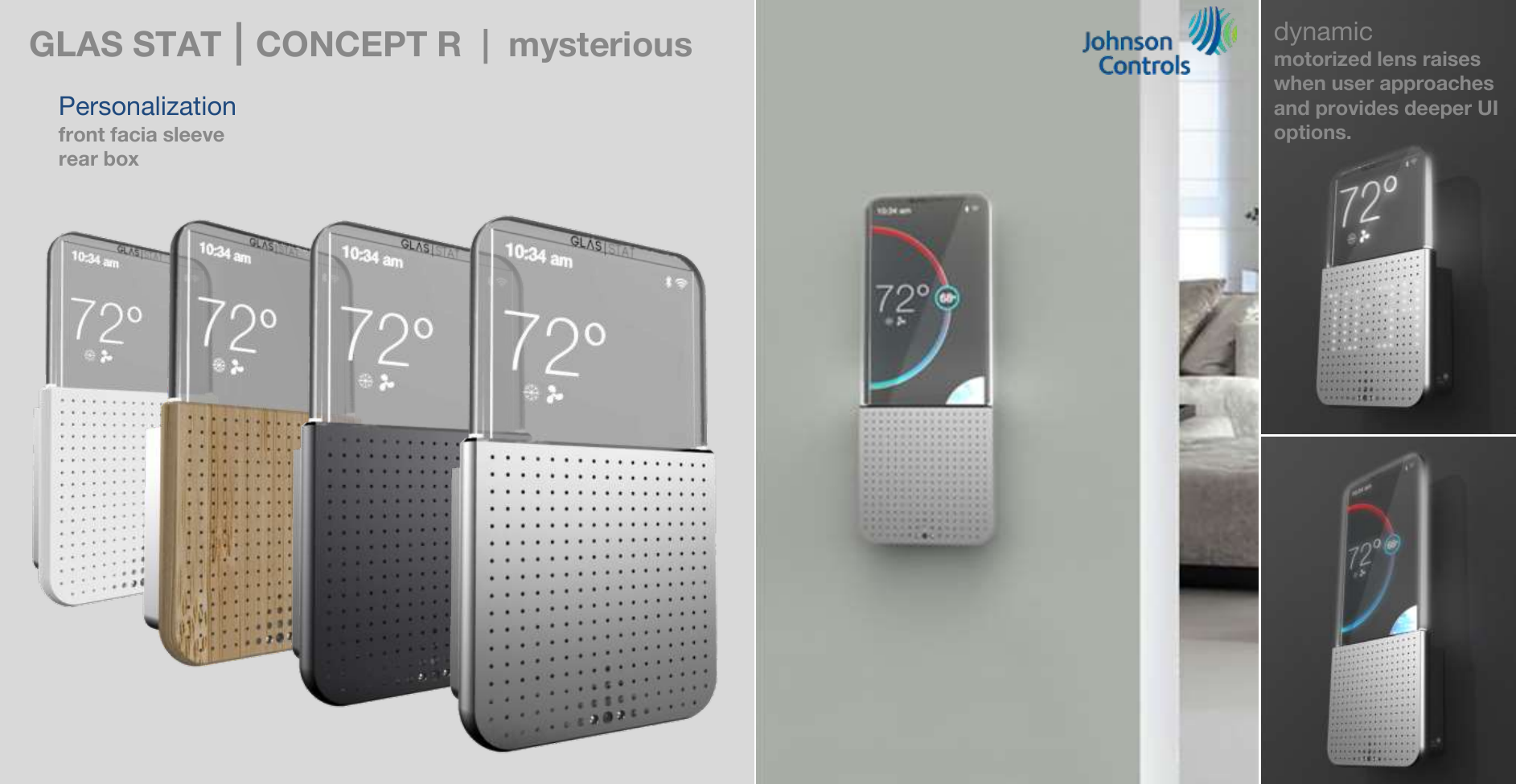
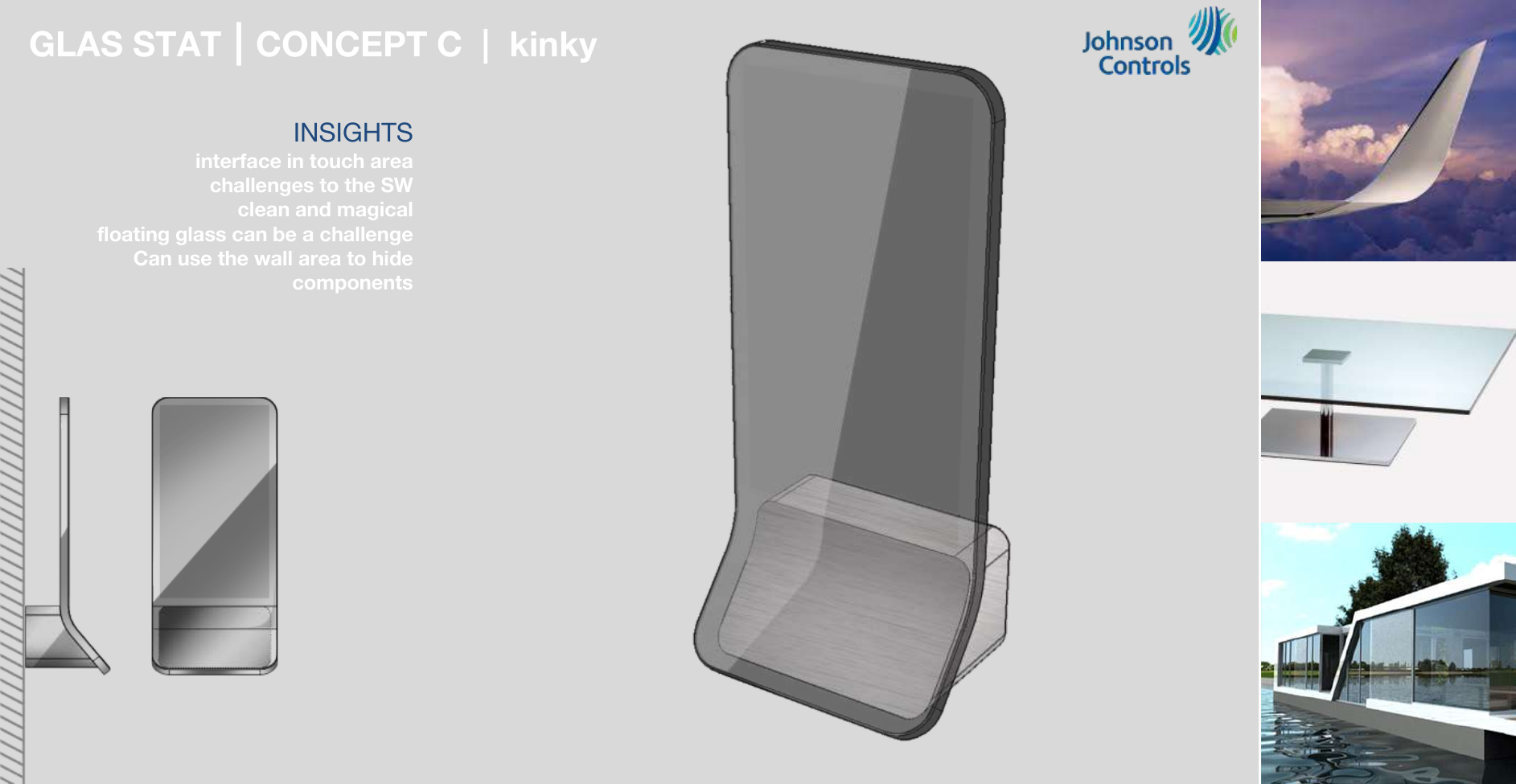
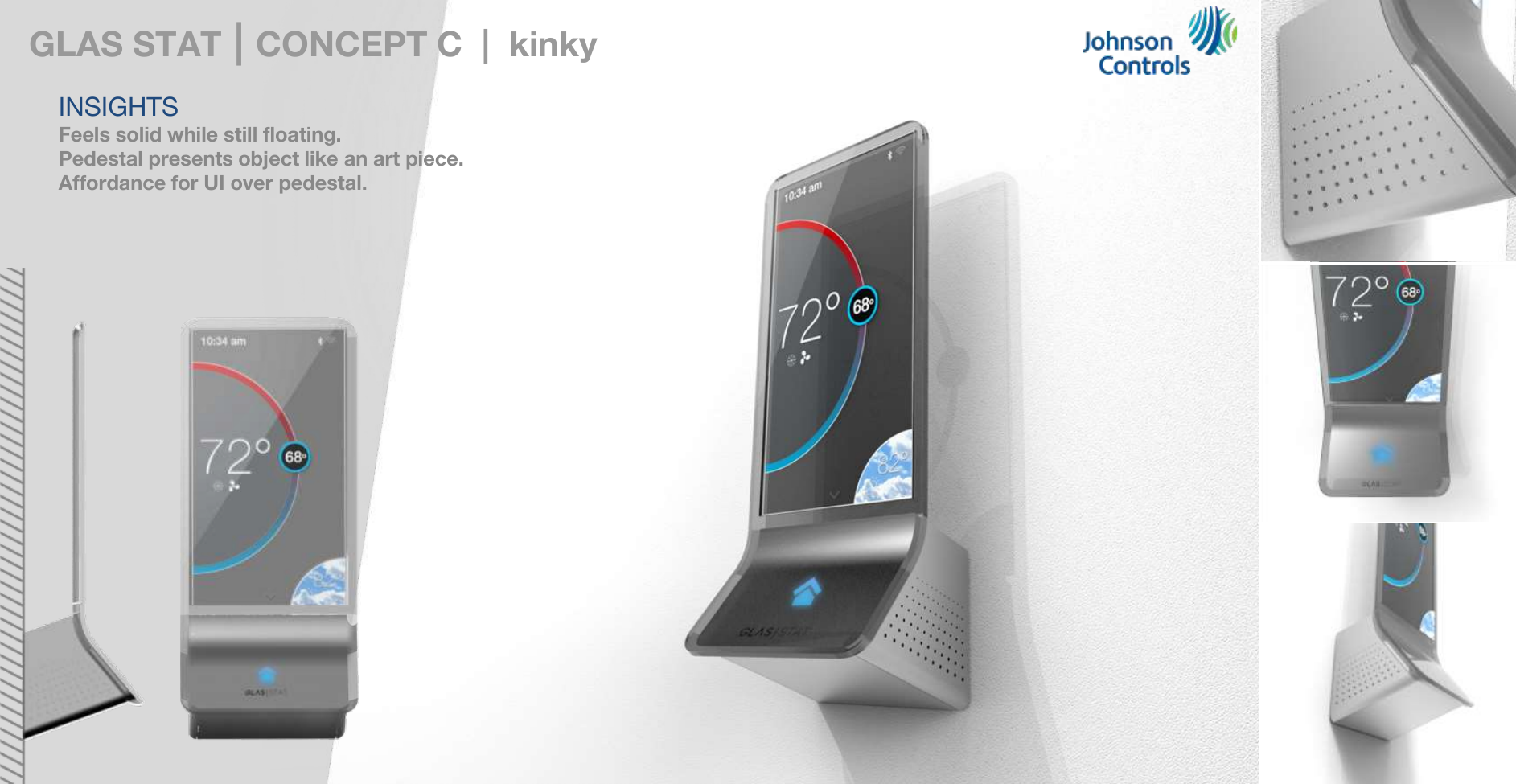
The Deep-Dive Finalists
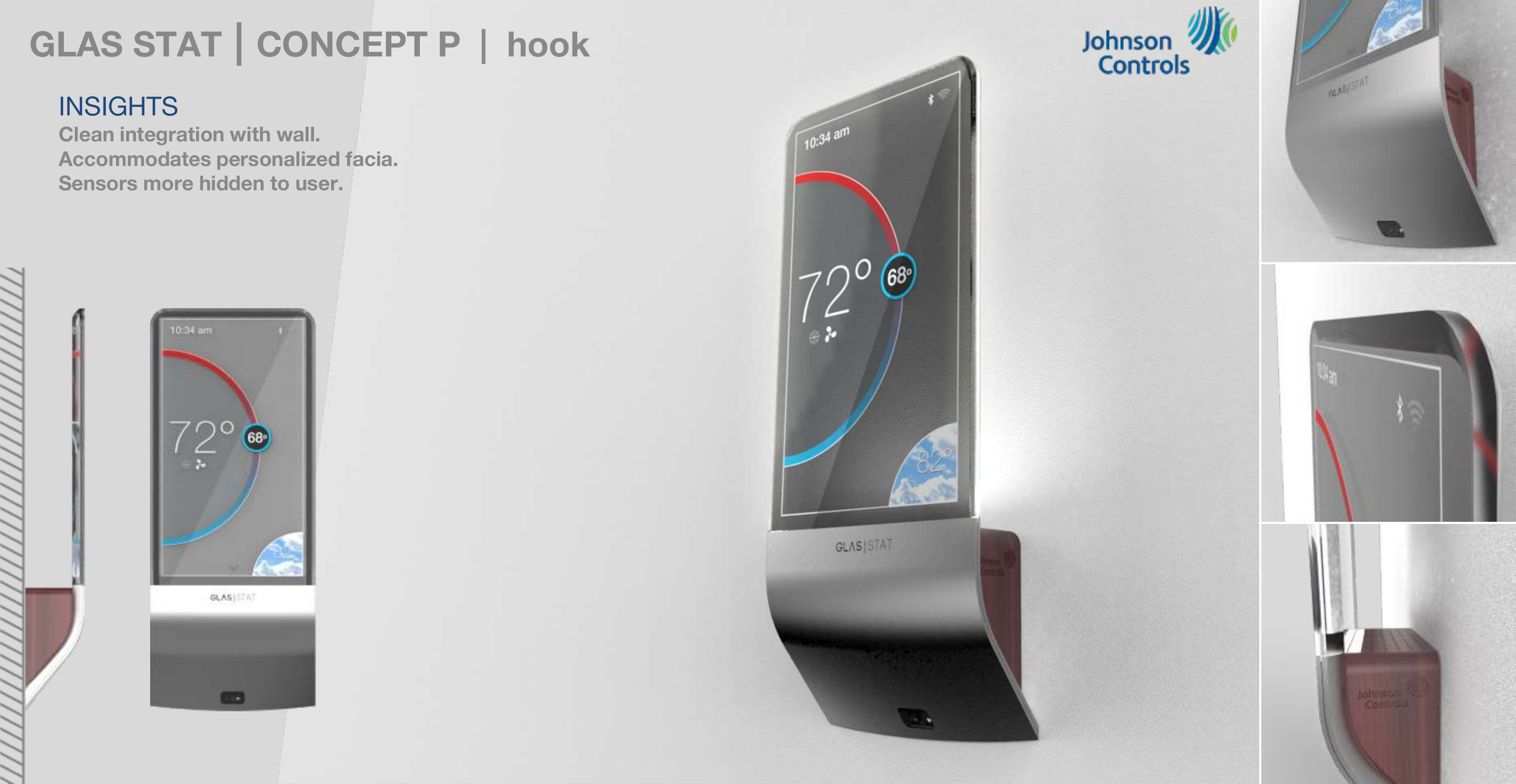
Concept P
Hook
Clean wall integration with swappable facia and sensors hidden from the user. Chosen: this resolved, wall-mounted form became the production direction for GLAS.
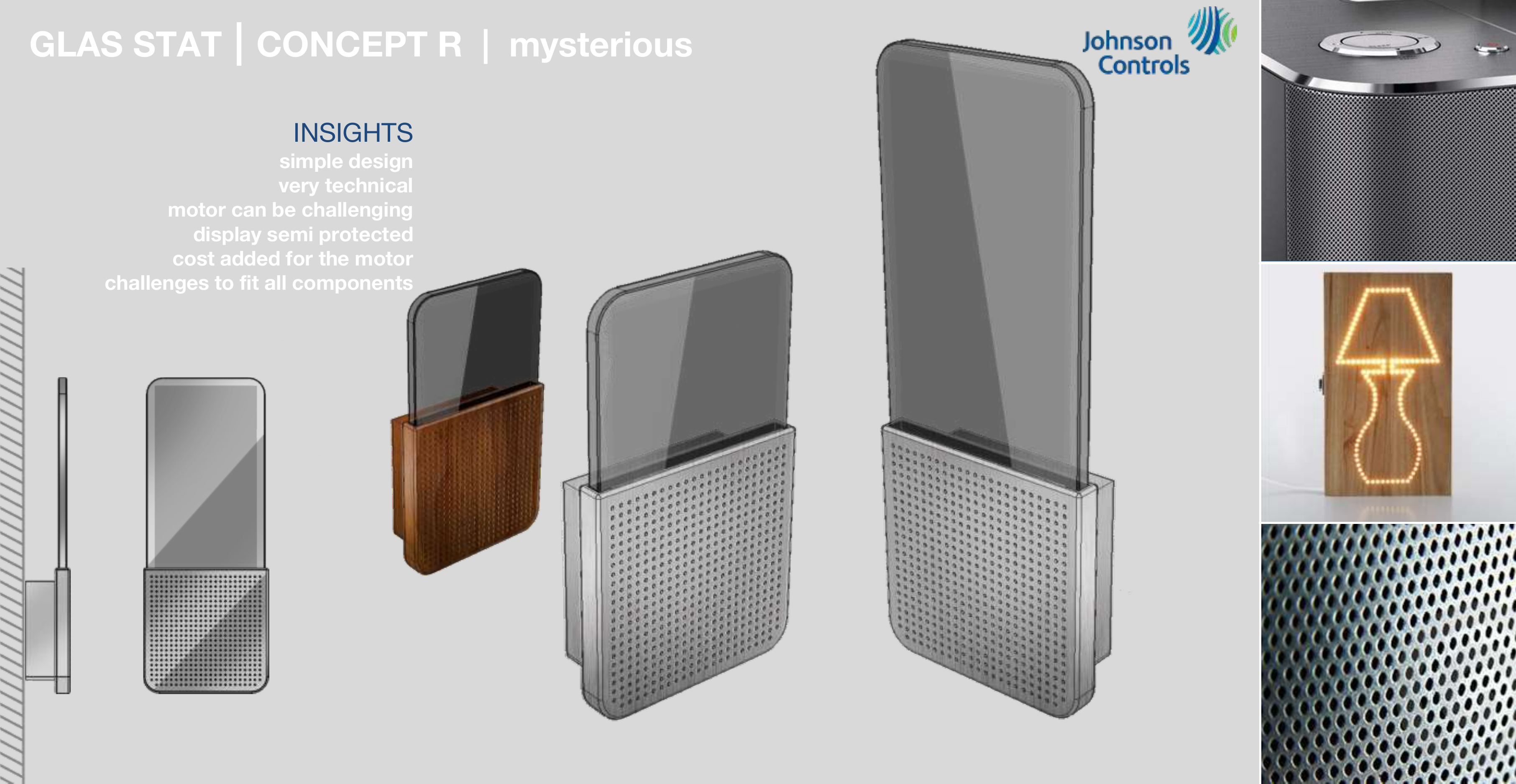
Concept R
Mysterious
A motorized lens that rises as you approach to reveal deeper UI. Killed: delightful, but the motor added cost, complexity and a reliability risk the product didn't need.
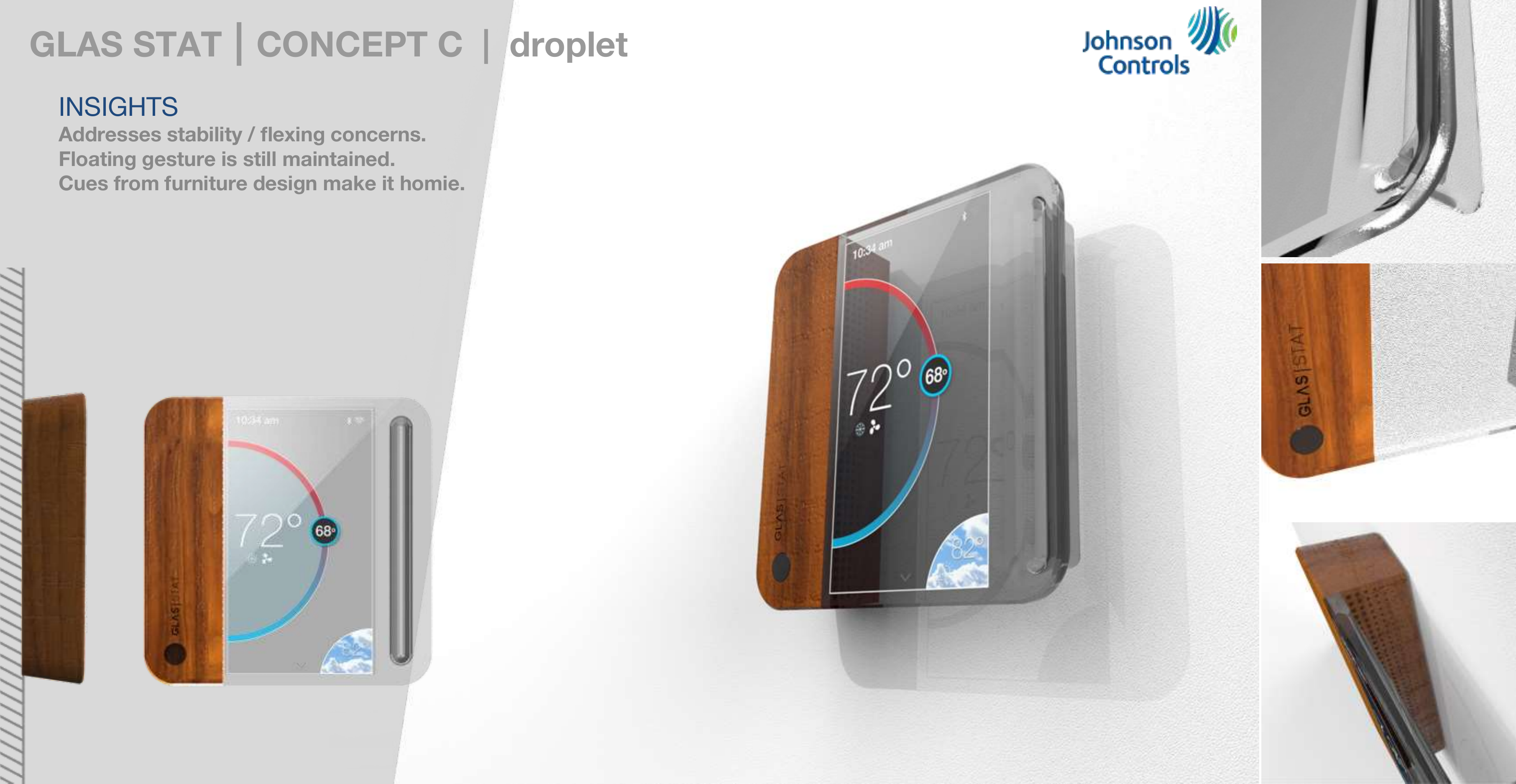
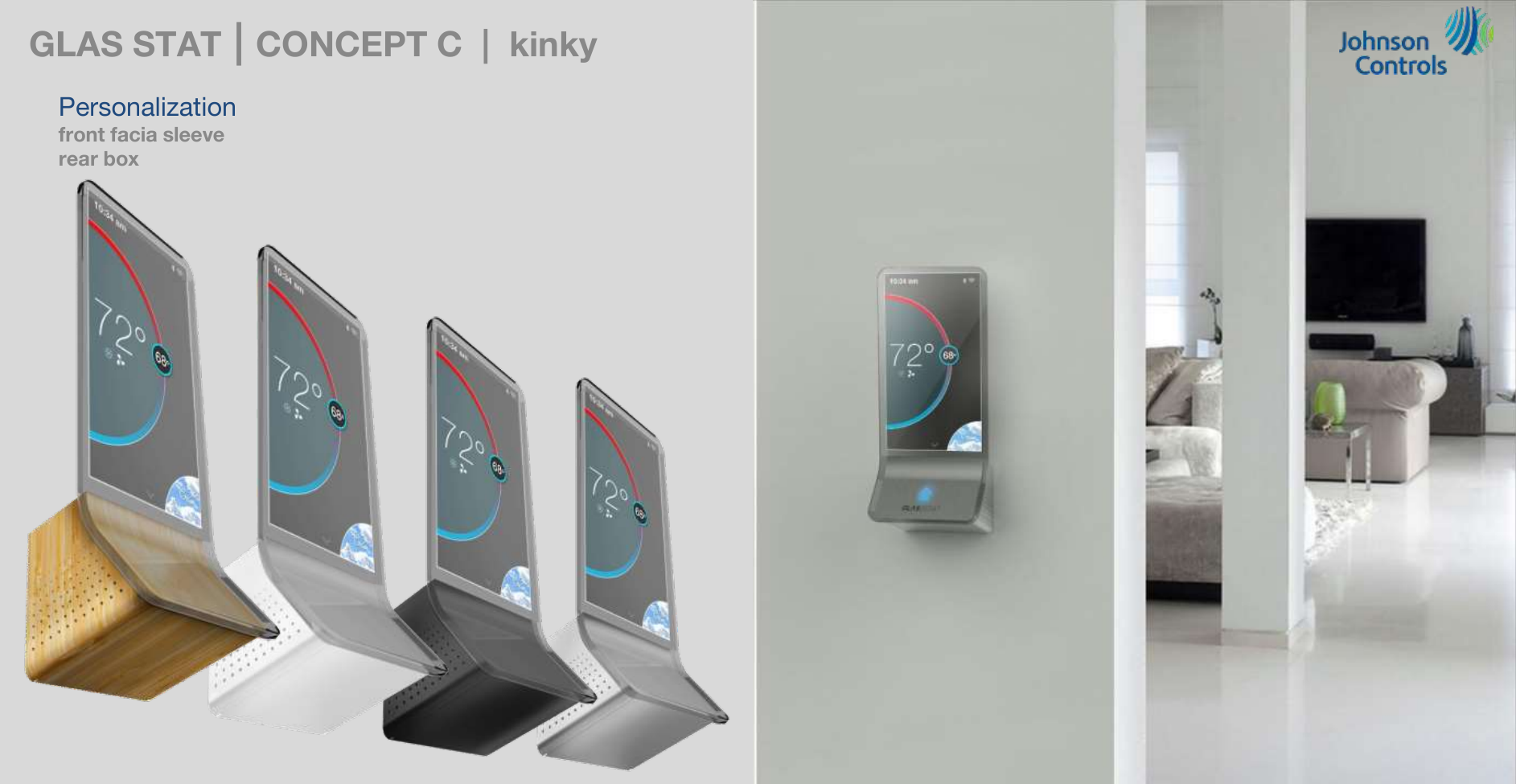
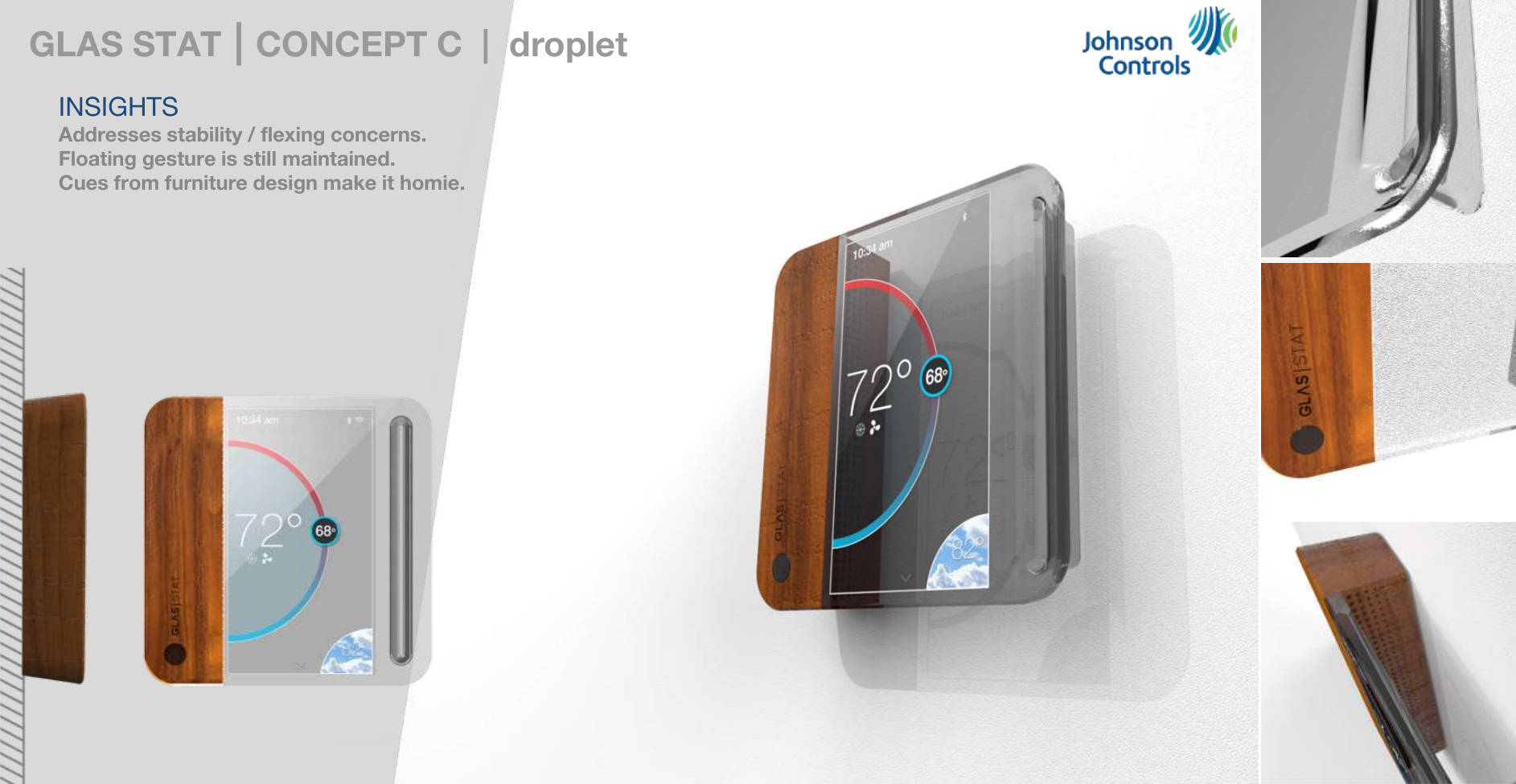
Concept C
Droplet
A floating form with furniture cues for warmth that resolved earlier stability and flexing concerns. Set aside: a close contender, but the hook direction integrated more cleanly with the wall.
Form Factor · choosing landscape
Portrait or
landscape.
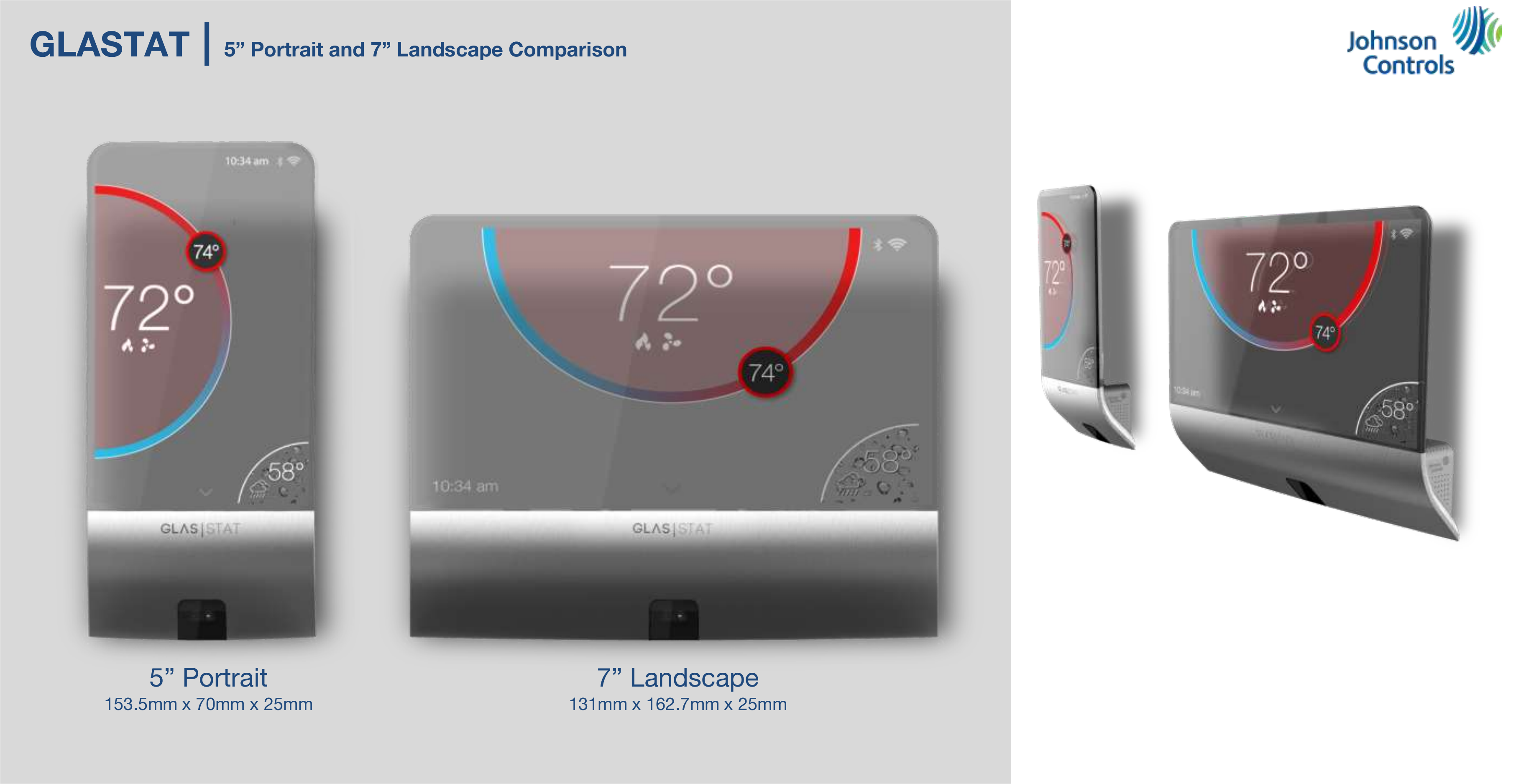
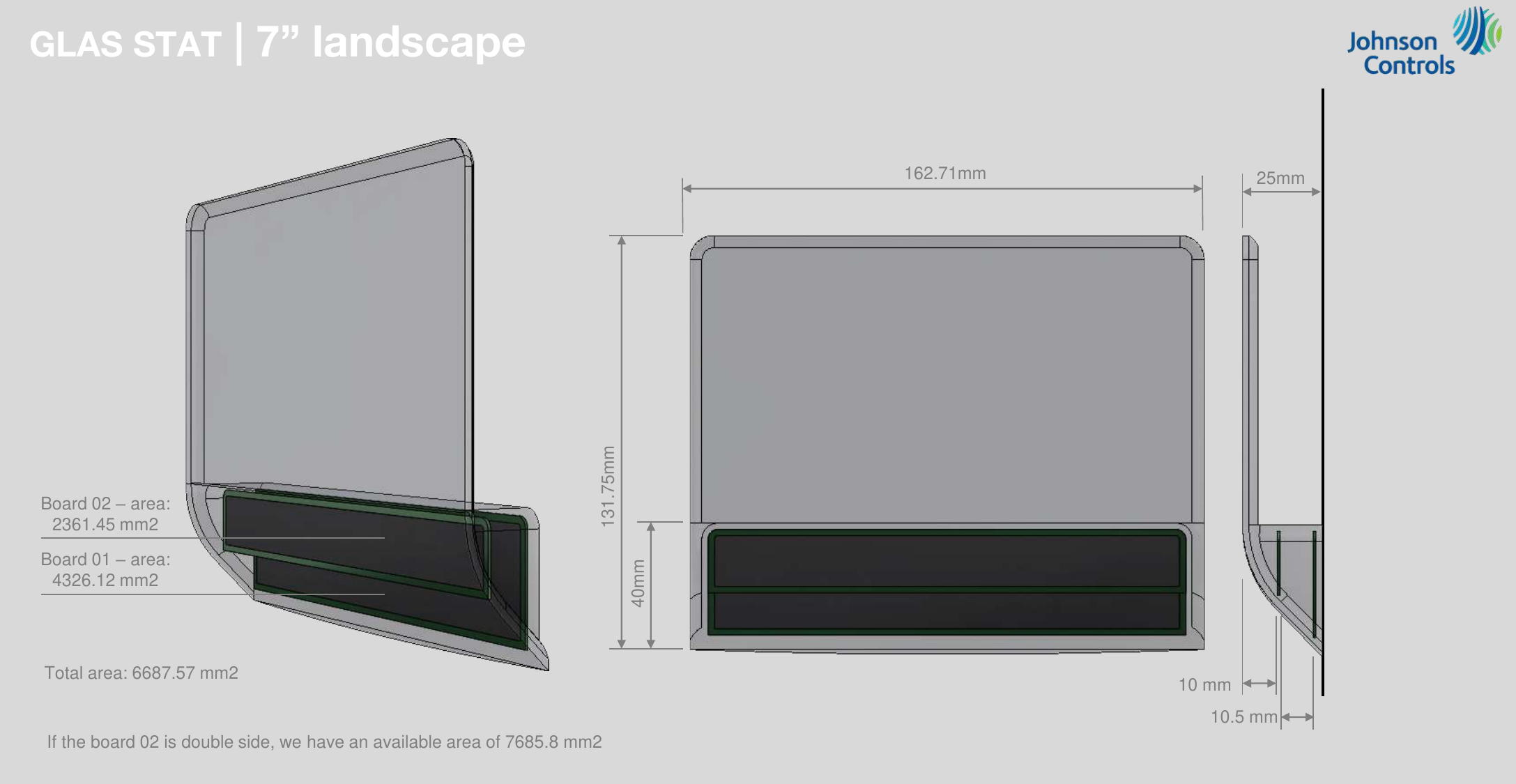
With Concept P (hook) selected, the last open question was screen format. We compared a 5-inch portrait against a 7-inch landscape, weighing glanceability, on-wall proportion and how the interface reads at a distance, and chose landscape for the production device.
Cross-Functional Development
Interface meets
invisible hardware.
Execution meant aligning a software experience with one hard physical constraint: frameless glass. I directed the on-glass UI and worked with Johnson Controls engineering on display, touch and HVAC integration, so neither side broke the illusion.
Interaction Model
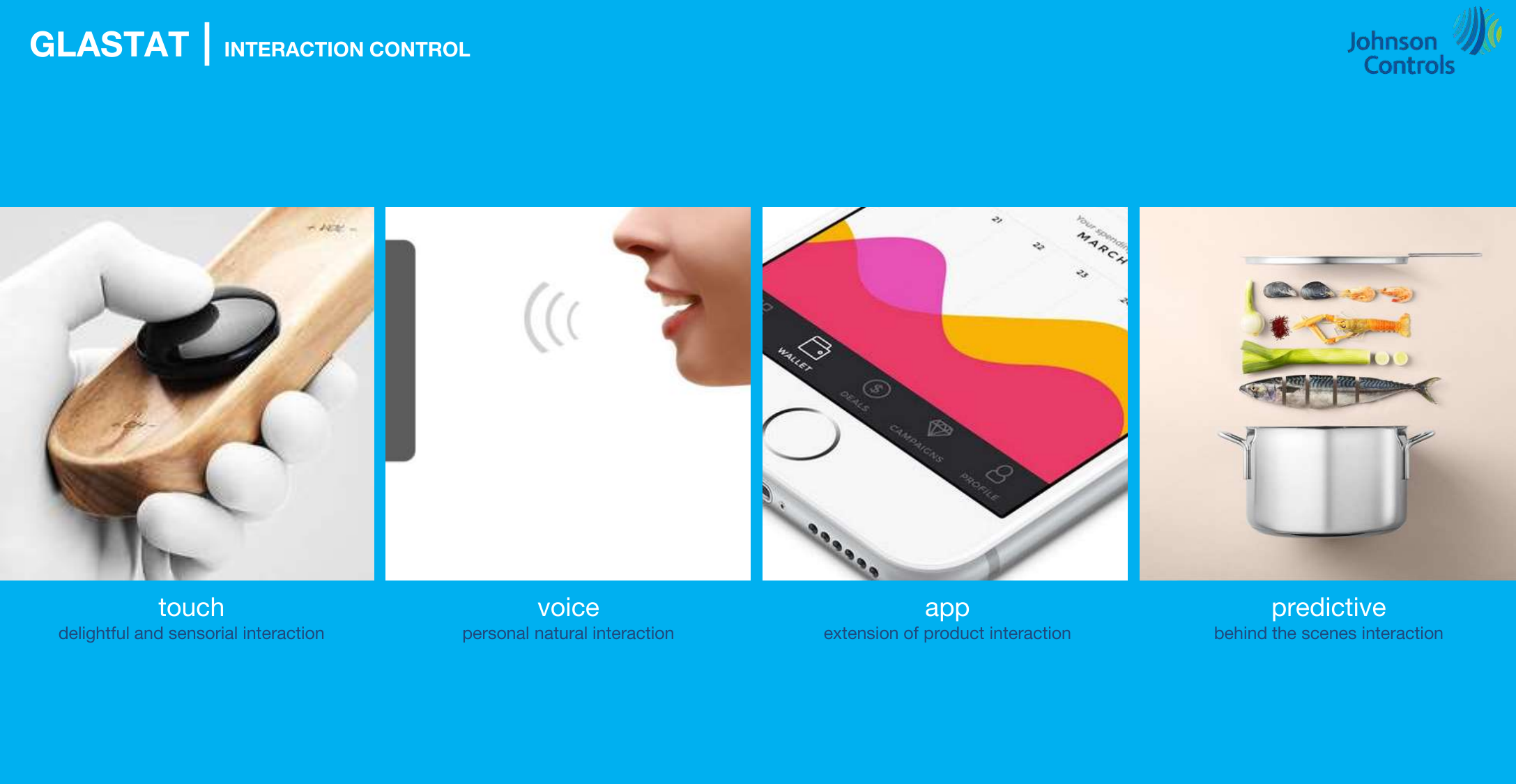
Design Language
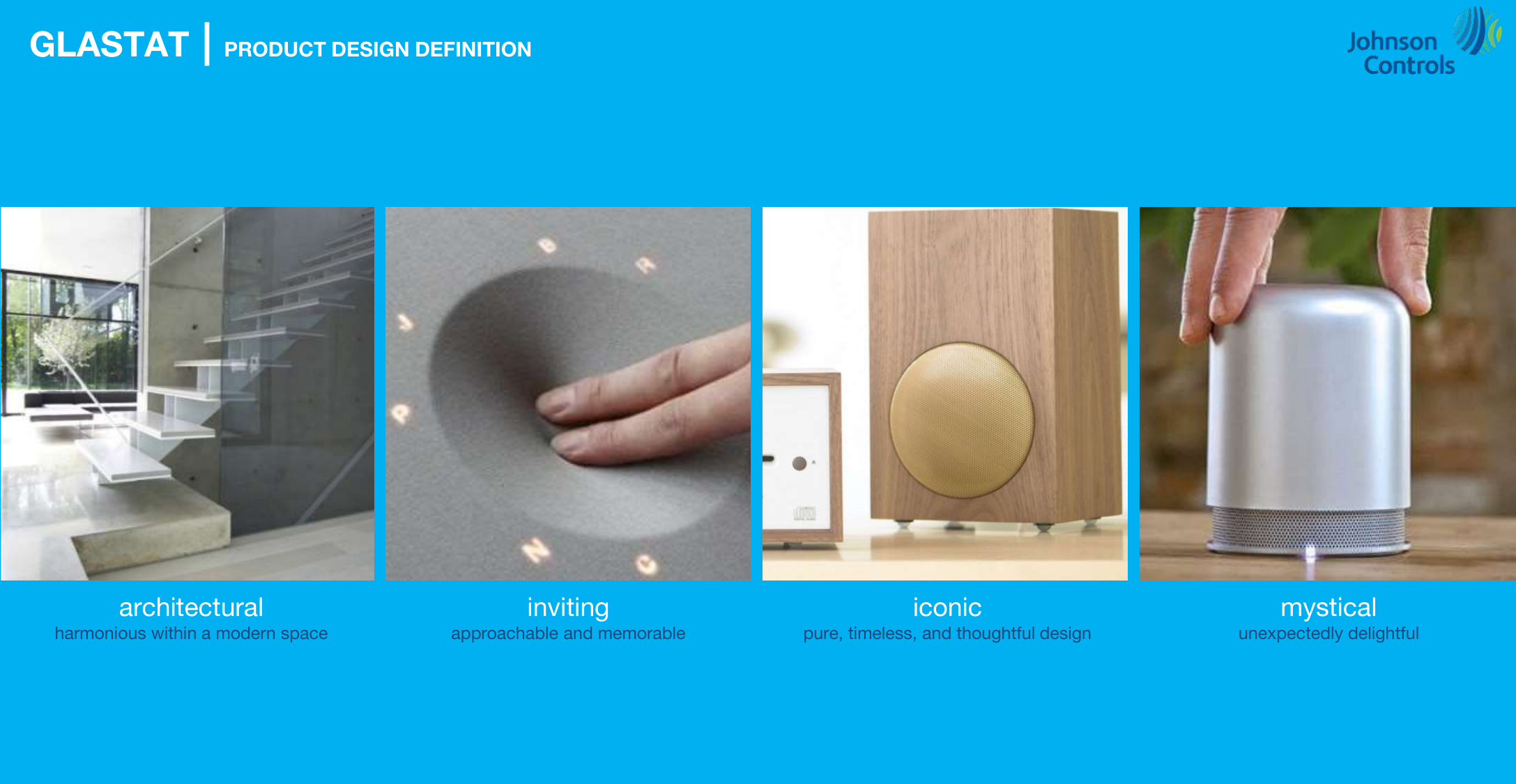
Interface · UX
An assistant behind glass
Built on Windows IoT with a Cortana assistant, GLAS was one of the first thermostats with a native AI. The on-glass UI shows only what's needed, temperature, weather, schedule, then fades back to clear glass.
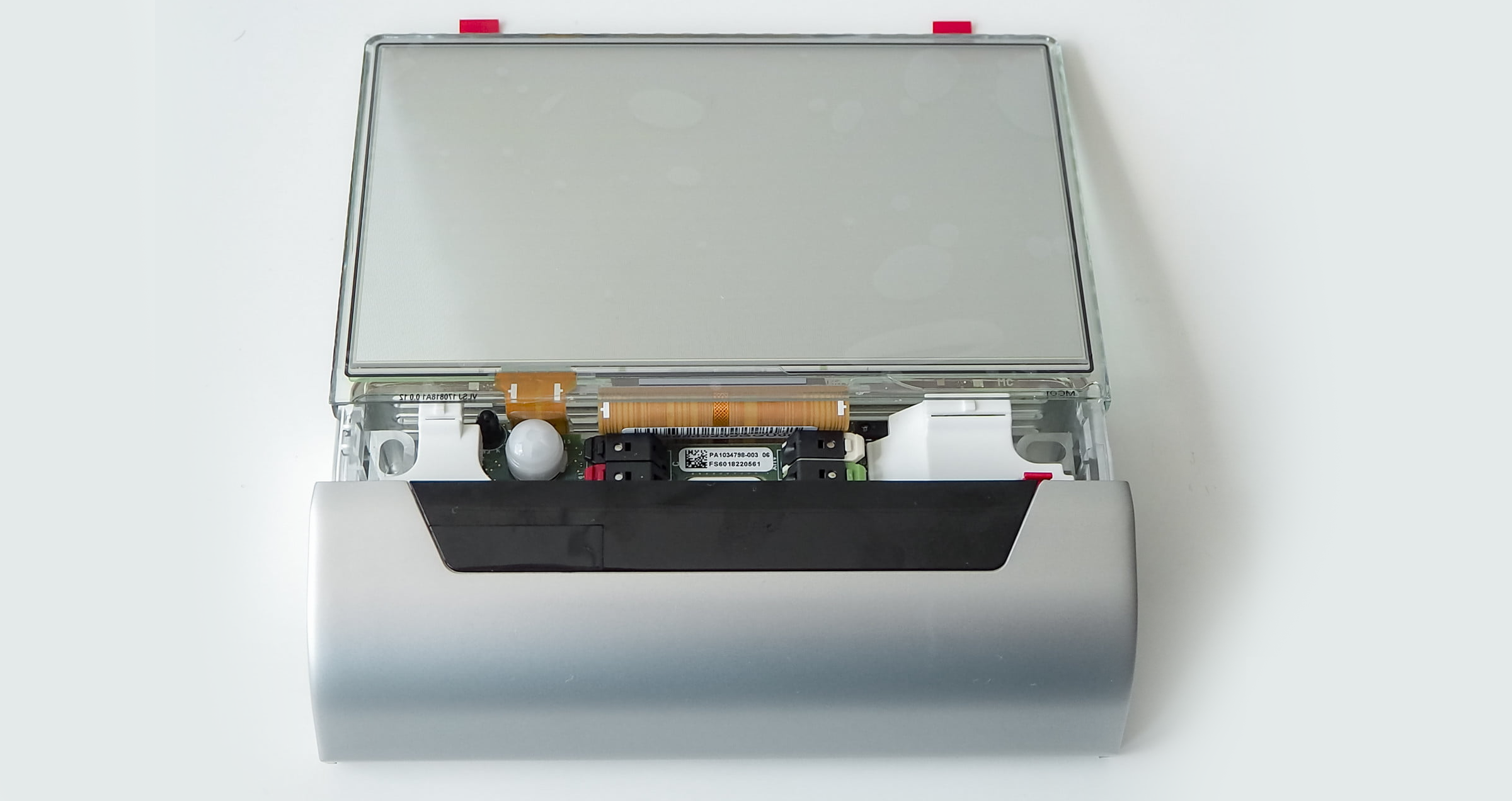
Hardware · Engineering
A frameless illusion
Concealed the display, capacitive touch layer, sensors and wiring behind a single pane, and aligned the design with Johnson Controls' HVAC compatibility and certification so it could actually run a home.
Early CMF for Appearance Model
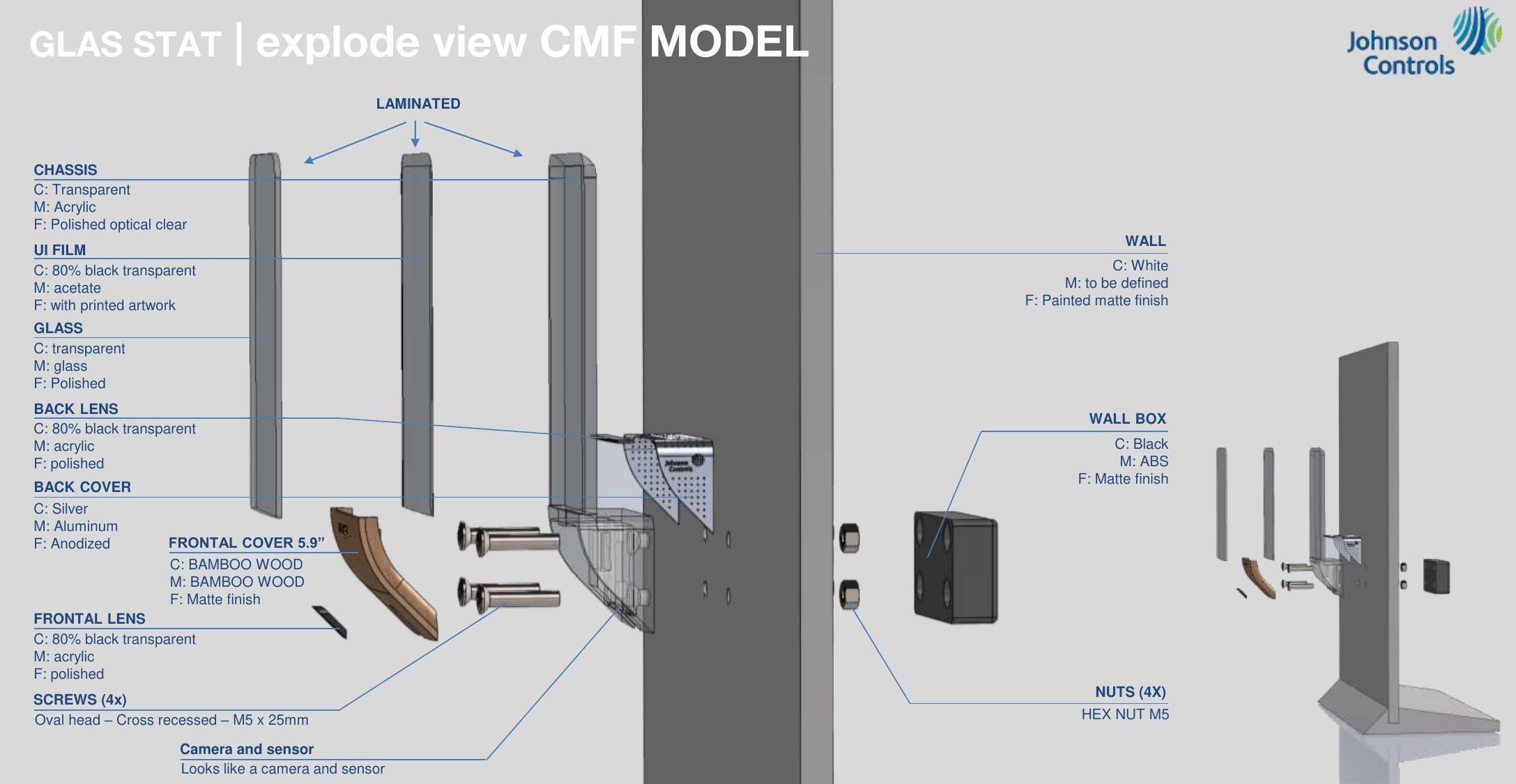
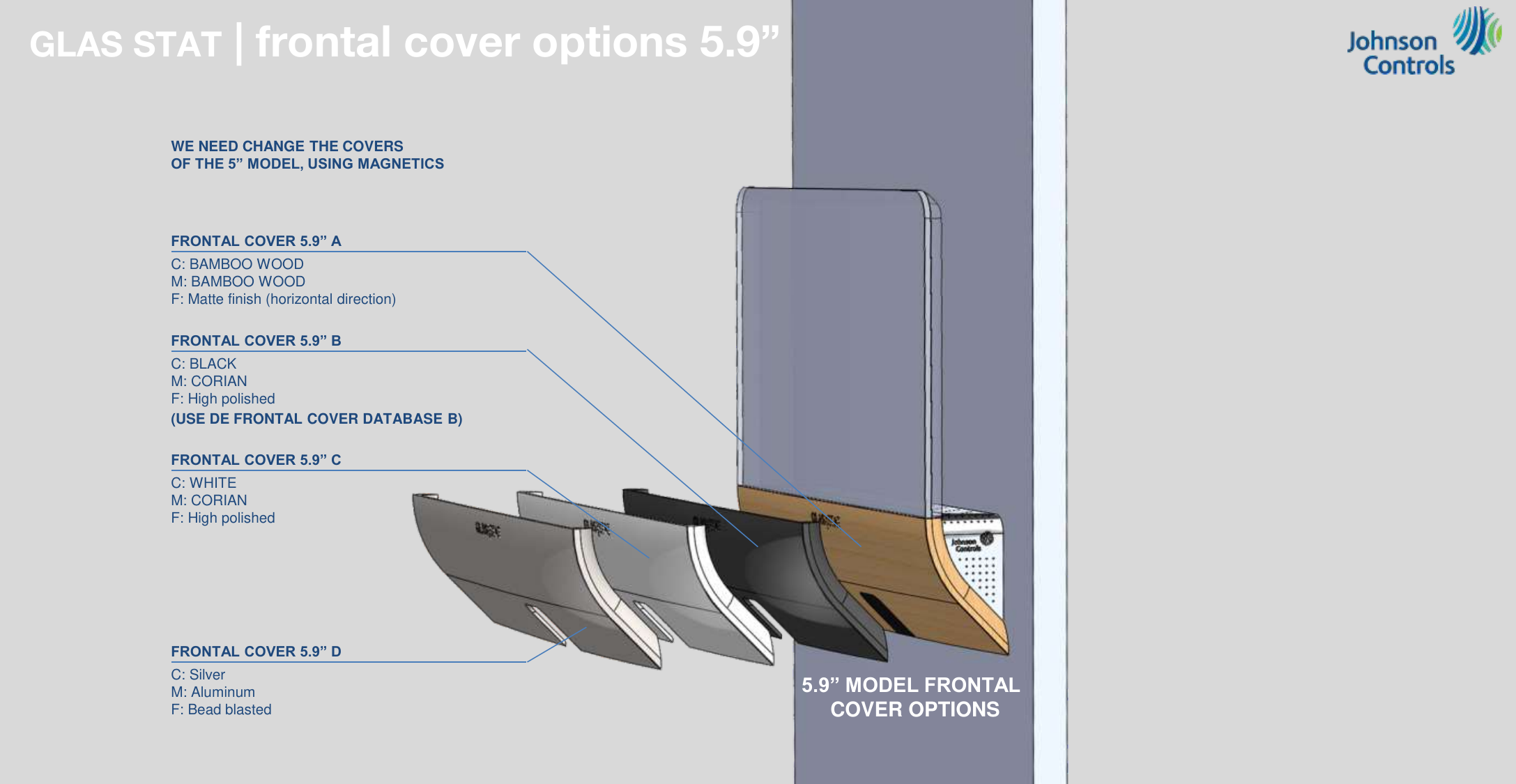
Every layer specified: laminated transparent acrylic chassis, printed UI film, polished glass, anodized aluminum back cover and a bamboo or Corian frontal cover, all stacked to keep the pane reading as a single frameless object.
Exploration on Swappable Frontal Covers
Board Packaging · fitting electronics behind glass
Prototyping & Human Factors
Legible from
across the room.
Physical prototyping validated that a transparent device could still work as an instrument. Each call below protected legibility and trust.
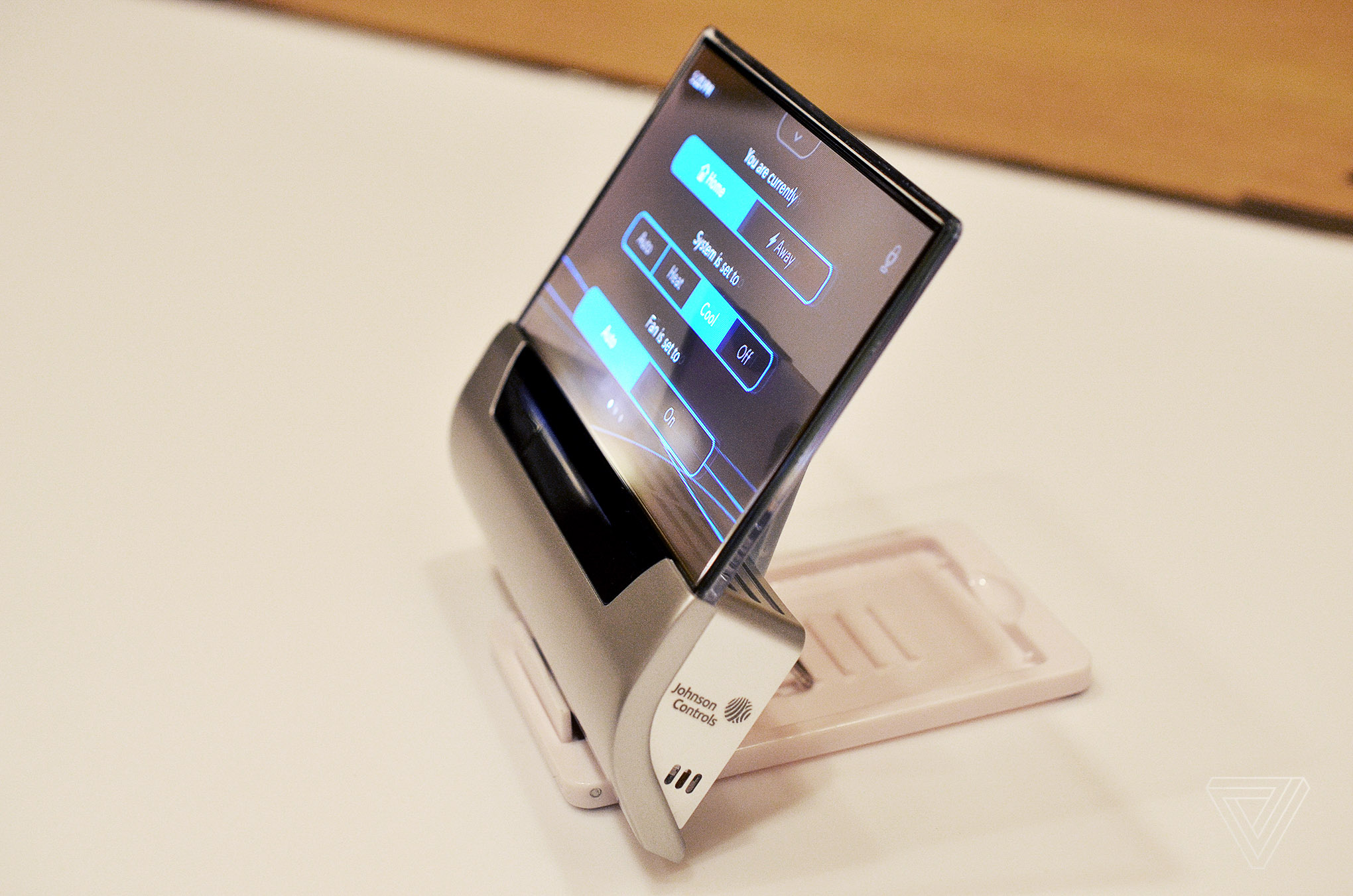
Glanceable at distance
Tuned display contrast and type so the reading is clear from across the room, not only up close.
Readable through glass
Validated the on-demand display against reflections and ambient light, so information stays legible on a transparent surface.
Touch you can trust
Placed and tested capacitive targets so control through glass feels deliberate, never accidental.
The Experience System
Four products
in one pane.
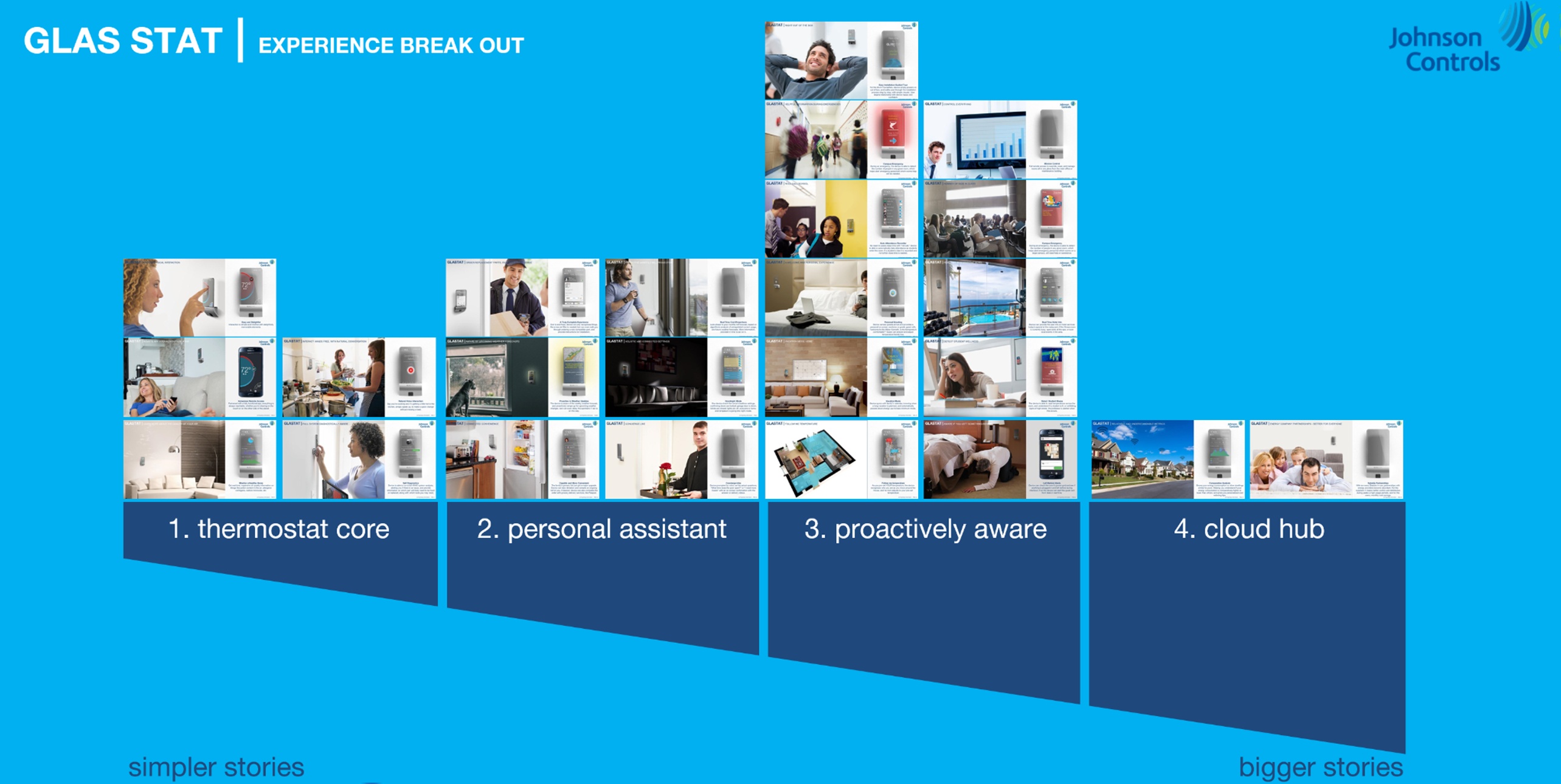
GLAS was scoped as four expanding experiences, from a better thermostat to a whole-home cloud hub. The work wasn't only the object; it was defining the system of moments the device could own, and editing them from simpler stories to bigger ones.
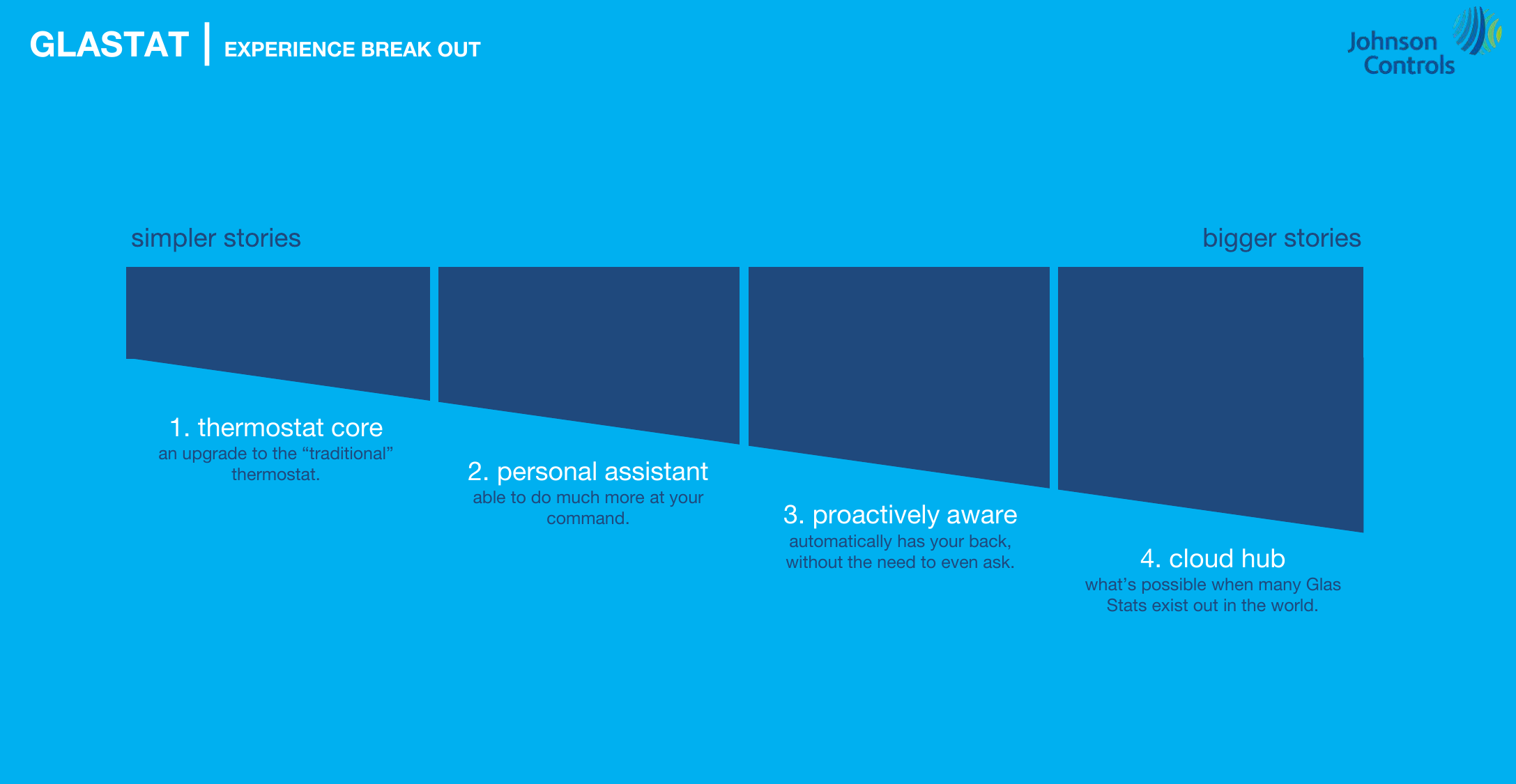
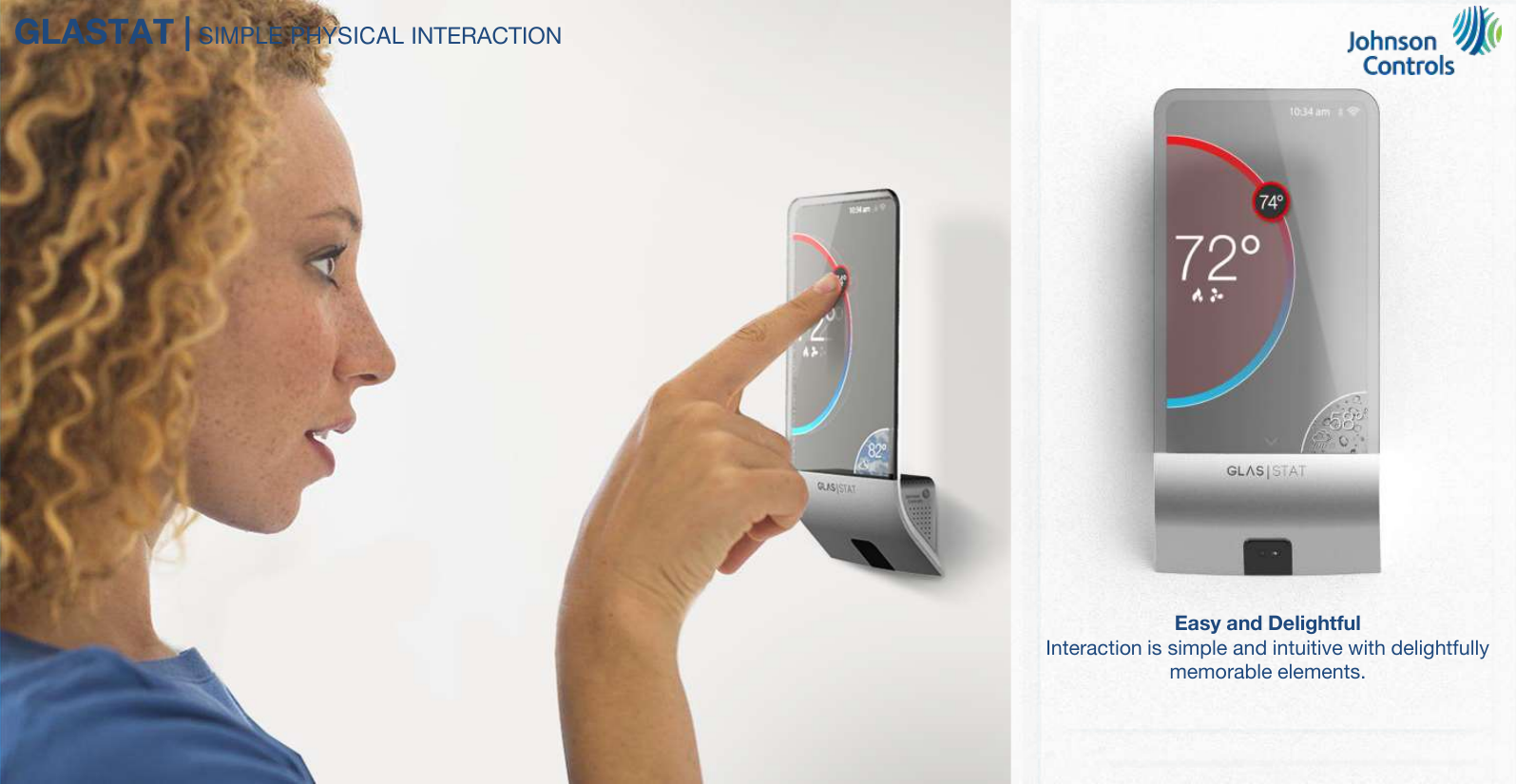
01 · Thermostat Core · an upgrade to the traditional thermostat
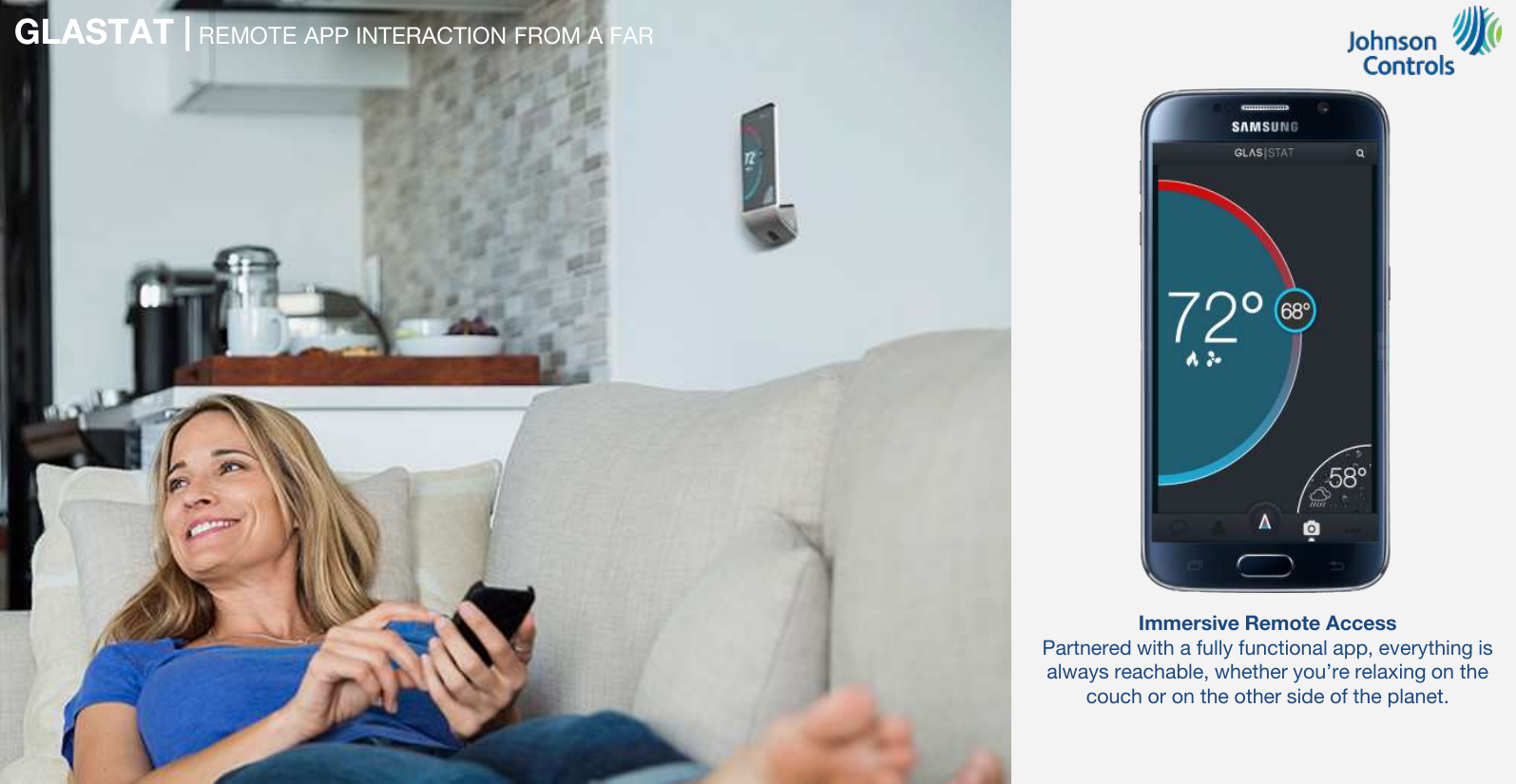
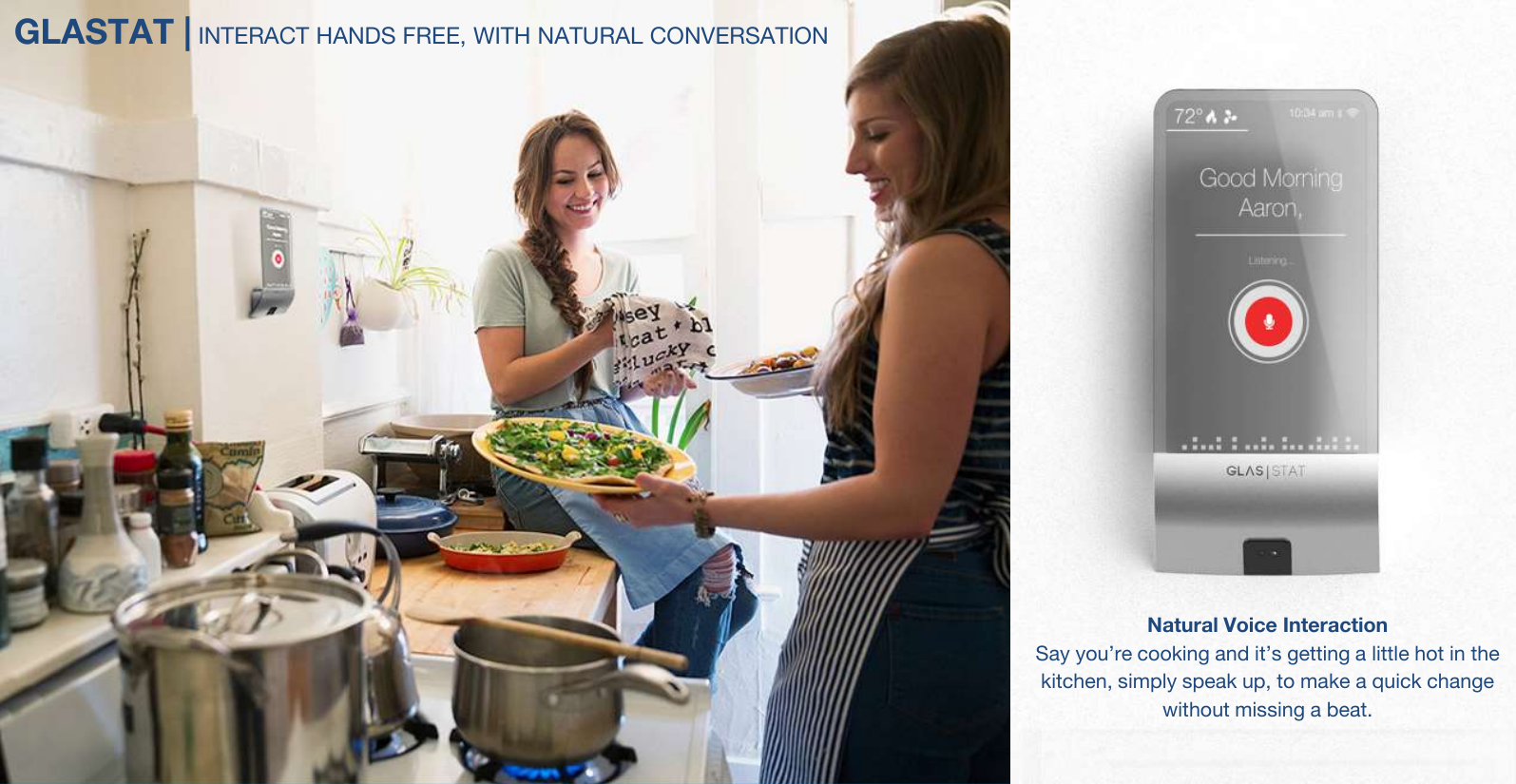
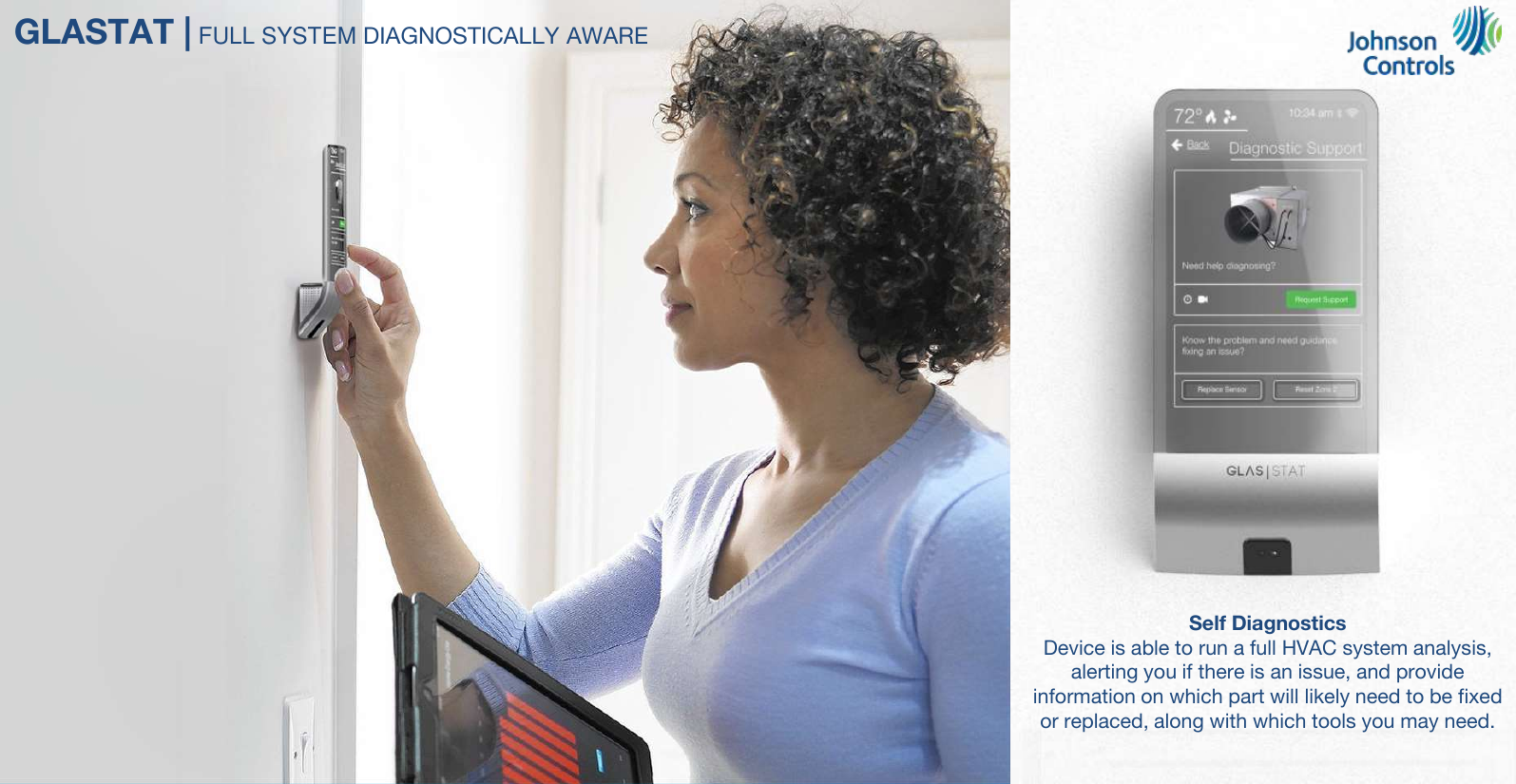
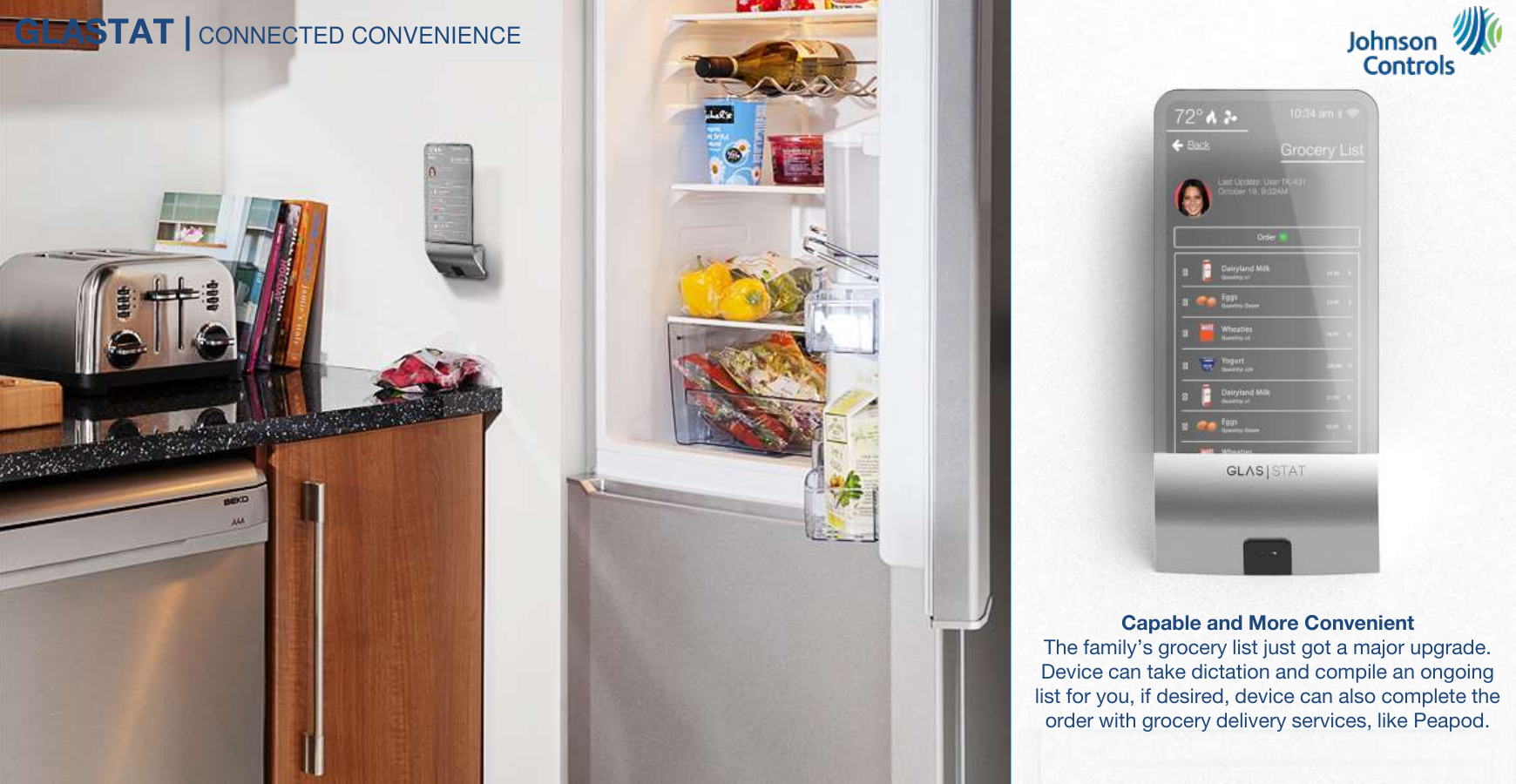
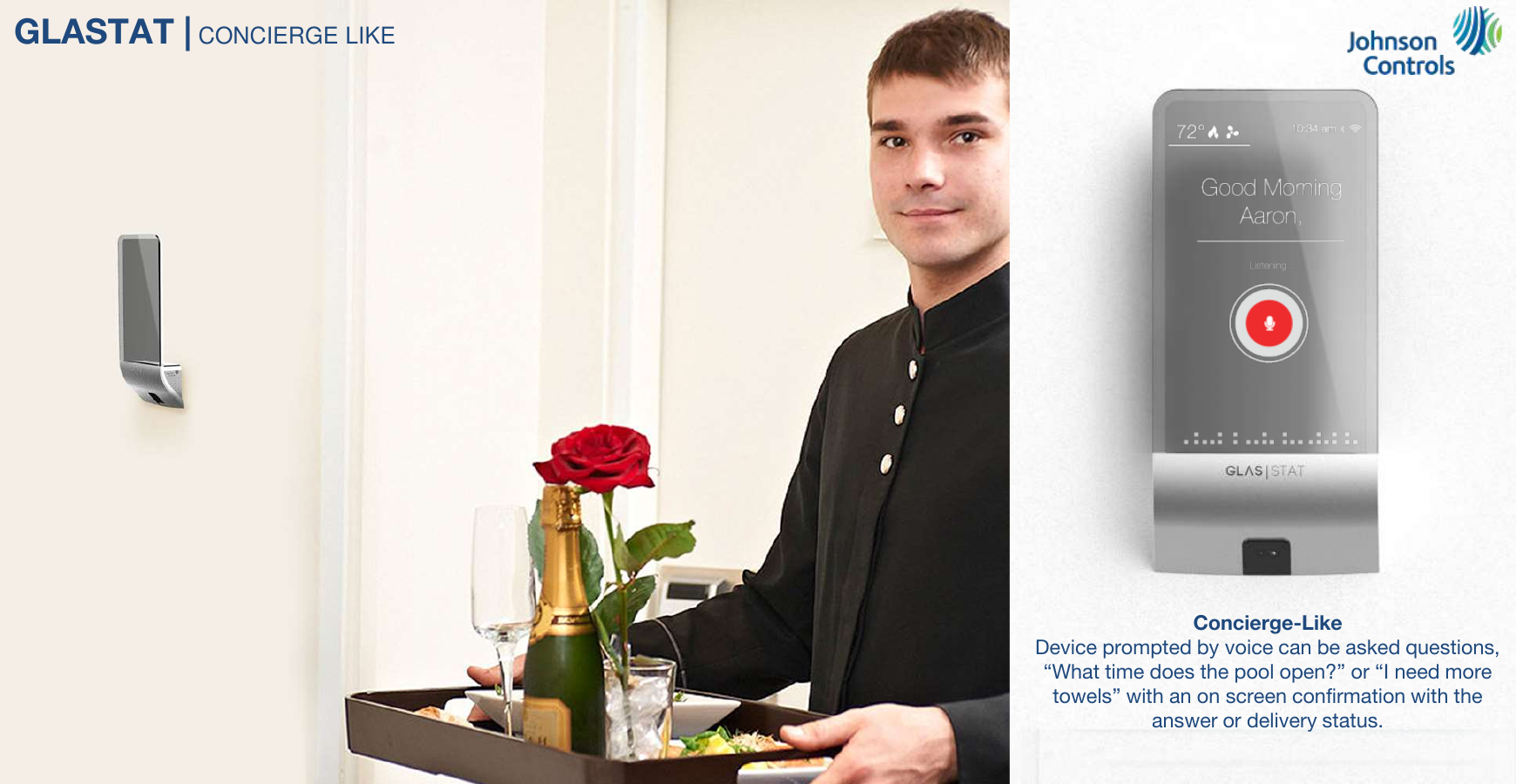
02 · Personal Assistant · able to do much more at your command
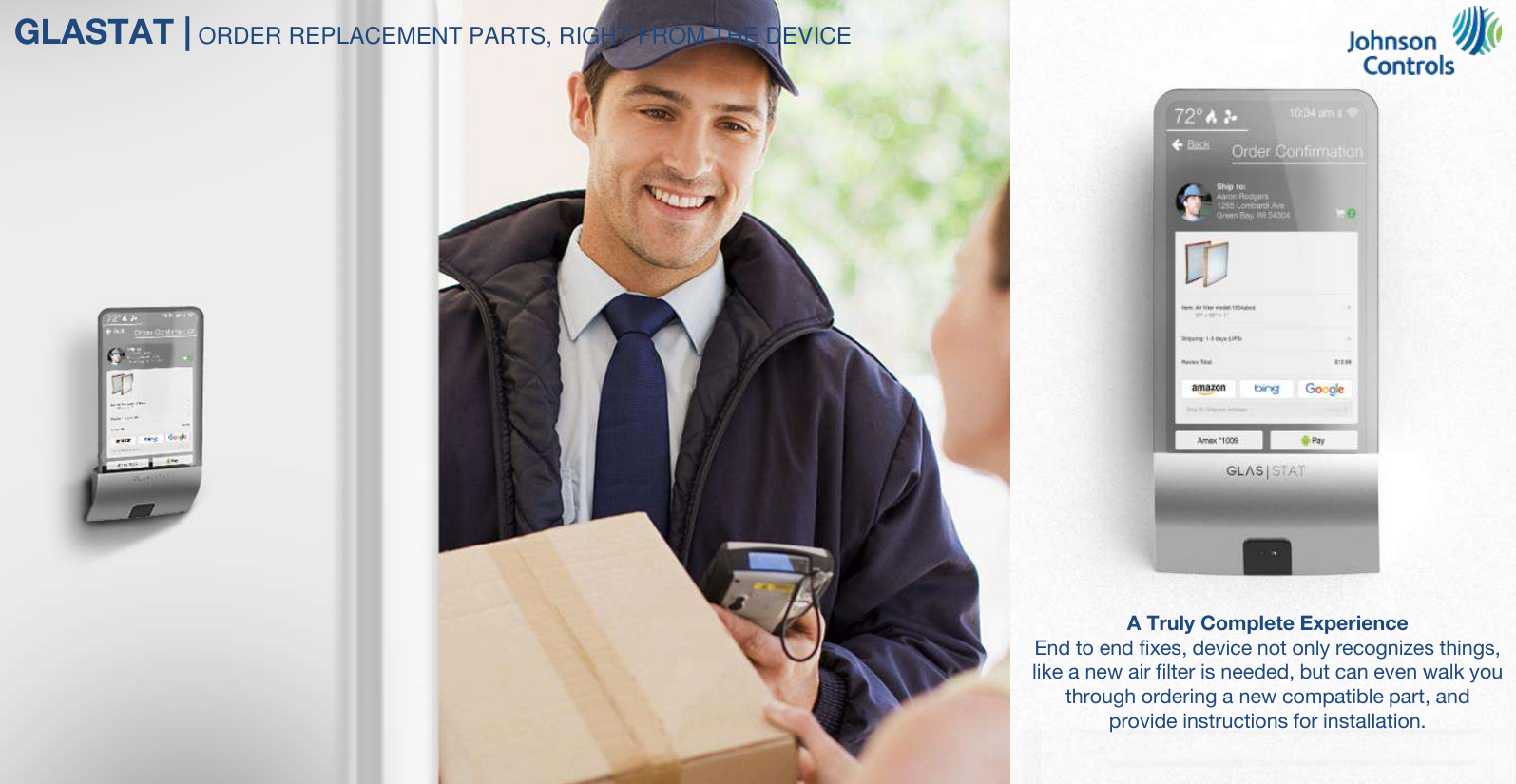
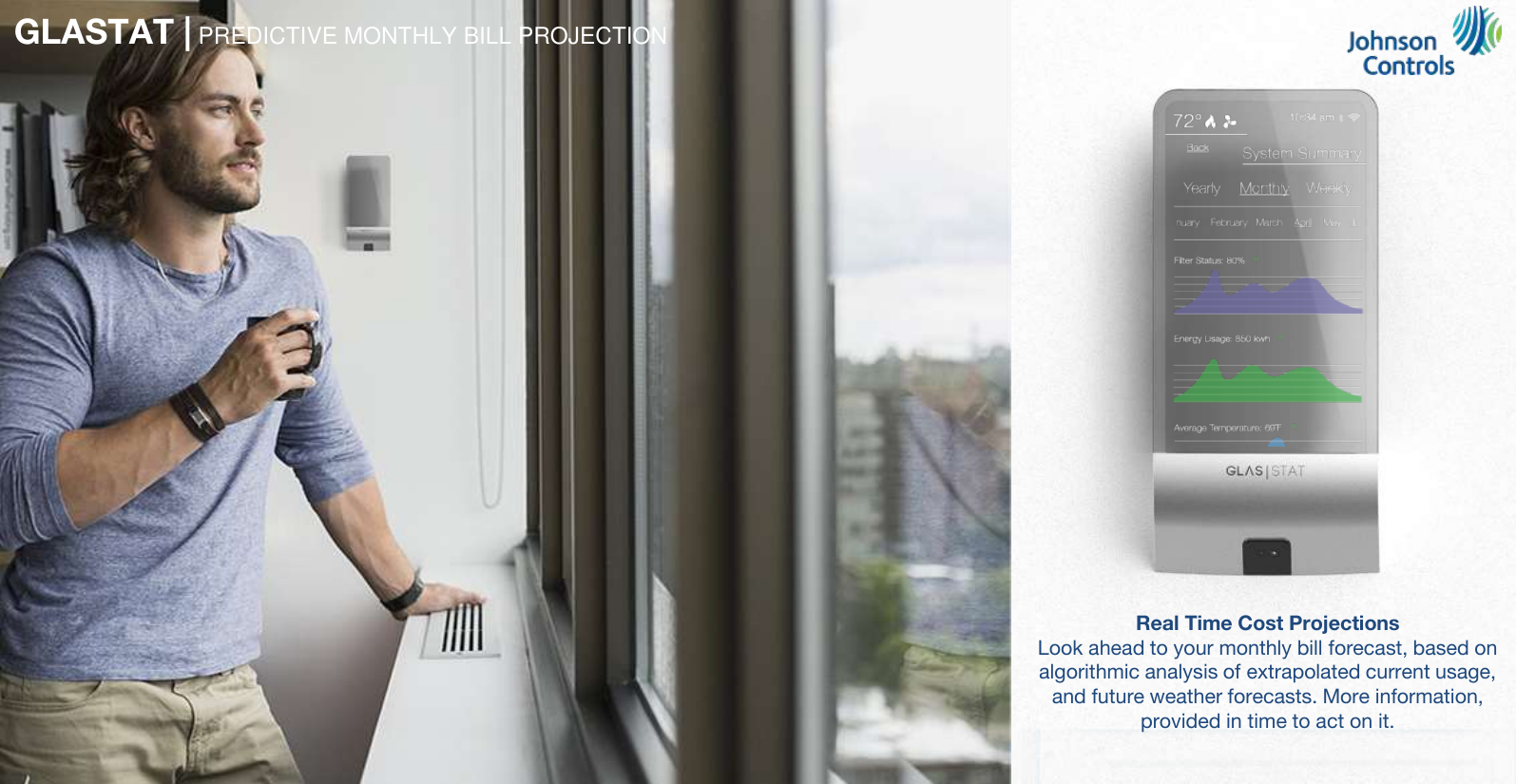
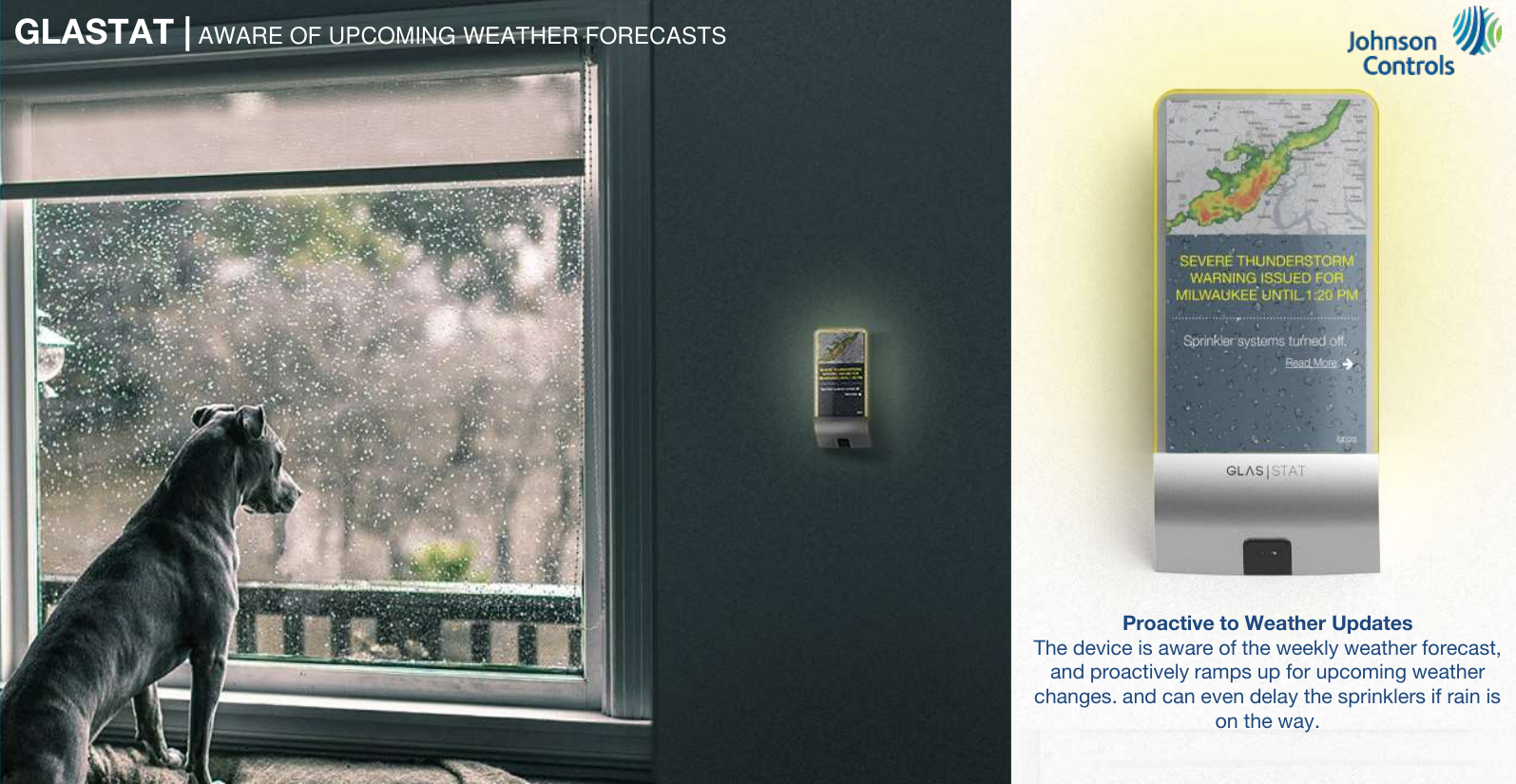
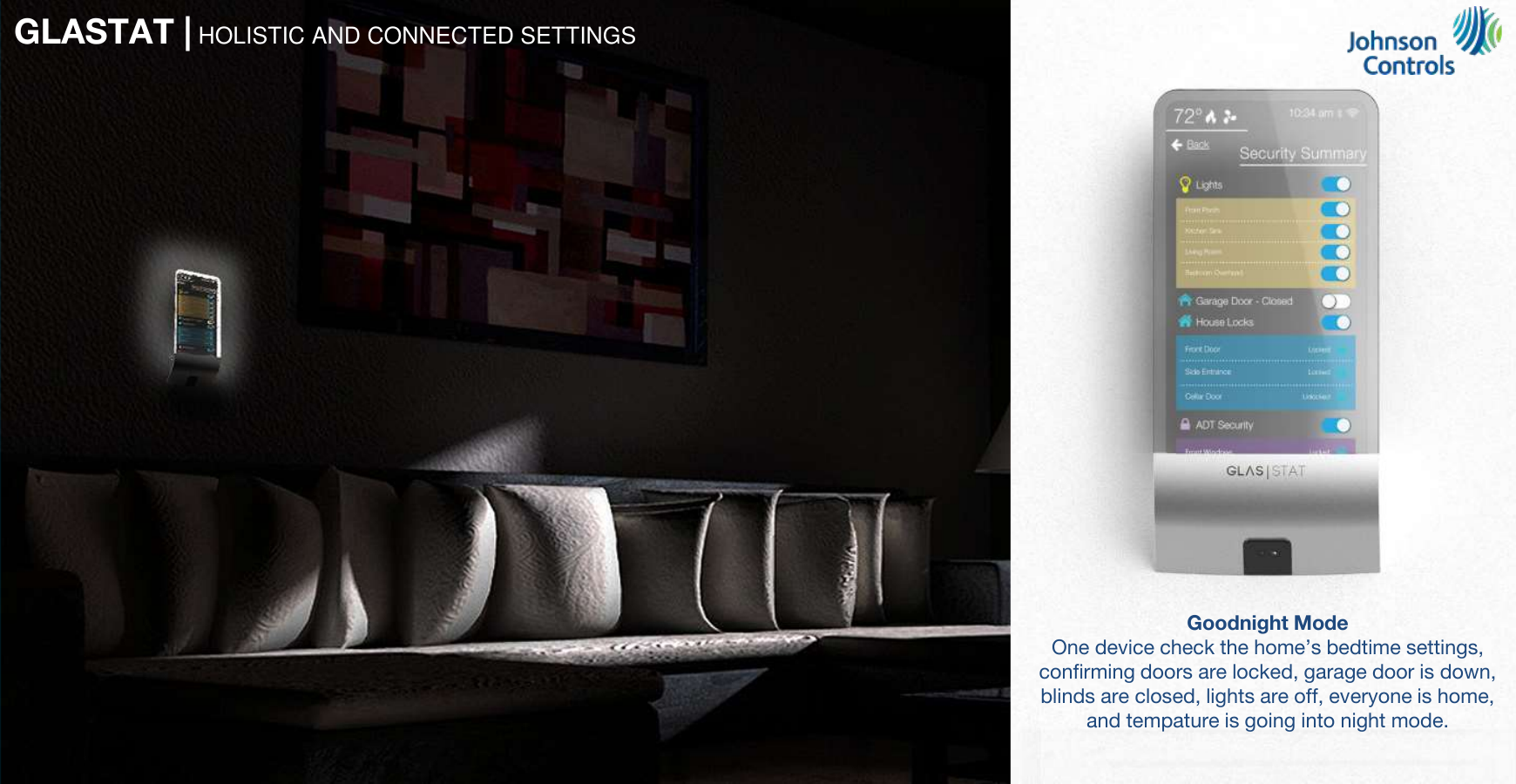
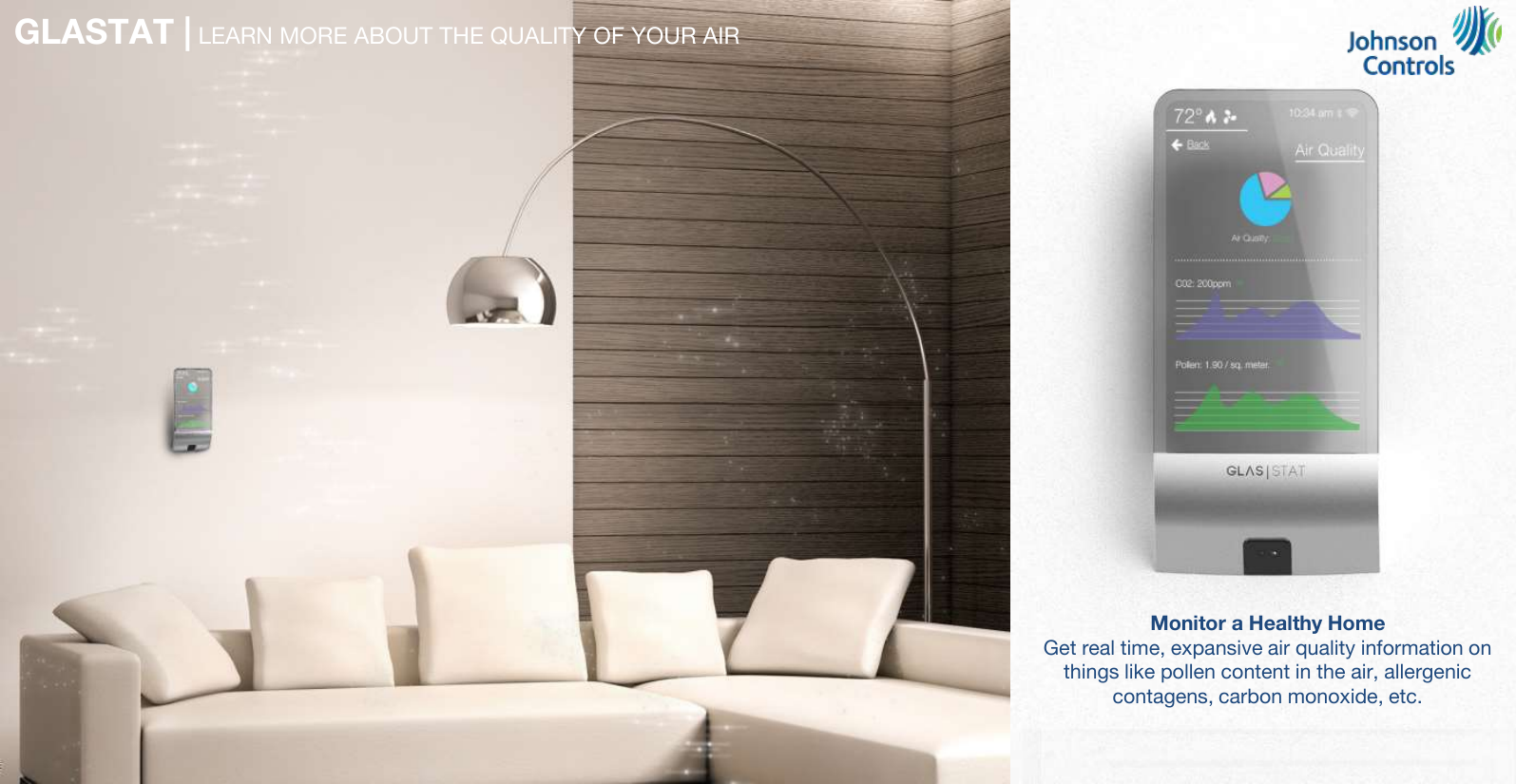
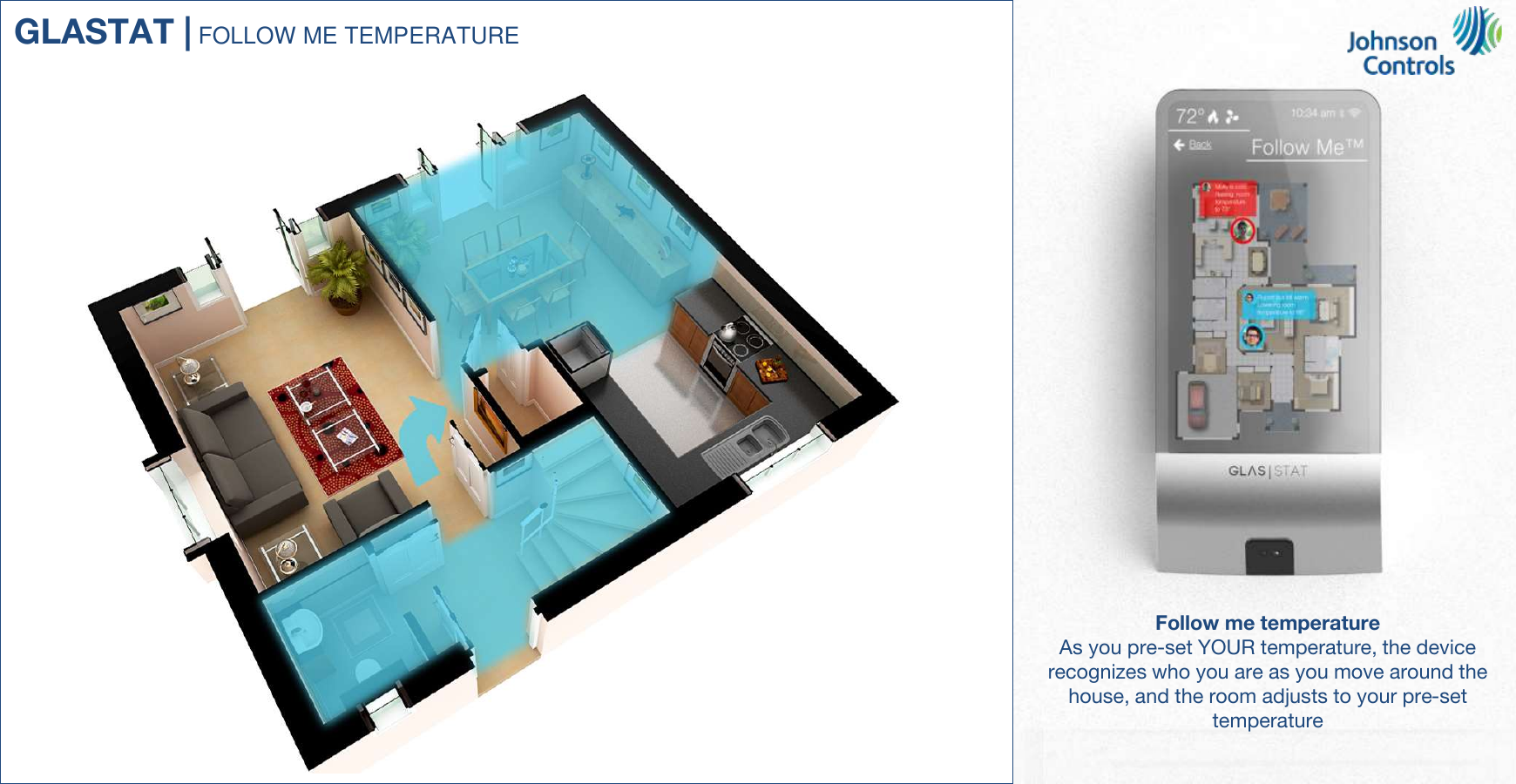
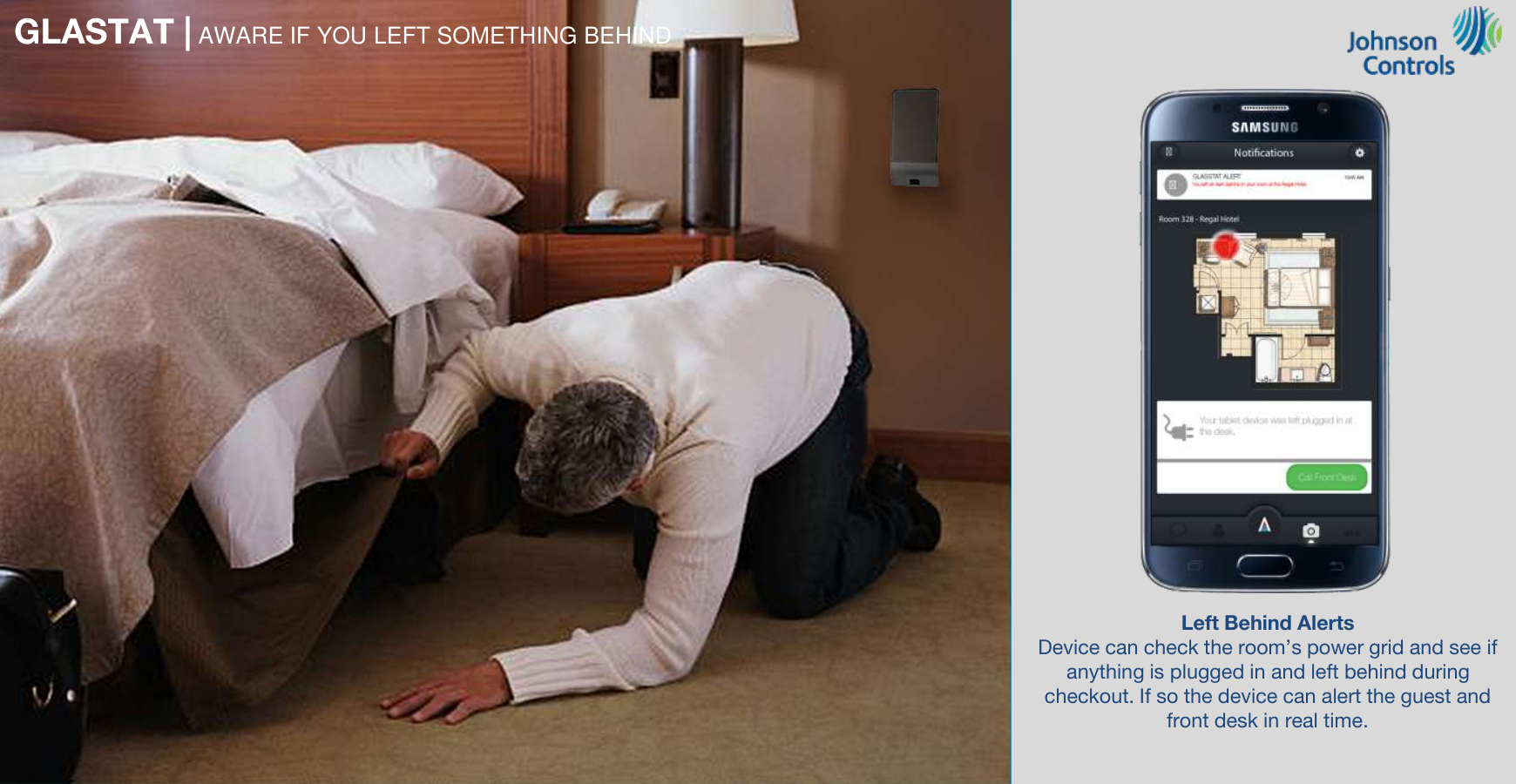
03 · Proactively Aware · has your back without the need to ask
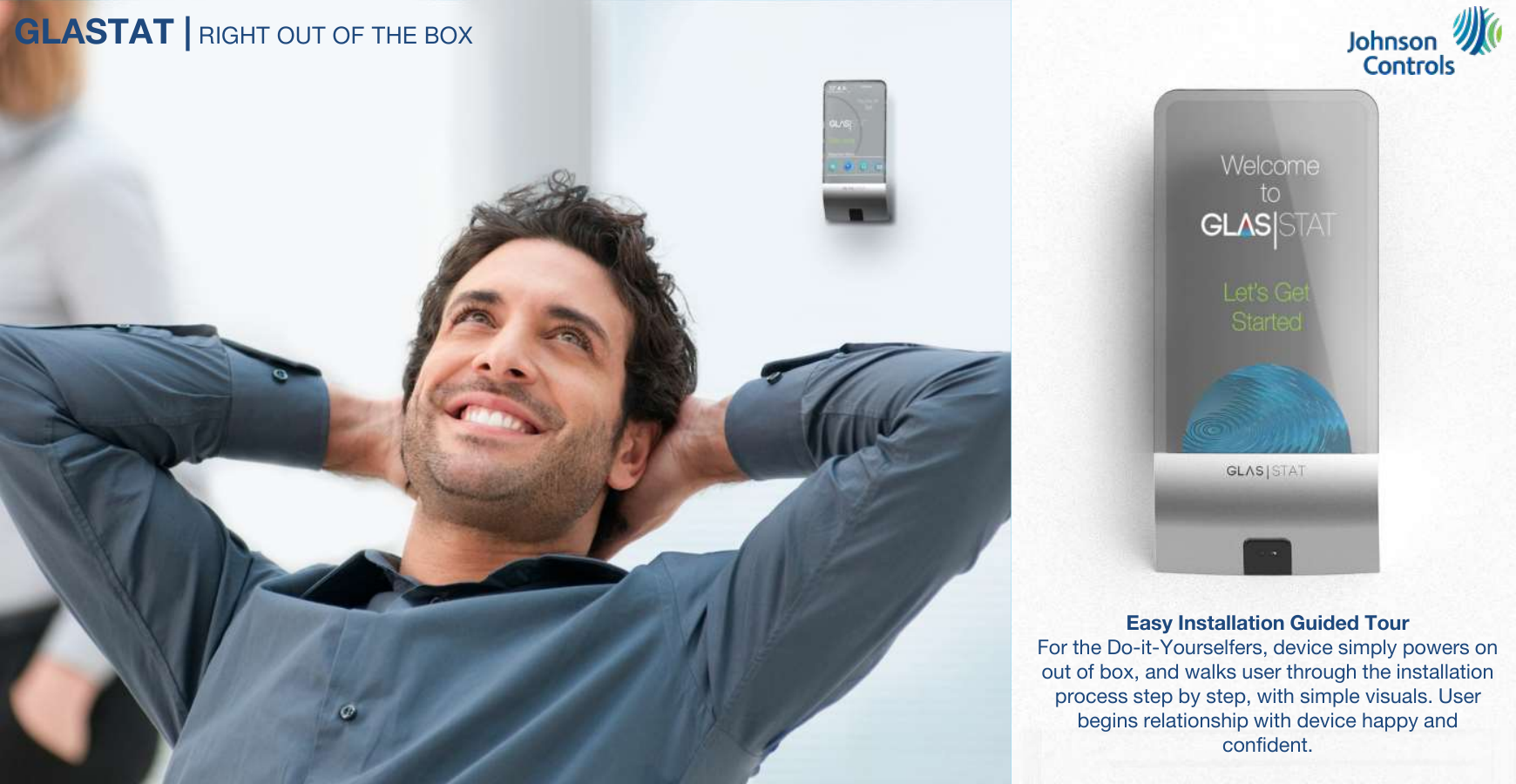
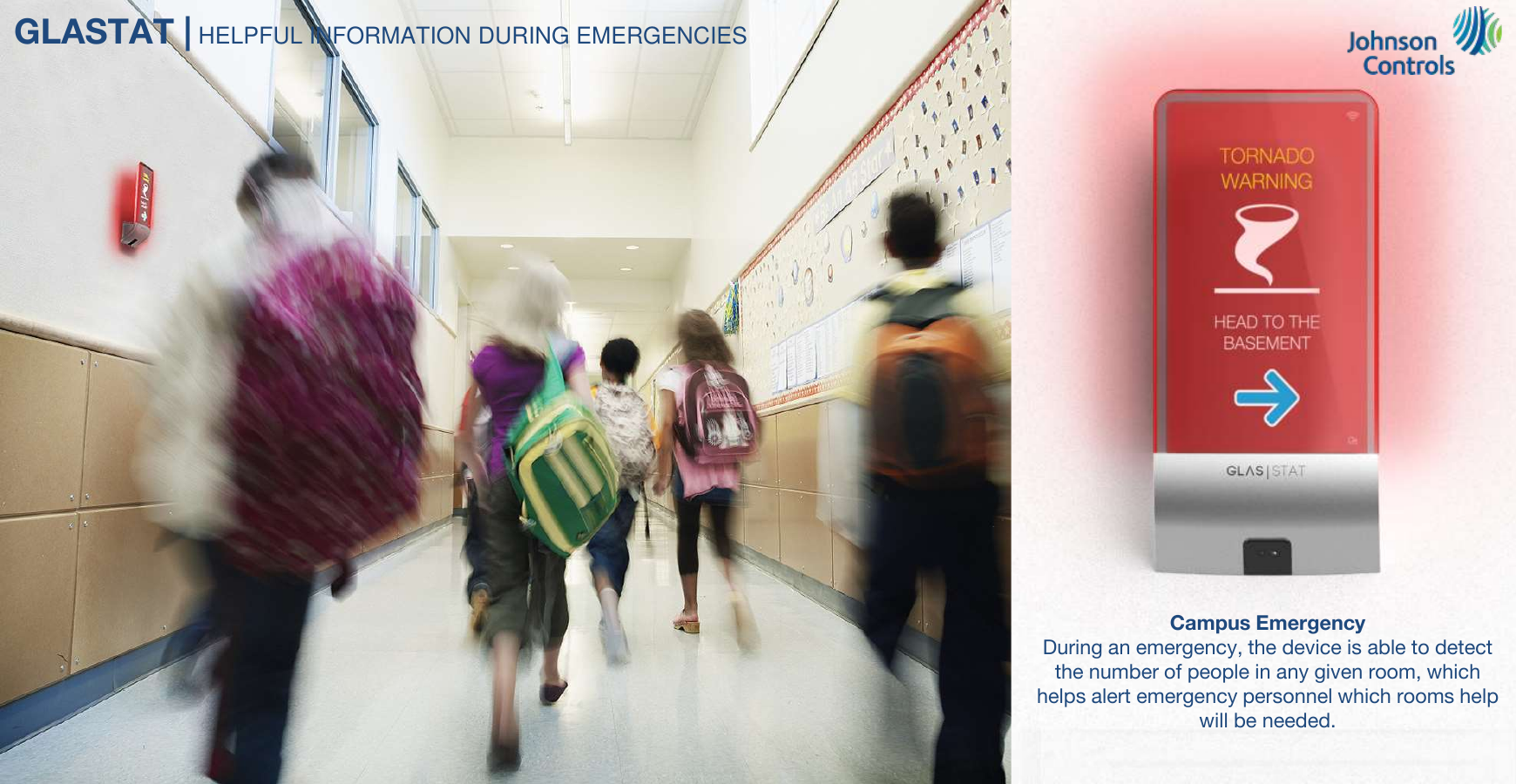
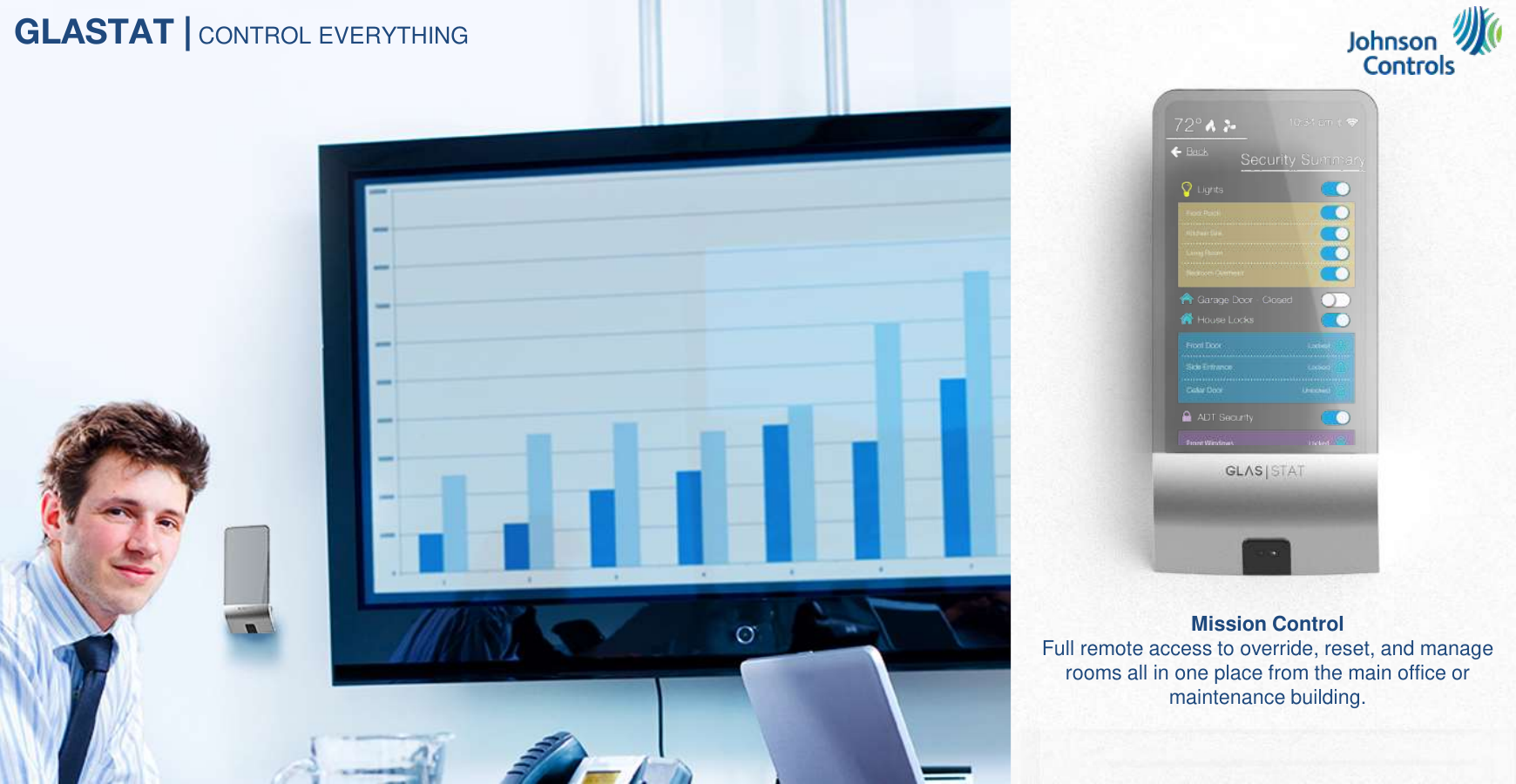
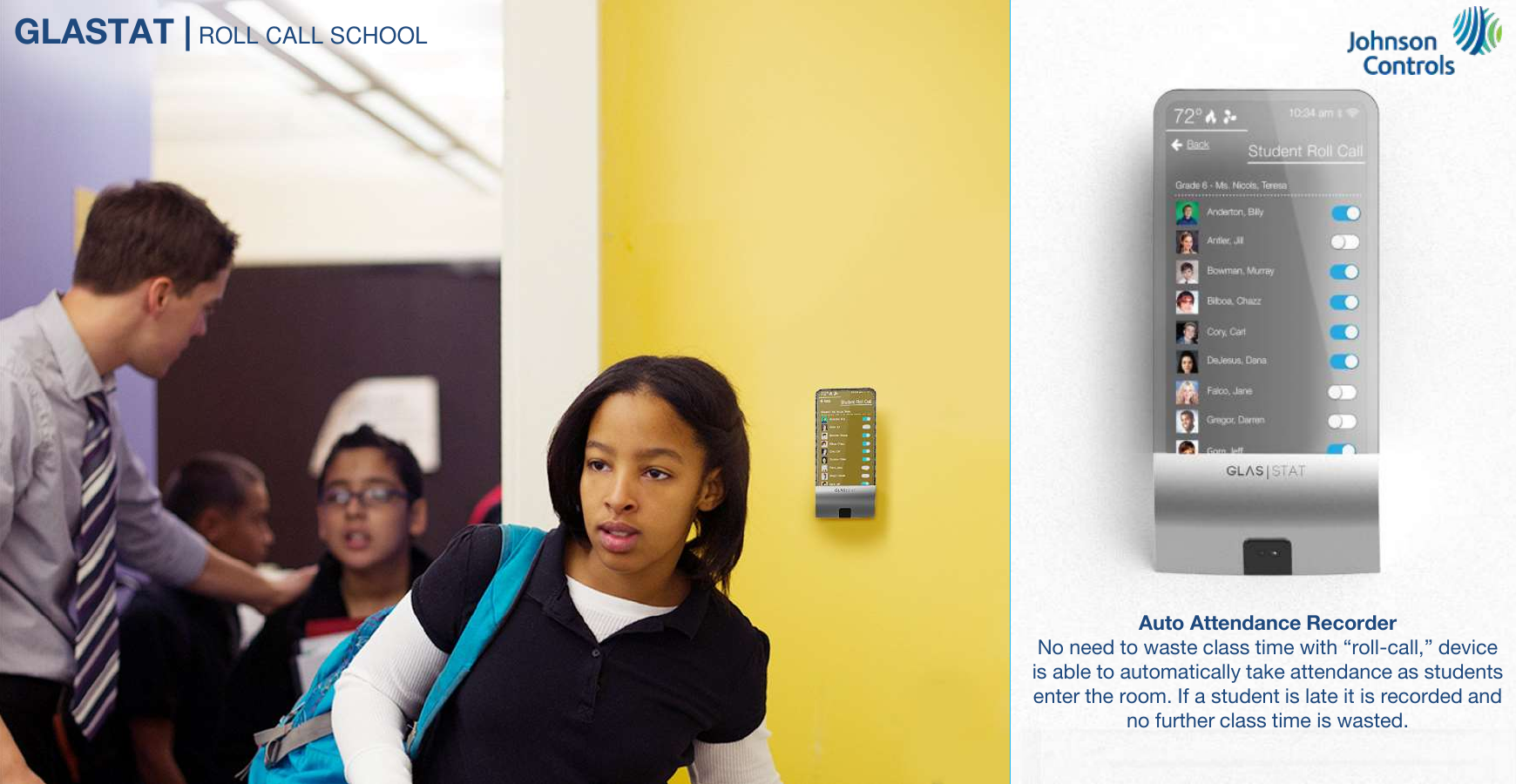
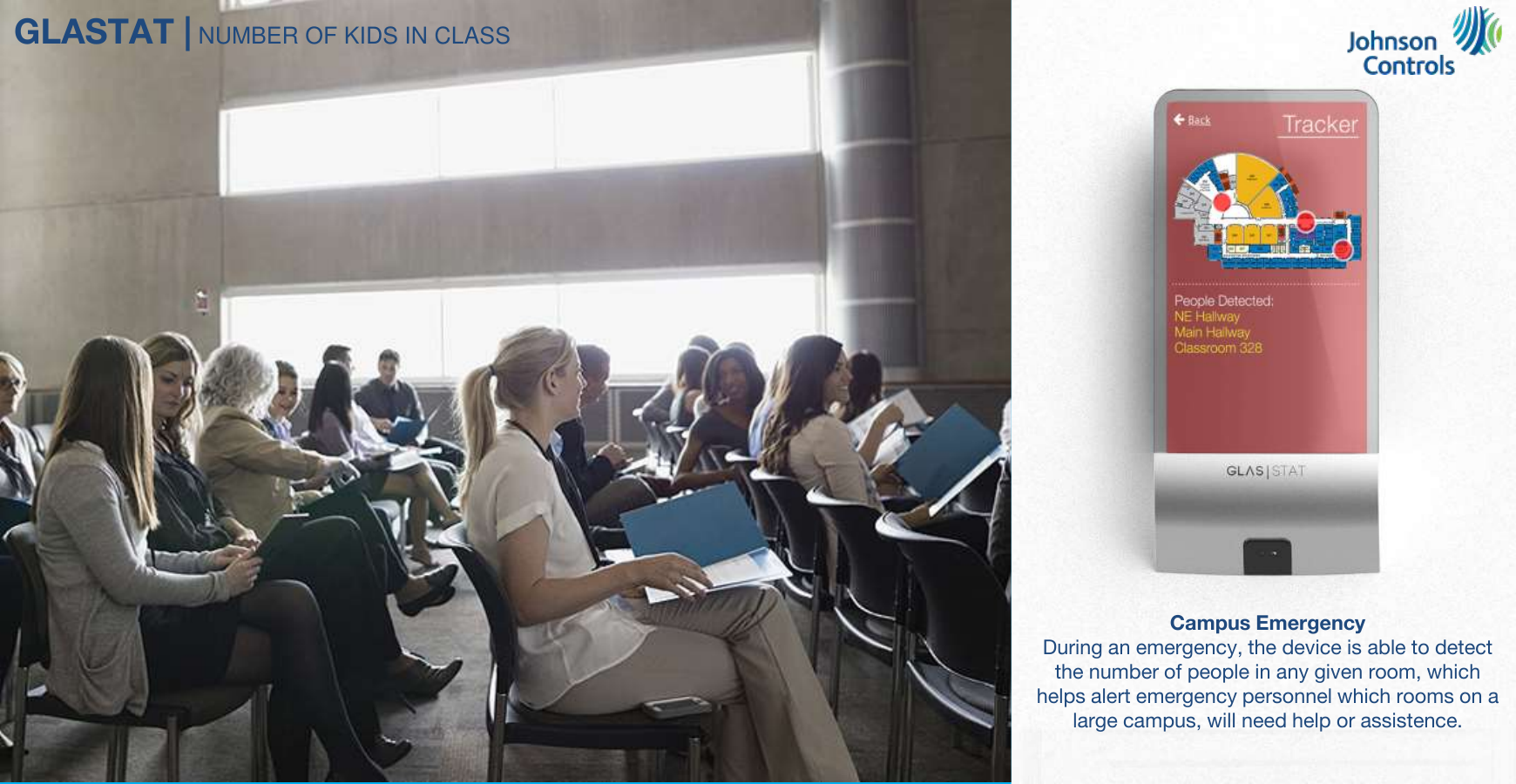
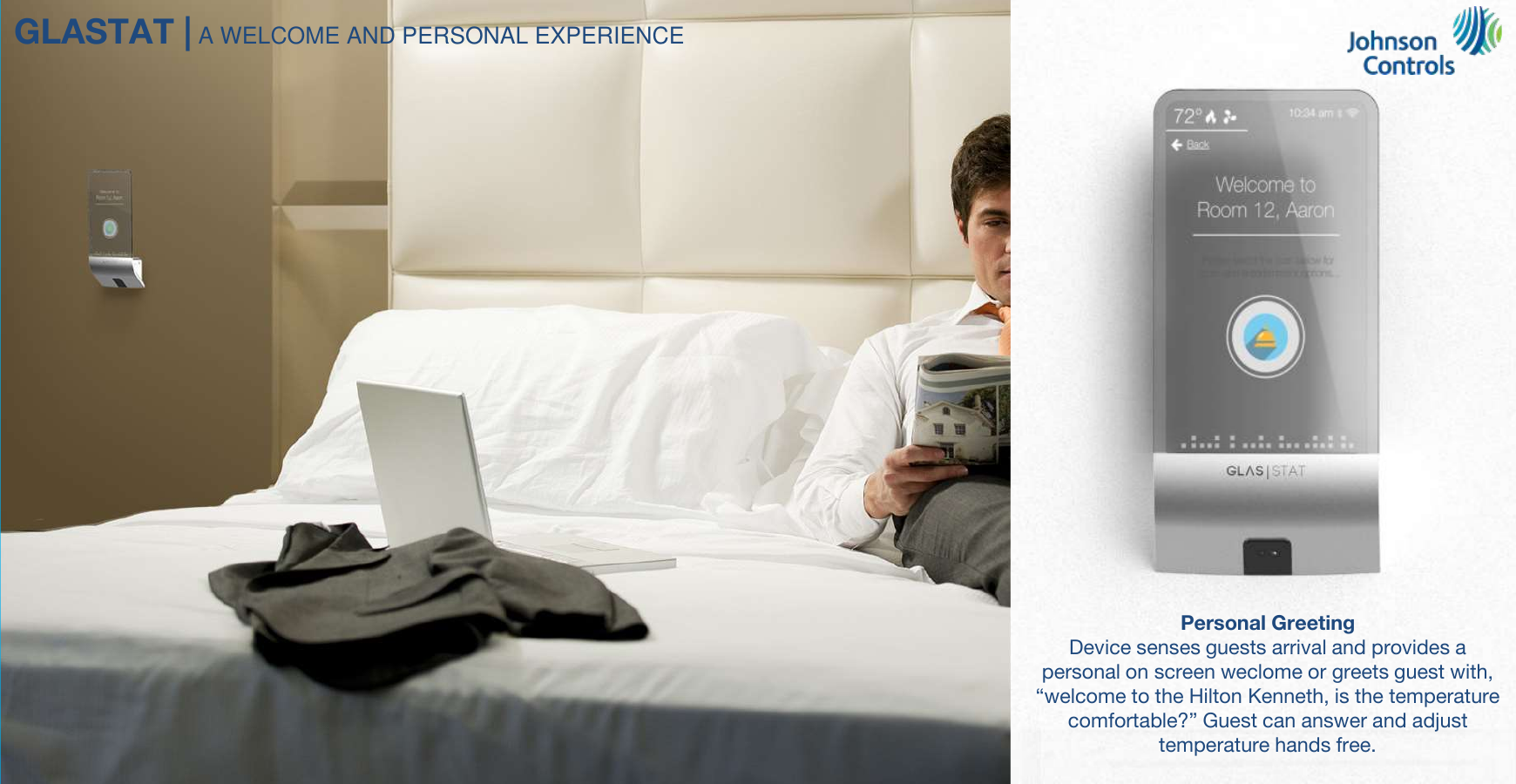
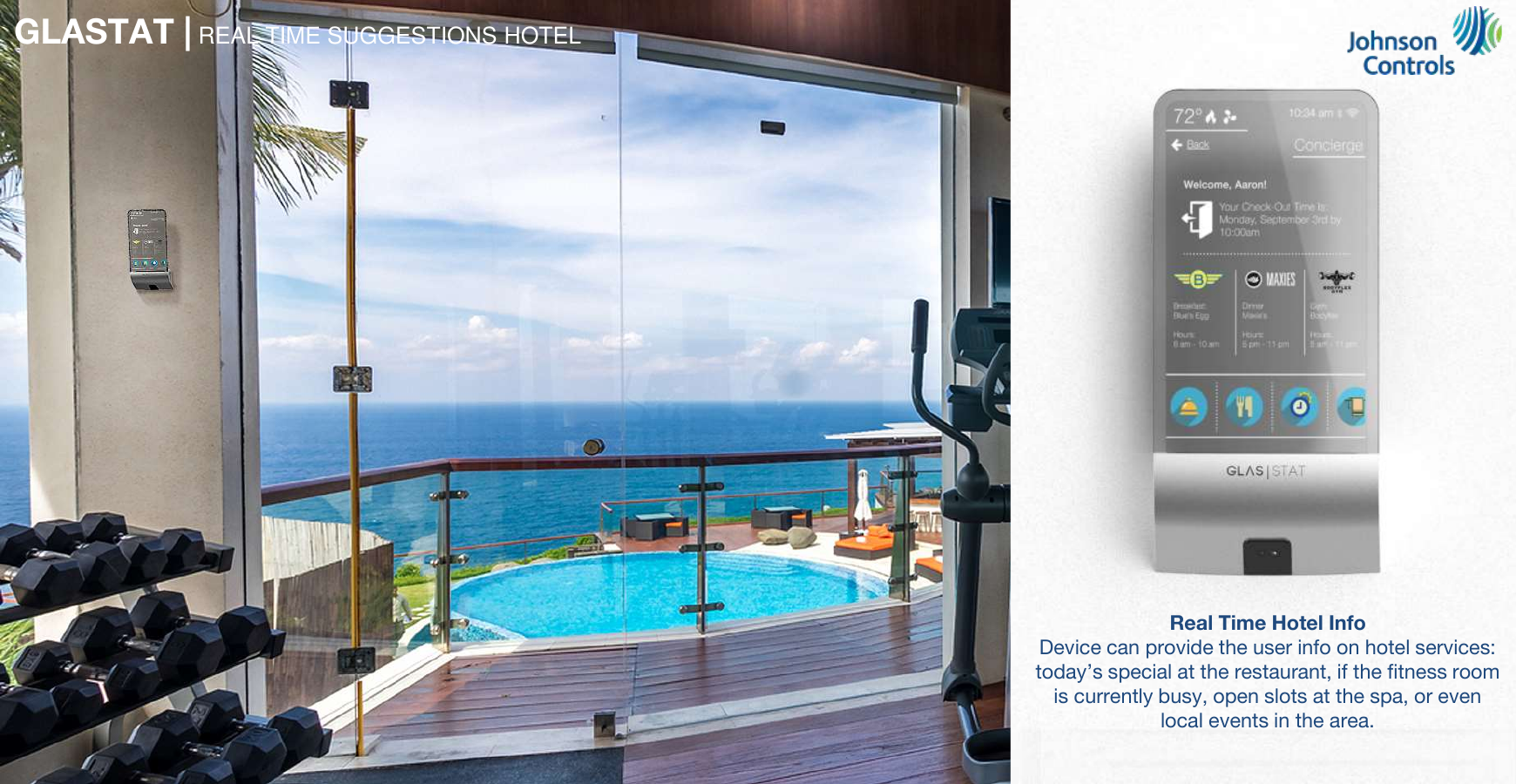
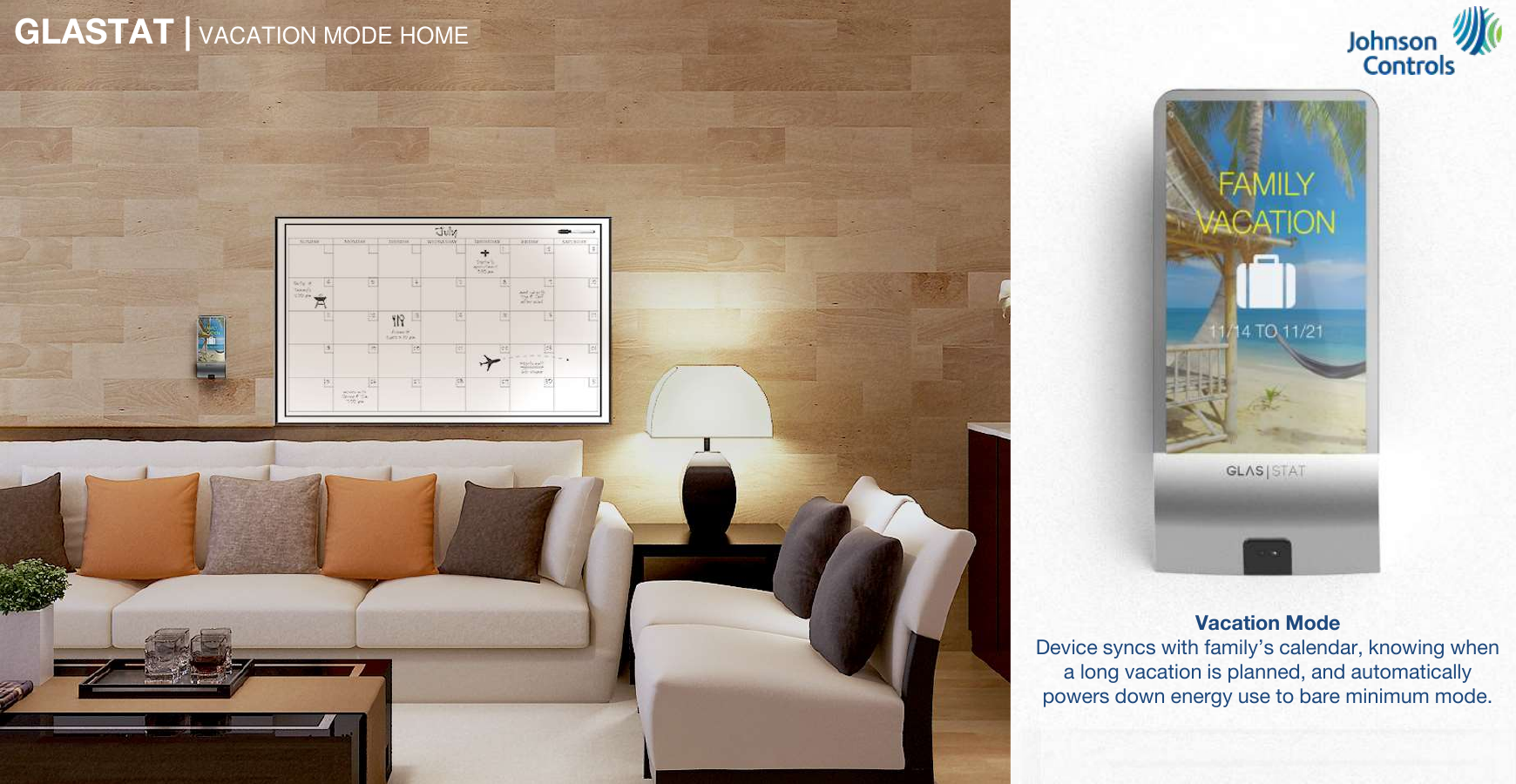
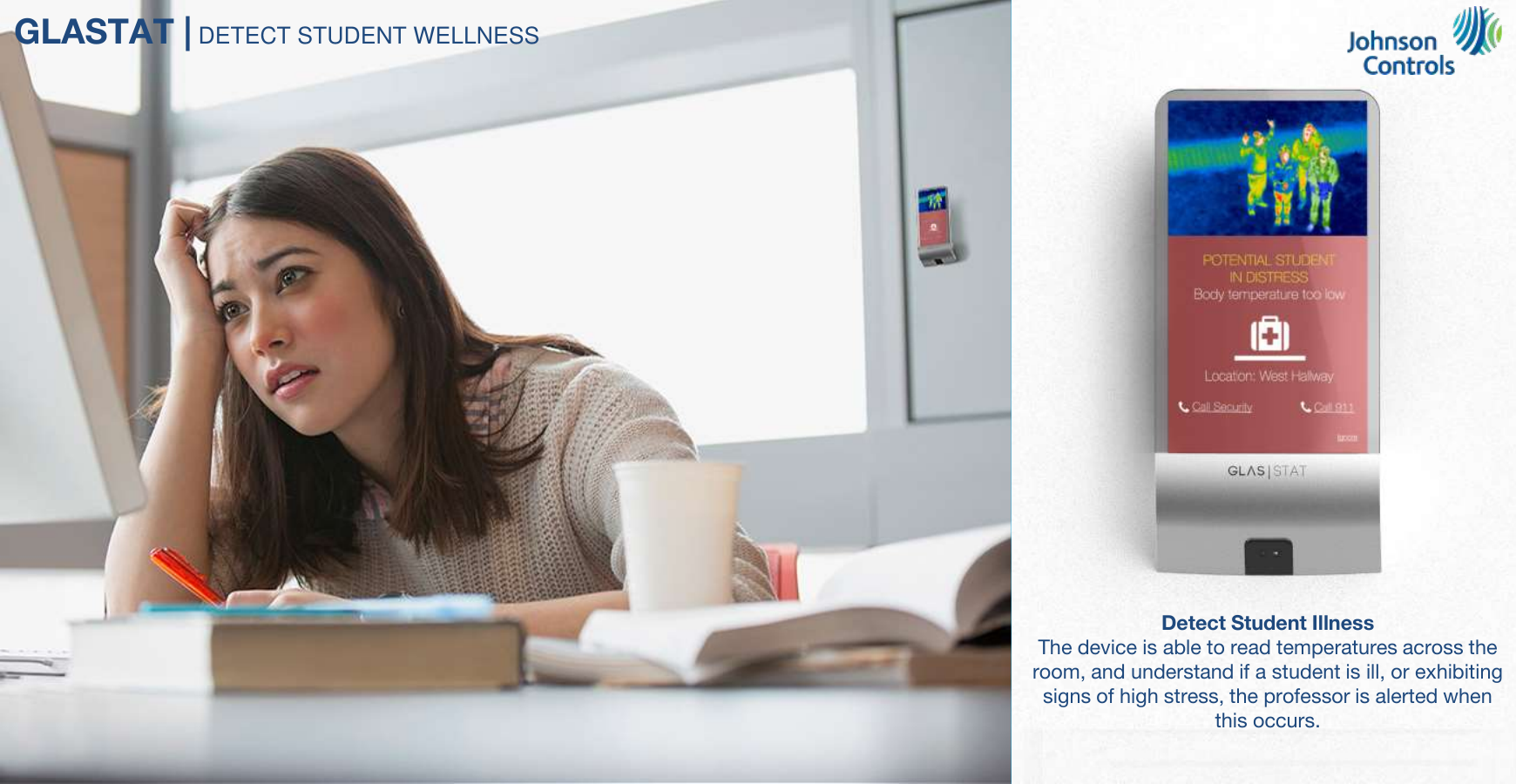
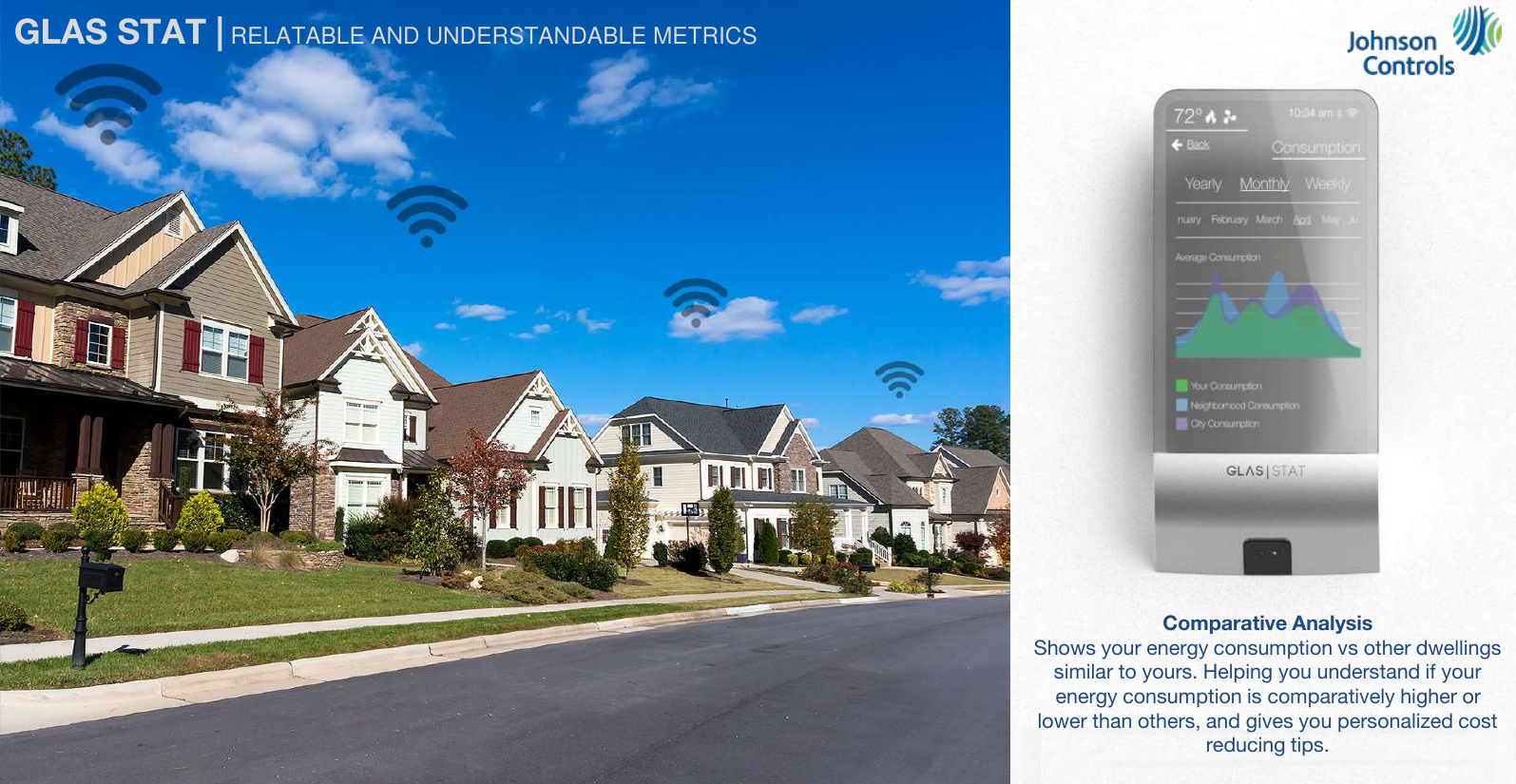
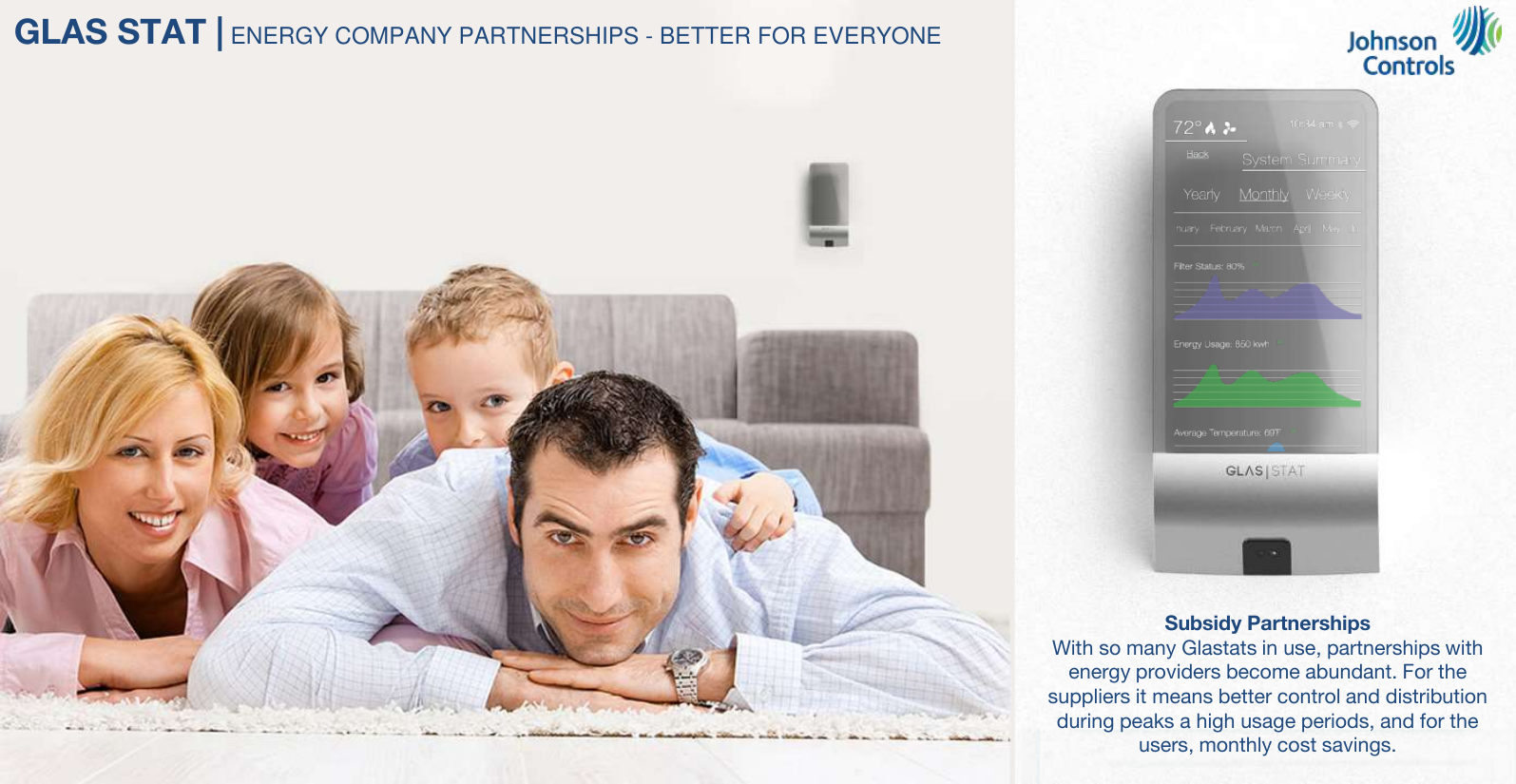
04 · Cloud Hub · what's possible when many GLAS exist in the world
The Result
Invisible yet
present.
.jpg)
GLAS doesn't sit on the wall so much as belong to it. At rest it's a clear pane that takes on the room behind it; when you need it, the interface rises out of the glass and then recedes. The technology is present, but it never announces itself.
That restraint is the product's whole argument. In a category that competes on presence, GLAS competed on absence, which is exactly what made it read as premium and architectural rather than as another gadget on the wall.
Final Execution & Market Validation
Restraint, validated
in market.
Amazon rating · distributed 2017, 2020
GLAS redefined what a thermostat could be, proving that the most powerful interface is one that disappears, leaving only the experience. Built on Windows IoT with Cortana and protected by patent.