The Brief
Inventing a category
that didn't exist.
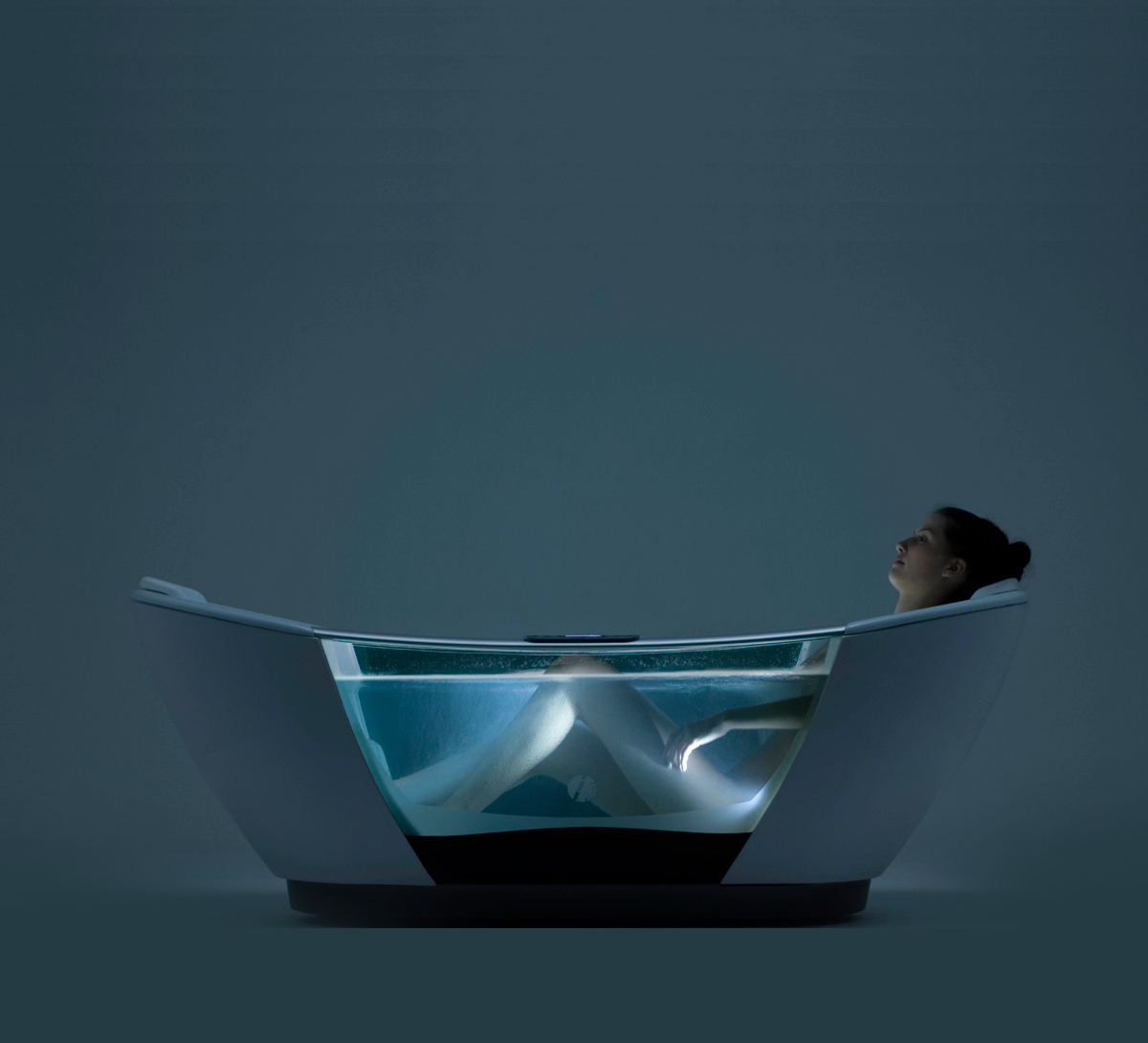
In 2003, the connected home was barely a concept and a smart bathtub was unheard of. iHouse Brazil set the ambition; I led the industrial design of a bathtub that would sit inside a full home-automation ecosystem, controlling temperature, water level, jets, essence, lighting and music from within the bath itself.
The work defined a product category that had no reference point, and validated it commercially: $5M in pre-orders a full year before the first unit was produced.
Design Process
Pioneering at the edge
of what's possible.
01 · Discover
Redefining the Bathroom Experience
Conducted extensive research into bathroom rituals, wellness behaviors, and emerging connected home technology. Mapped user scenarios around relaxation, morning routines, and the role of water in daily wellness, identifying opportunities for intelligent personalization.
02 · Conceive
Category Creation
With no prior reference category, developed the entire design language from scratch. The core design insight: technology should be invisible in the bathroom. All interfaces, sensors, and connectivity elements were integrated without disrupting the serene aesthetic of the bathtub form.
03 · Develop
Waterproofing, Controls & Integration
Resolved the significant engineering challenges of integrating electronics in a wet environment. Collaborated with hardware engineers on sealed touch interfaces, embedded speakers, temperature sensors, and connectivity hardware that could all meet safety standards in water contact zones.
04 · Launch
$5M in Pre-Orders Before Production
The Smart-Hydro was unveiled as part of iHouse Brazil's connected home ecosystem to immediate commercial success, generating $5M in pre-orders a full year before production. It was widely covered as the world's first truly connected bathtub and established a new product category.
The Problem Space
Designing into
a vacuum.
There was no playbook to follow. Three barriers defined the risk we were taking on, and framed every decision the team made afterward.
01
No Precedent
Zero existing UI paradigms for a "smart bathroom." No touchscreens, no smartphones, no reference products. The interaction model had to be invented from nothing.
02
Engineering Risk
Electronics living inside a water-contact zone, in the first fully injection-molded bathtub ever attempted, controls, sensors and speakers all had to be sealed and certified safe.
03
Aesthetic Clash
Early-2000s tech was bulky and loud; a luxury bathroom demands visual serenity. Connectivity itself was immature, Zigbee was only entering testing in 2003.
Strategic Exploration
Three ways to
command water.
The central question wasn't how to build the bath, it was how a person should control it before touchscreens existed. I directed exploration across three input paradigms, then edited down based on the wellness experience and the technology actually available in 2003.
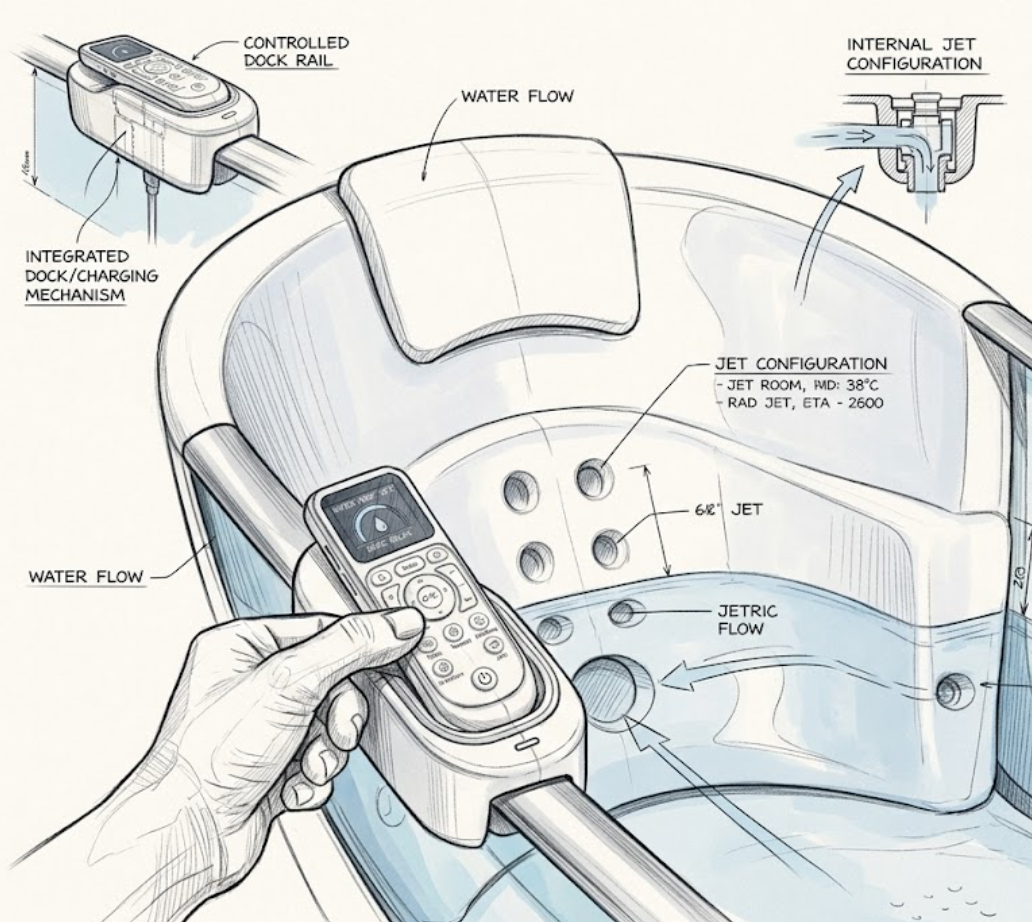
Direction A.
Loose Handheld Controller
Freeform accessory controllers explored in early sketch. Killed: a loose object near a full bath is dropped, lost, or short-circuited, too fragile to own the core interaction.
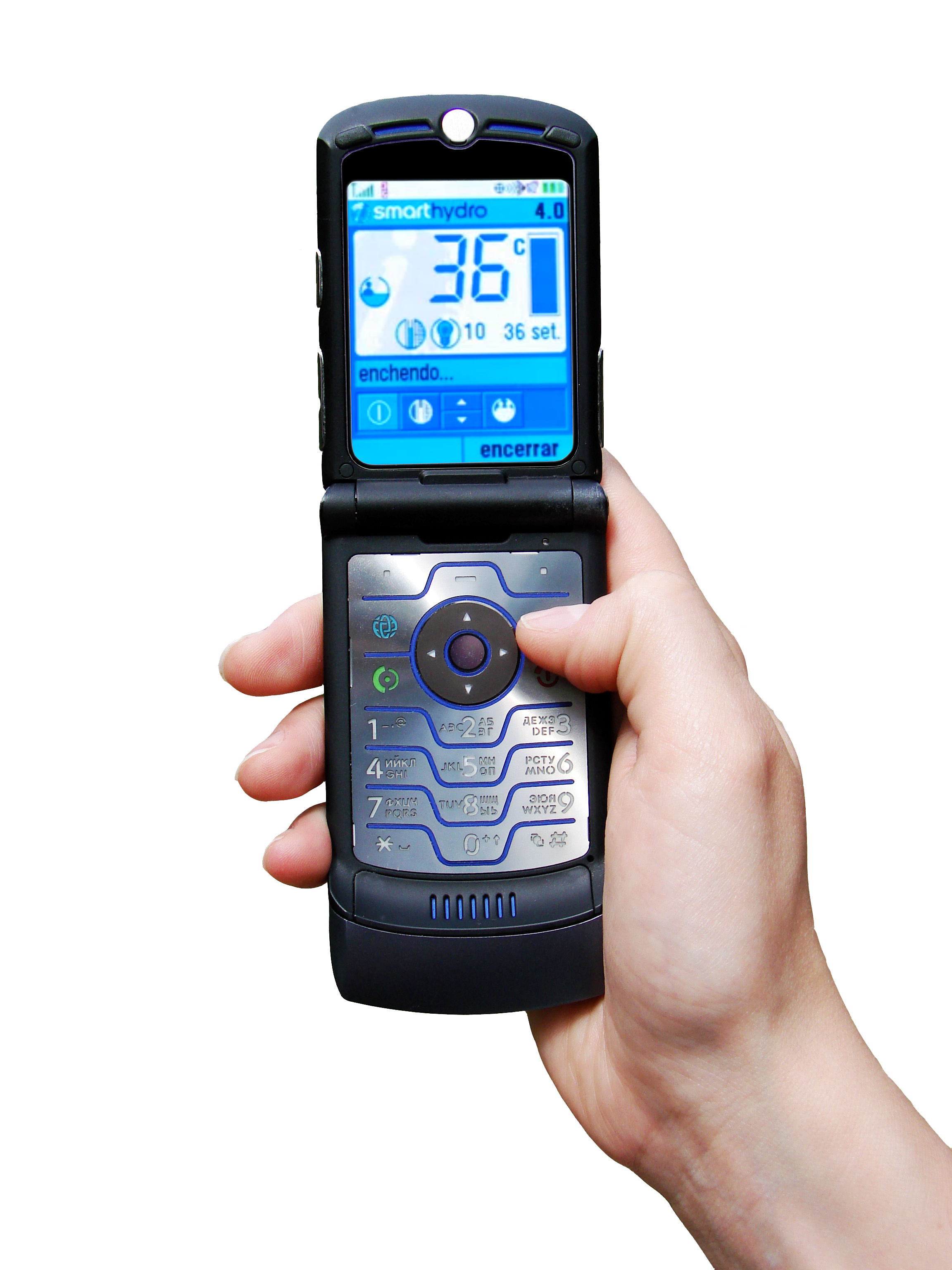
Direction B.
Phone-Based Remote
A handset UI to pre-fill and warm the bath from another room. Scoped back: non-touch hardware and immature wireless made it too slow as the primary control, kept as a secondary, remote-start layer.
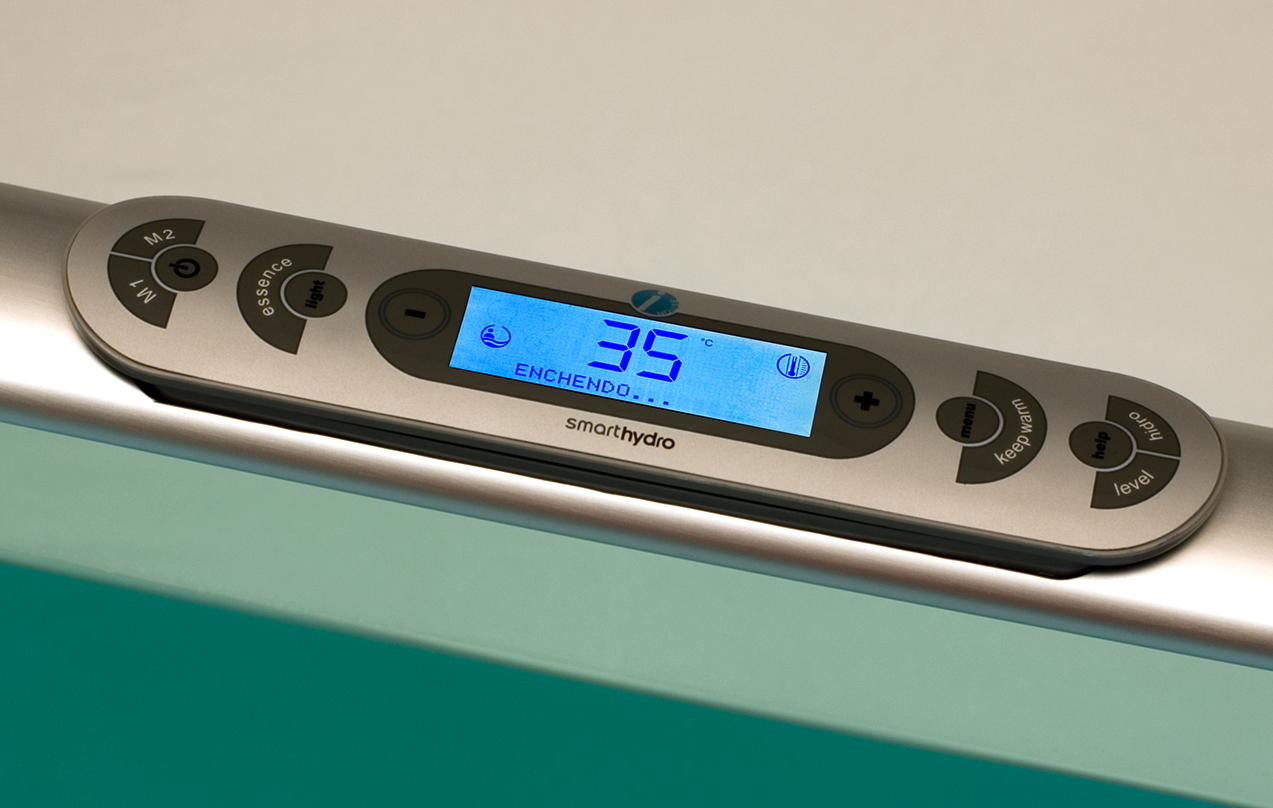
Direction C.
Integrated Rim Panel
Sealed controls and a glanceable display set into the tub edge. Chosen: within arm's reach from a fully reclined position, and it disappears into the sculptural form instead of fighting it.
Form Factor Exploration
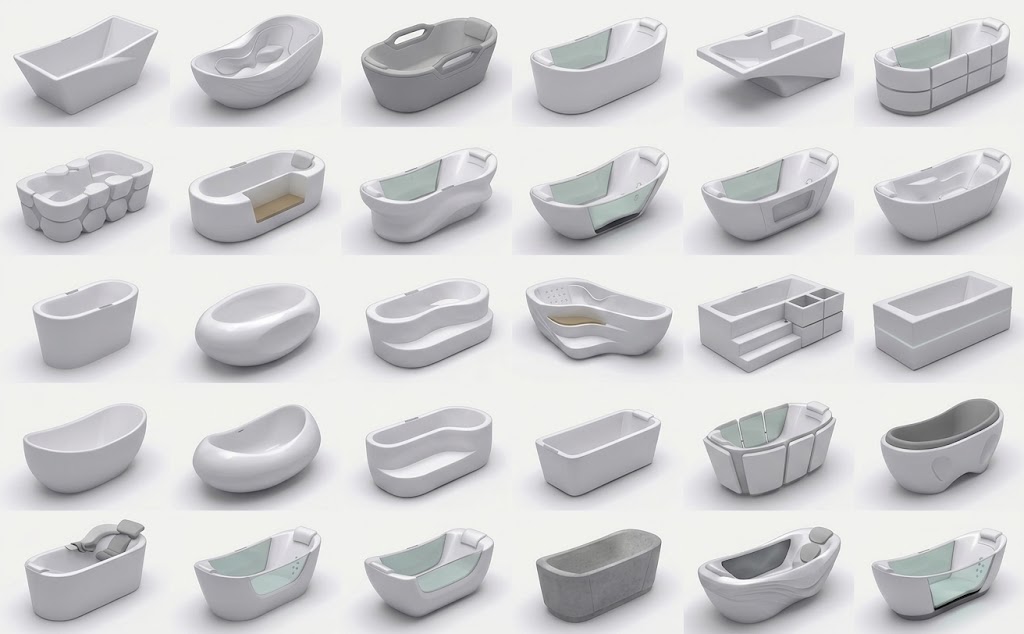
Editing thirty silhouettes
down to one.
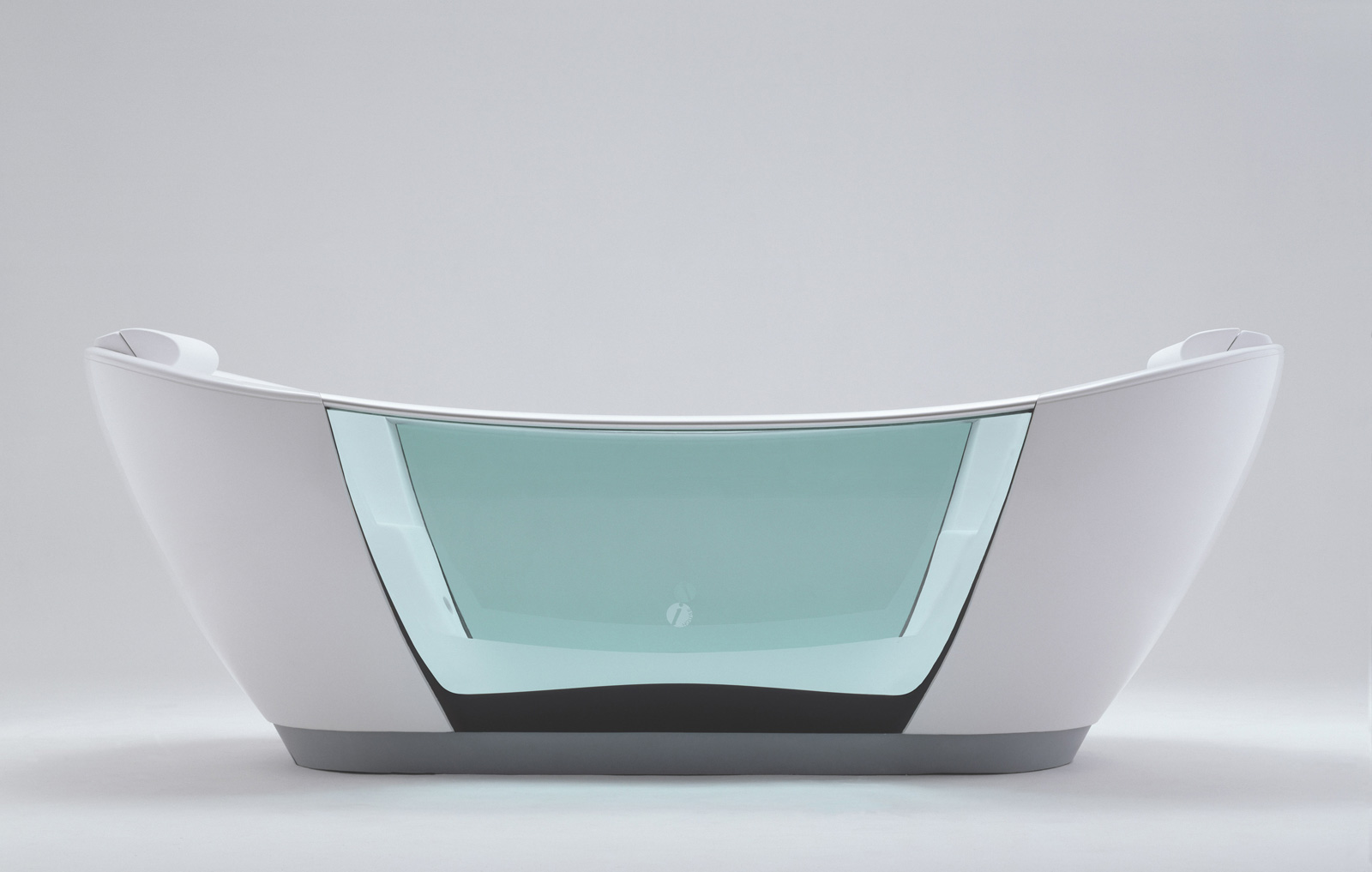
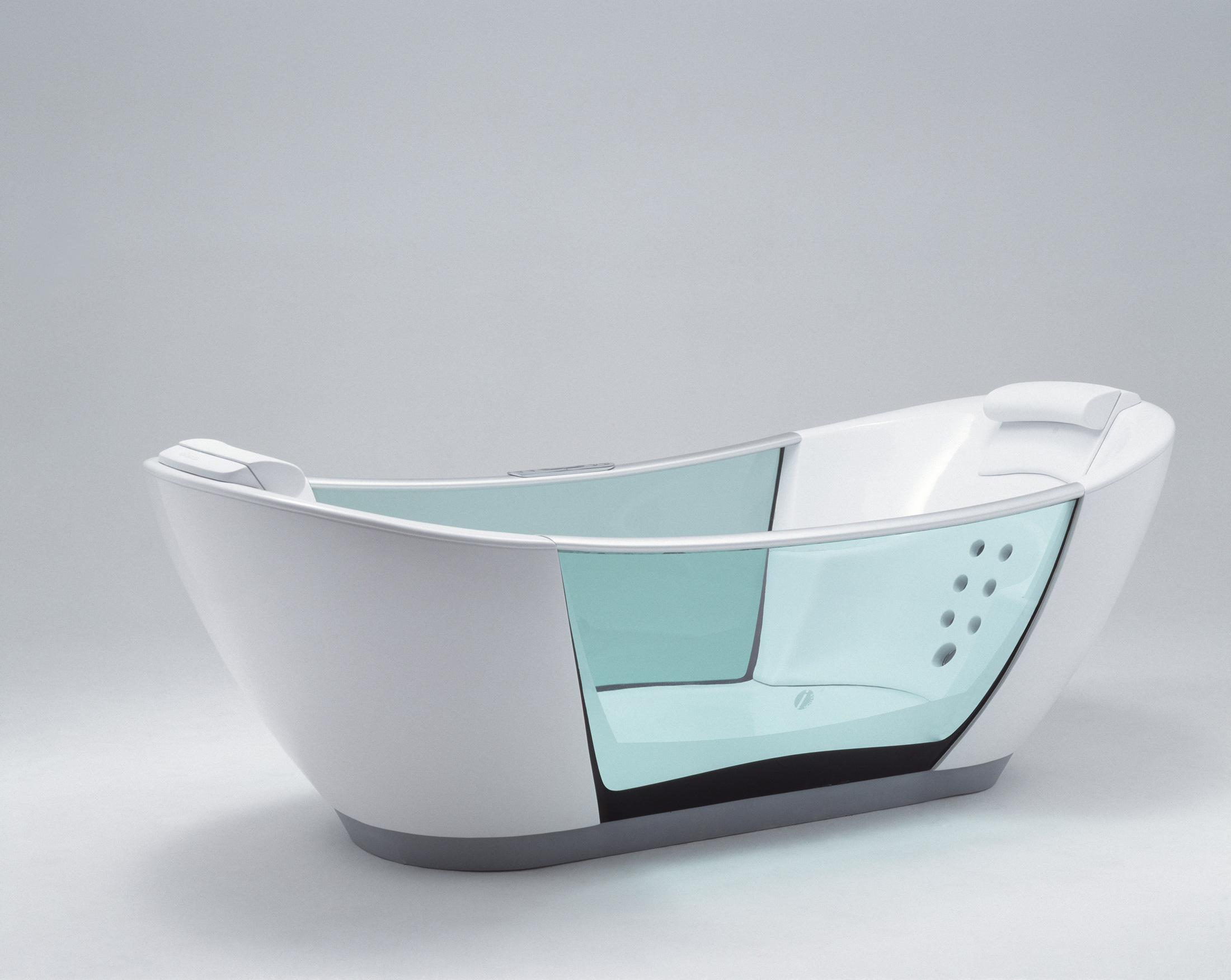
Before the interface was settled, the form itself had to be found. I directed a broad sweep of bathtub silhouettes across sculptural, geometric, sectioned and monolithic options, then converged on the suspended, transparent shell that makes the technology feel weightless rather than bolted on.
Cross-Functional Development
UX meets
hardware reality.
Execution was a leadership problem before it was a technical one. I established the design language on the interface side and aligned the industrial design and hardware engineering teams on the constraint side, so neither one compromised the exterior surfacing.
Interface · UX
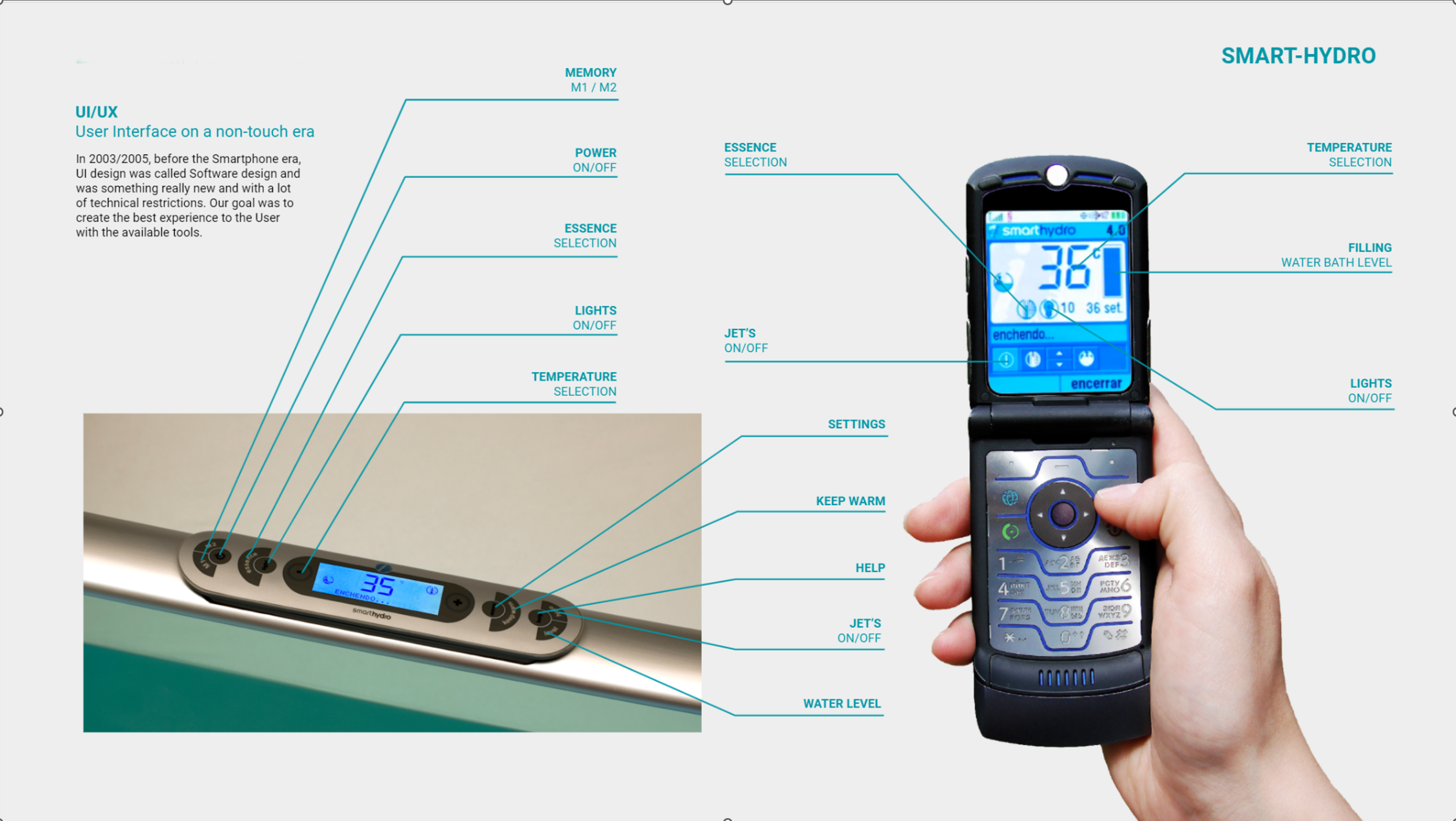
Designing for a non-touch era
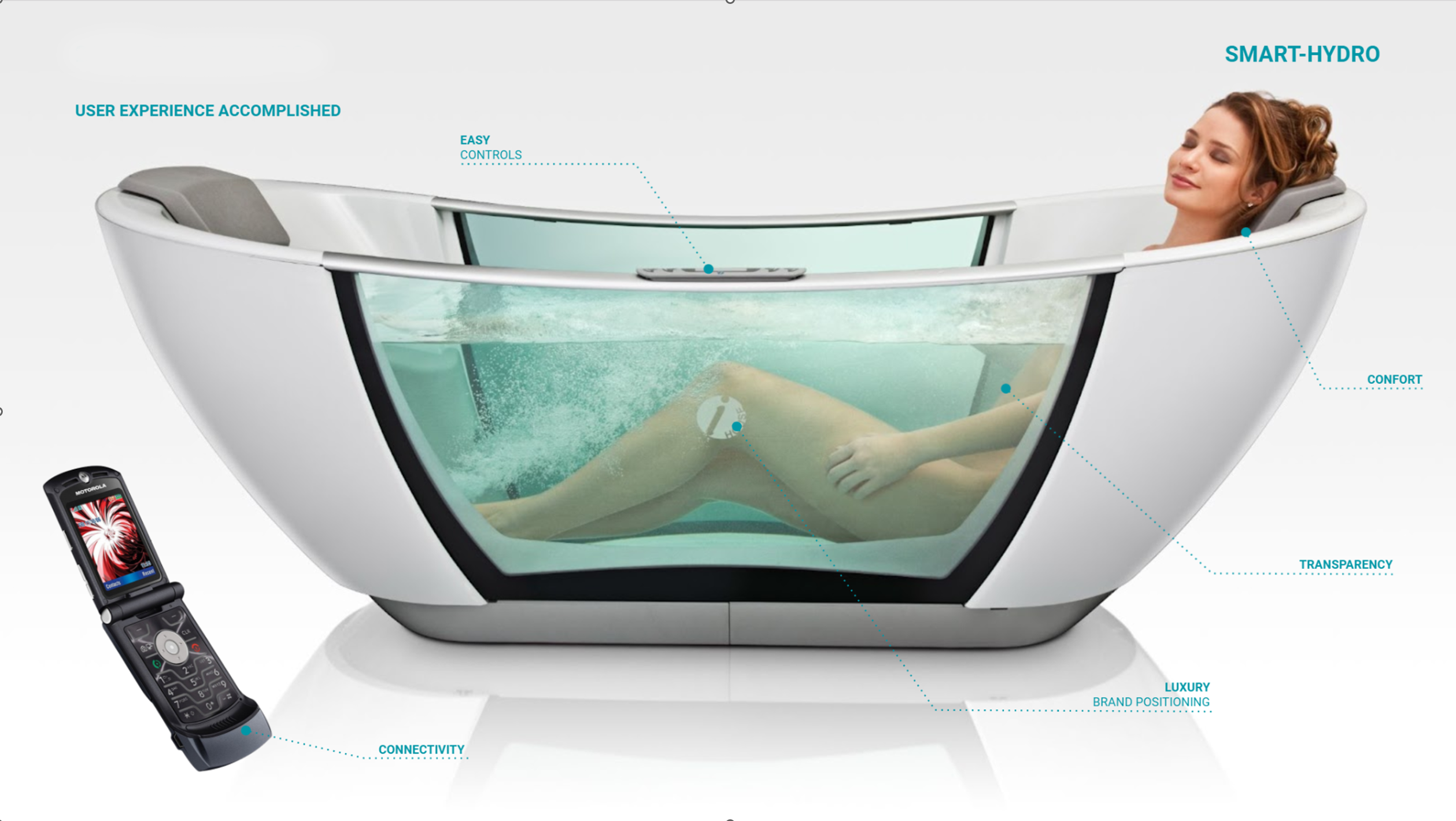
Before smartphones, "UI" meant software design under hard hardware limits. I established one coherent control language across both the sealed rim panel and the handset companion, essence, temperature, fill level, jets and lighting, all legible at a glance.
Hardware · Engineering
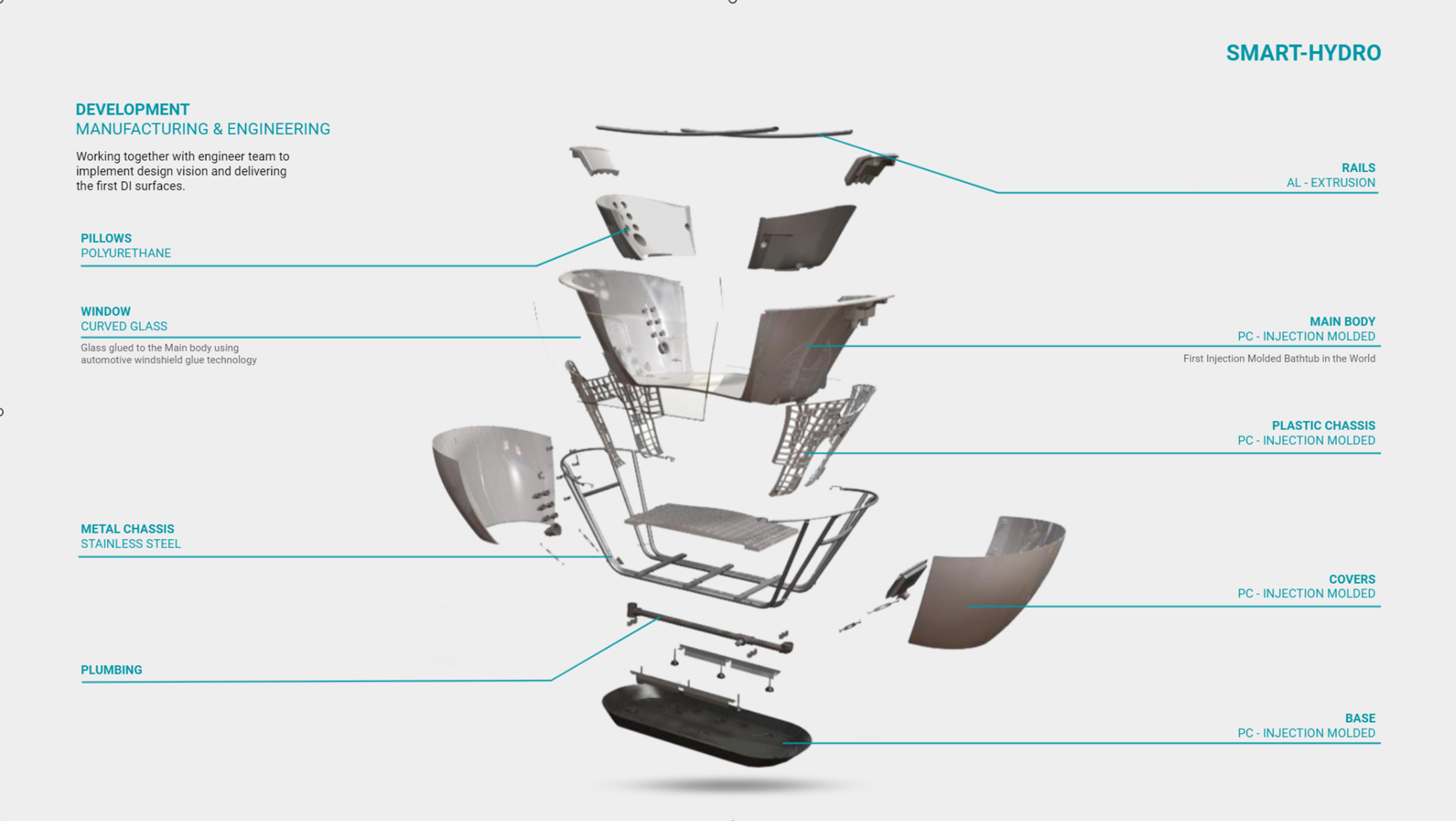
Electronics inside a wet object
Guided the engineering team to solve sealed touch interfaces, embedded speakers, temperature sensing and connectivity inside a water-contact zone, routed through the first fully injection-molded tub shell without breaking the clean exterior.
Prototyping & Human Factors
Validating the body
in the water.
Full-scale evaluation de-risked the experience before committing to expensive tooling. Each decision below was a deliberate trade-off, not a detail.
Reach from reclined
Validated that every control falls within arm's reach when the user is fully reclined, no sitting up to change temperature or jets.
Readable through glare
Tested display visibility through moving water and surface glare, so the interface stays glanceable mid-bath.
Sealing before tooling
Finalized the waterproof sealing strategy on full-scale models first, locking down the highest-risk decision ahead of committing to molds.
The Result
The centerpiece,
not the corner.
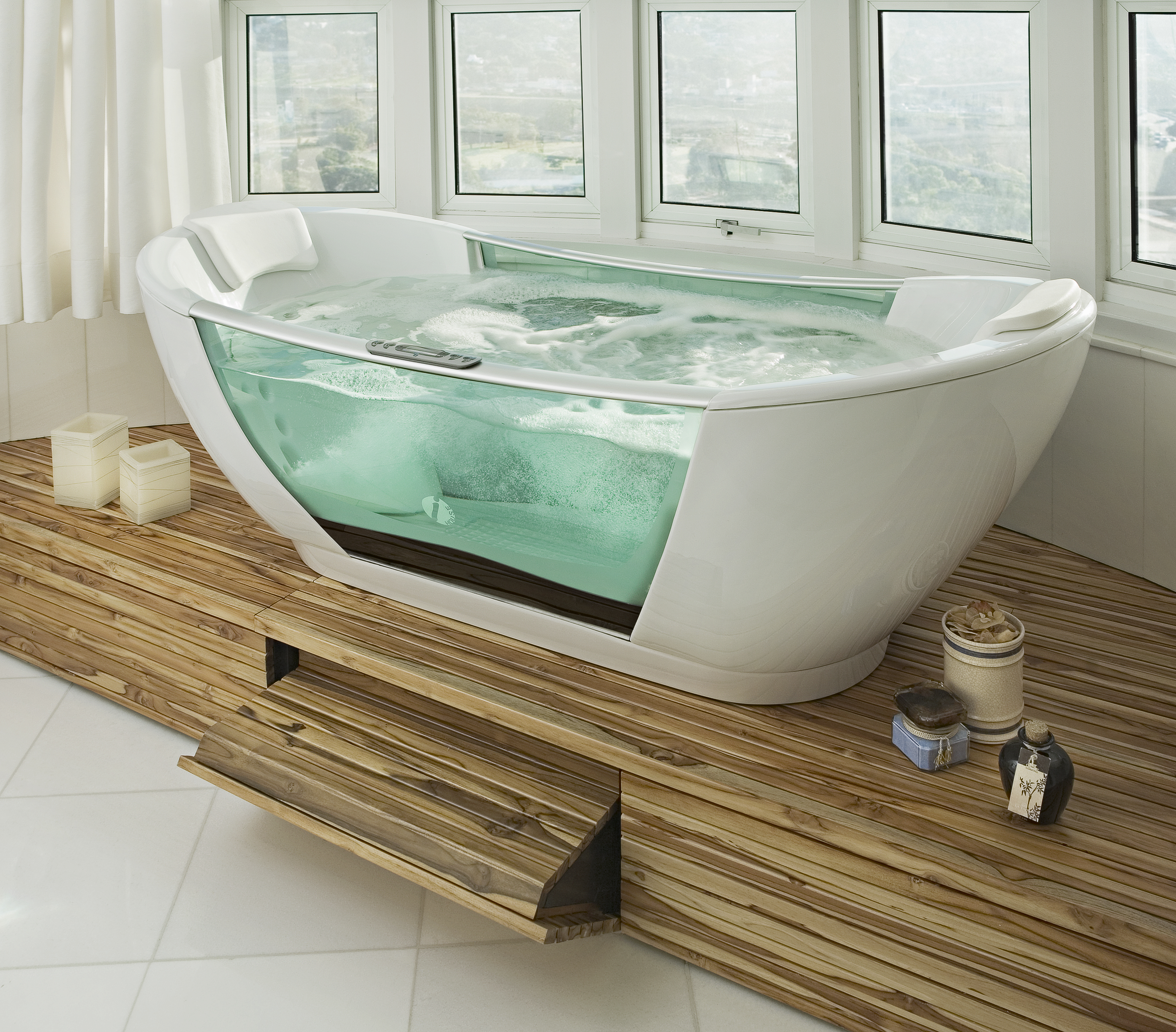
Most bathtubs are pushed against a wall and treated as plumbing. The Smart-Hydro was designed to sit in the middle of the room and hold it, a freestanding object you arrange the space around, not hide in a corner.
The transparent shell turns the water itself into the feature, dissolving the mass of the tub and making the whole piece read as a calm, spa-like sculpture. The technology stays invisible, and what's left is serenity on display.
That decision reframed the product's value: not a fixture to be installed, but a statement of wellness and status at the heart of the bathroom, which is exactly what justified its premium positioning and pre-launch demand.
Final Execution & Market Validation
A category, proven
at launch.
In pre-orders · one year before production
Unveiled inside iHouse Brazil's connected-home ecosystem, the Smart-Hydro was covered as the world's first truly connected bathtub, proving demand for an entirely new product category before a single unit shipped.